
Exodus 34:1-5 is about God’s renewal of the covenant with Moses, emphasizing the importance of obedience, repentance, and His forgiveness and mercy towards His people.
1 The Lord said to Moses, “Cut for yourself two tablets of stone like the first, and I will write on the tablets the words that were on the first tablets, which you broke.
2 Be ready by the morning, and come up in the morning to Mount Sinai, and present yourself there to me on the top of the mountain.
3 No one shall come up with you, and let no one be seen throughout all the mountain. Let no flocks or herds graze opposite that mountain.”
4 So Moses cut two tablets of stone like the first. And he rose early in the morning and went up on Mount Sinai, as the Lord had commanded him, and took in his hand two tablets of stone.
5 The Lord descended in the cloud and stood with him there, and proclaimed the name of the Lord.
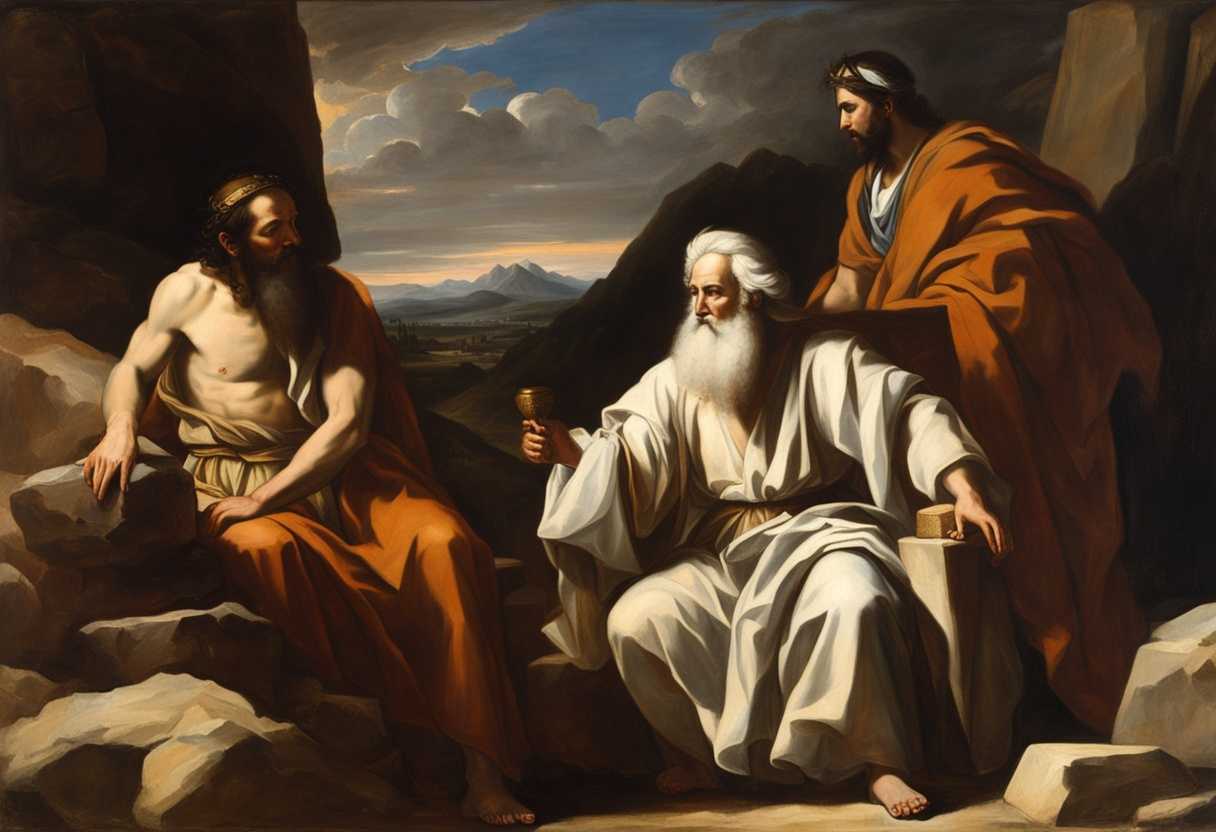
Setting the Scene for Exodus 34:1-5
In Exodus 34:1-5, we find Moses on Mount Sinai, having just smashed the tablets containing the Ten Commandments in response to the Israelites’ worship of the golden calf. After this act of anger and destruction, Moses is called by God to come back up the mountain to receive a new set of tablets with the commandments written on them. The scene is set in the early morning, with a gentle breeze carrying the scent of the desert flowers that grow sporadically on the rocky terrain. The sun is just beginning to rise, casting a warm glow over the mountain.
Moses ascends the mountain with a mix of trepidation and anticipation, unsure of what to expect after his previous encounter with God. As he reaches the summit, he is enveloped in a thick cloud, a sign of God’s presence. In the midst of this cloud, the Lord descends in all His glory, revealing His name and proclaiming His attributes of mercy, grace, patience, and justice. Moses falls to his knees in awe and reverence, humbled by the majesty of the Almighty God standing before him.
Surrounded by the beauty and power of nature, Moses and God engage in a profound conversation, where God reaffirms His covenant with the Israelites and promises to perform wonders that have never been seen before. This intimate moment between God and His chosen servant sets the stage for the continued journey of the Israelites through the wilderness, guided by the presence of the Almighty.
What is Exodus 34:1-5 about?
We witness the beauty of God’s nature and His unchanging character in this verse. The renewal of the covenant with Moses reveals God’s compassion, grace, patience, and love towards His people. It displays His commitment to His promises and His enduring desire to have a relationship with humanity. God’s love for us and His willingness to forgive and restore us despite our shortcomings are evident as we reflect on this verse.
Have you ever experienced a time when you felt unworthy of God’s love and yet He showered you with His compassion and grace? The renewal of the covenant with Moses serves as a powerful reminder that God’s love knows no bounds and His patience is limitless. It challenges us to reflect on our own attitudes towards others and strive to emulate God’s character of compassion and love in our interactions with those around us. We can take comfort in the fact that God, who is faithful and loving, is always ready to renew His covenant with us and guide us on the path of righteousness.
Understanding what Exodus 34:1-5 really means
In Exodus 34:1-5, we find a pivotal moment in the relationship between God and the Israelites. The historical backdrop reveals a significant turning point following the Israelites’ grave sin of worshipping the golden calf. Moses, in his role as mediator, had shattered the original tablets inscribed with God’s laws out of righteous anger. However, God’s mercy and desire for reconciliation shine through as He instructs Moses to prepare new tablets, symbolizing the renewal of the covenant.
The command to “Cut for yourself two tablets of stone like the first” carries profound symbolism. Despite the people’s disobedience, God’s willingness to restore the covenant underscores His unfailing love and faithfulness. The continuity in God’s instruction to write the same words on the new tablets emphasizes the unchanging nature of His standards and promises. This consistency serves as a reminder of God’s reliability and the enduring nature of His Word.
The directive for Moses to “Be ready in the morning, and come up in the morning to Mount Sinai” underscores the importance of preparation and reverence in approaching God. The solitude required as “No one shall come up with you” highlights the personal nature of Moses’ encounter with God, emphasizing the unique relationship he shared as a mediator. The image of “The Lord descended in the cloud and stood with him there” portrays God’s willingness to be present with His chosen servant, signifying His desire for intimacy and communion with His people.
Drawing parallels with related biblical passages such as Deuteronomy 10:1-5, Jeremiah 31:31-34, and Hebrews 8:10, we see a consistent theme of God’s covenantal faithfulness and His desire for a deeper relationship with His people. These passages point towards a new covenant where God’s laws are internalized, emphasizing the transformative power of God’s Word in the lives of believers.
The timeless relevance of Exodus 34:1-5 resonates with believers today. It serves as a poignant reminder of God’s willingness to offer renewal and forgiveness, mirroring His grace through Jesus Christ. The unchanging nature of God’s Word provides a steadfast foundation in a world of shifting values and uncertainties. The call to cultivate a personal relationship with God echoes through the ages, inviting individuals to seek intimacy with the Creator through prayer, devotion, and obedience.
In conclusion, the narrative in Exodus 34:1-5 inspires us to embrace God’s offer of renewal and forgiveness, to anchor ourselves in the consistency of His Word, and to nurture a personal relationship with Him. Just as God extended grace to the Israelites through the renewal of the covenant, He continues to extend His loving hand to us, ready to restore and renew our connection with Him, no matter how far we may have strayed.
How can we experience God’s presence more deeply?
To experience God’s presence more deeply, we can dedicate time to seeking Him in prayer and through studying His Word. We open our hearts and minds to His presence by setting aside moments for quiet reflection and communion with God. We too can retreat to a place of solitude to connect with God, just as Moses went up to the mountain to speak with Him. We can pour out our hearts, listen for His voice, and allow His Spirit to move within us in these moments.
Furthermore, by meditating on the attributes of God and acknowledging His sovereignty and goodness, we can cultivate a deeper awareness of His presence in our lives. Recognizing His faithfulness, mercy, and love can lead us to offer thanksgiving and praise, which invites God’s presence to dwell among us. We can respond with reverence and adoration in our own lives, just as Moses bowed to the ground in worship upon hearing God’s proclamation of His name. Living in obedience to God’s commands and walking in His ways can create a pathway for us to experience His presence more deeply. We invite His Spirit to work in and through us by aligning our actions and attitudes with His will. Like Moses, who carried the tablets inscribed with God’s laws, we can keep His commandments close to our hearts and allow them to shape our daily lives. Through a lifestyle of faithfulness and obedience, we can create an environment where God’s presence is welcomed and felt in a profound way.
Application
Join Moses on the mountaintop of your spiritual journey. Dive deep and forge a bond with the divine that surpasses mere acquaintance. Embrace the challenge to approach the Almighty with humility and respect, acknowledging His infinite might and purity. Will you seize this moment to connect with God in prayer and delve into His teachings, yearning for a richer union with the Creator?

Reverend Michael Johnson is an experienced Church Minister with a profound expertise in spirituality and guidance. With a serene presence and a compassionate heart, he has faithfully served his congregation for over 20 years, leading them on a spiritual journey towards inner peace and enlightenment. Reverend Johnson’s extensive knowledge of religious philosophies and profound understanding of human nature have made him a trusted confidant and mentor to many, as he seamlessly weaves his profound wisdom into life teachings. Reverend Johnson’s calming demeanor and empathetic nature continue to uplift and heal souls, nurturing a sense of unity and tranquility within his community.