
2 Samuel 24:13-14 is about King David receiving a severe choice from the prophet Gad regarding punishment for his census, highlighting the consequences of his actions and ultimately illustrating the mercy of God, as David chooses to fall into the hands of God rather than men, demonstrating a recognition of God’s sovereignty and compassion amid impending judgment.
13 So Gad came to David and told him, and said to him, “Shall three years of famine come to you in your land? Or will you flee three months before your foes while they pursue you? Or shall there be three days’ pestilence in your land? Now consider, and decide what answer I shall return to him who sent me.”
14 Then David said to Gad, “I am in great distress. Let us fall into the hand of the Lord, for his mercy is great; but let me not fall into the hand of man.”
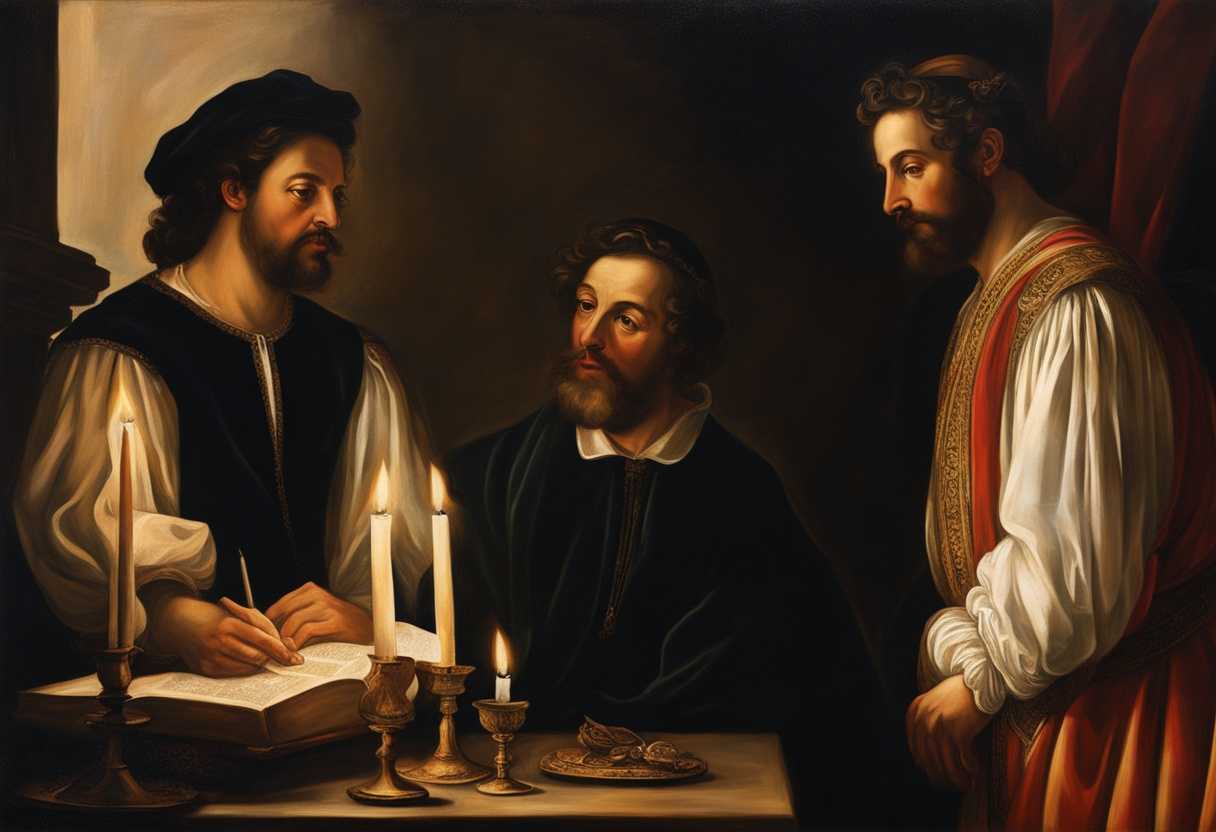
Setting the Scene for 2 Samuel 24:13-14
In the twilight of King David’s reign, a somber atmosphere enveloped the royal palace in Jerusalem. The air was thick with tension as David, burdened by the weight of his decisions, stood before the prophet Gad. The two men were in a dimly lit chamber, the flickering oil lamps casting shadows on the stone walls, which bore witness to the many trials and tribulations of David’s kingship. Gad had just delivered a grave message from the Lord, presenting David with a choice that would determine the fate of his people. The prophet’s voice was steady, yet the gravity of the situation hung heavily in the air, as David grappled with the consequences of his actions.
Surrounding them were the remnants of a once-vibrant court, now filled with anxious advisors and guards who could sense the tension. The palace, adorned with rich tapestries and golden artifacts, felt like a gilded cage, trapping David in a moment of profound introspection. He had recently conducted a census of Israel, a decision that had displeased God, leading to a divine punishment that loomed over the nation. As David contemplated the options laid before him—three years of famine, three months of fleeing from his enemies, or three days of plague—his heart was heavy with the realization that his choices would not only affect him but the entire nation of Israel.
As David weighed his options, the distant sounds of the city echoed through the palace—children playing, merchants calling out in the marketplace, and the faint sound of worship from the Temple. Yet, in that moment, all he could feel was the weight of his sin and the impending judgment. The choice he faced was not merely a personal dilemma; it was a pivotal moment that would shape the future of his kingdom. With a deep breath, David finally spoke, revealing his heart’s desire to fall into the hands of God rather than man, a testament to his faith and recognition of divine mercy amidst impending judgment. The scene was a poignant reminder of the complexities of leadership, the burden of responsibility, and the ever-present need for humility before God.
What is 2 Samuel 24:13-14 about?
David’s choice of punishment in the context of the story highlights the profound nature of human sin and the importance of divine mercy. After committing a grave sin, David is given the daunting task of selecting a consequence for his actions. What does this tell us about accountability? Isn’t it thought-provoking to consider how our choices can sometimes lead to consequences that are not just personal, but also communal? David’s predicament serves as a mirror to our own lives; we often face dilemmas where our decisions have far-reaching effects on those around us. David demonstrates an understanding of God’s ultimate authority and compassion by choosing a punishment that would allow him to fall into God’s hands rather than human judgment. The selection of divine mercy over human repercussion suggests a deep-rooted faith that acknowledges the nature of God’s grace. Could it be that in acknowledging our shortcomings, we are also opening ourselves to redemption? David’s choice ultimately emphasizes the belief that while we may face the fallout of our actions, the path to reconciliation lies in seeking God’s mercy. How often do we mirror this in our own lives when we confront our mistakes? David’s story invites us to reflect on the necessity of grace and the desire for forgiveness amidst the consequences of our actions.
Understanding what 2 Samuel 24:13-14 really means
In 2 Samuel 24:13-14, we encounter a pivotal moment in King David’s life, one that underscores the profound truth that our actions carry weighty consequences. David, a man described as “after God’s own heart,” finds himself in a precarious situation after conducting a census that reflects pride and a lack of trust in God. The Lord, through the prophet Gad, presents David with three choices of punishment, each a stark reminder of the gravity of his sin. This passage invites us to reflect on the nature of sin and its repercussions, even for those who are deeply devoted to God.
One of the key themes in this passage is the reality of consequences. David’s decision to count the people was not merely a logistical exercise; it was an act that revealed his reliance on human strength rather than divine providence. This serves as a cautionary tale for us today. How often do we find ourselves leaning on our own understanding or abilities, only to face the fallout of our choices? David’s experience reminds us that no one is exempt from the repercussions of their actions, regardless of their standing before God.
Another significant theme is the interplay of divine judgment and mercy. David is faced with three forms of punishment, yet he is given the agency to choose. This moment illustrates God’s justice—He does not overlook sin—but it also highlights His mercy. David’s choice to “fall into the hand of the Lord” reflects a deep understanding of God’s character. He recognizes that while God is just, He is also merciful. This choice is a powerful testament to faith, encouraging us to trust in God’s nature even when we face the consequences of our actions.
The parallel account in 1 Chronicles 21:10-13 provides further insight into David’s heart. His response to the situation is one of deep remorse, showcasing the importance of acknowledging our mistakes. When we confront our failures, we often experience a weight of guilt that can be overwhelming. Yet, as David demonstrates, this acknowledgment is the first step toward healing. How do we respond when we realize we’ve erred? Do we shy away from our mistakes, or do we confront them with honesty and seek restoration?
In our modern context, the relevance of this passage is striking. Many individuals grapple with the consequences of their choices, whether in personal relationships, careers, or moral dilemmas. Consider the young professional who compromises their integrity in pursuit of success. When the fallout occurs, they stand at a crossroads, much like David. Will they choose despair, or will they seek forgiveness and make amends? This moment of decision can lead to restoration or further estrangement, emphasizing the importance of our responses to our actions.
The phrases “I am in great distress” and “Let us fall into the hand of the Lord” encapsulate the essence of this passage. David’s distress reflects the burden of guilt, a feeling we can all relate to when we acknowledge our wrongdoings. Yet, his choice to trust in God’s mercy rather than the unpredictable nature of man is a profound act of faith. It challenges us to consider our own trust in God during difficult times. Are we willing to lean into His character, knowing that His love and mercy are always available to us?
In conclusion, 2 Samuel 24:13-14 invites us to reflect on our lives and the choices we make. It encourages us to seek God’s mercy and guidance, reminding us that while we may face consequences, we can always return to Him for forgiveness and restoration. Just as David found hope in his distress, we too can experience the transformative power of God’s love and mercy, leading us toward healing and renewal. How will you respond to the choices in your life today?
Am I choosing faith over fear in my decisions?
When grappling with the choices I make, I must consider whether I am prioritizing faith over fear. This means focusing on the belief that there is a greater purpose and understanding beyond my immediate concerns, especially when faced with tough decisions or dire situations. One’s perspective in difficult times can often swing between the confidence in a higher plan and the anxiety that comes from uncertainty. I encourage a sense of hope and resilience by leaning into faith, even when the outcome is unclear or fraught with risk. Embracing faith enables one to recognize the potential consequences that come with decisions. It emphasizes the importance of trusting in a compassionate vision and finding comfort in the belief that enduring challenges can lead to growth and understanding. Confronting fears can diminish the sting of accountability and lead to a more grounded approach in decision-making. Faith ultimately illuminates the path to guide choices toward positive outcomes, rather than paralyzing them with fear of what might occur.
Choosing faith over fear cultivates a mindset that appreciates grace and the collective strength shared with others around me. This approach fosters a sense of responsibility toward my actions and their impact on myself and others, creating a space where I can move forward with clarity and purpose. Focusing on faith helps me build resilience, courage, and a deeper connection to the world around me as I navigate through life’s uncertainties.
Application
Think of your life as a busy workplace—each choice is a task that shapes your project. Just like David, you have to face the outcomes of your decisions, and sometimes that means realizing you need to make things right. Reflect on your own actions: are there areas where you need forgiveness or a fresh start? Invite God’s grace into your work and family life to help you reset. What small step will you take today to align your heart with what truly matters?

Reverend Michael Johnson is an experienced Church Minister with a profound expertise in spirituality and guidance. With a serene presence and a compassionate heart, he has faithfully served his congregation for over 20 years, leading them on a spiritual journey towards inner peace and enlightenment. Reverend Johnson’s extensive knowledge of religious philosophies and profound understanding of human nature have made him a trusted confidant and mentor to many, as he seamlessly weaves his profound wisdom into life teachings. Reverend Johnson’s calming demeanor and empathetic nature continue to uplift and heal souls, nurturing a sense of unity and tranquility within his community.