
John 1:24 is about the Pharisees challenging John the Baptist’s authority and asking him to justify his baptizing practices.
24 (Now they had been sent from the Pharisees.)
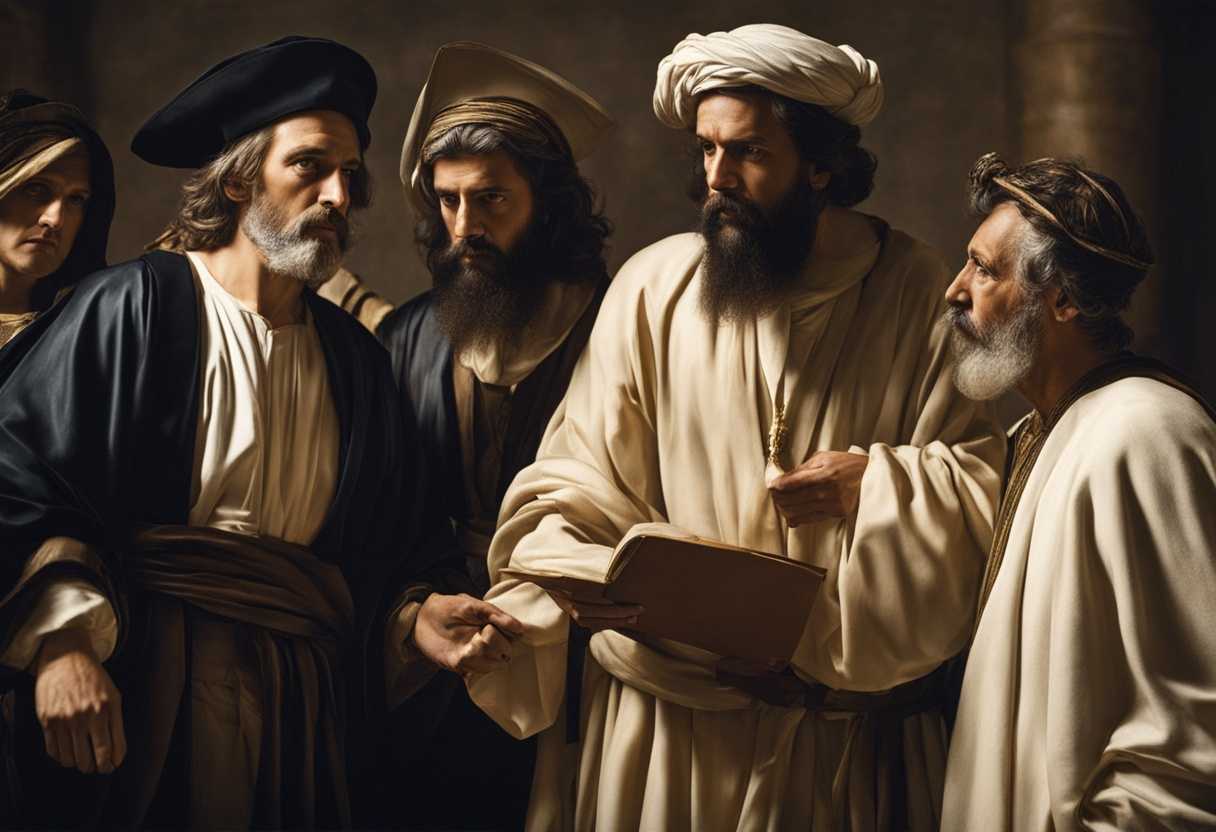
Setting the Scene for John 1:24
In John chapter 1, we find the scene where the religious leaders from Jerusalem send priests and Levites to question John the Baptist. The setting is the wilderness of Judea, where John has been baptizing people in the Jordan River. The priests and Levites are sent to inquire about John’s identity and purpose, as his preaching and baptizing have garnered significant attention.
As the priests and Levites approach John, the sun beats down on the arid landscape, casting long shadows across the dusty ground. John stands tall and resolute, his rough clothing and unkempt hair a stark contrast to the religious officials’ elaborate robes and polished appearance. The air is filled with the sound of the flowing river and the murmurs of the crowd that has gathered to listen to John’s message of repentance and the coming Messiah.
The tension is palpable as the priests and Levites question John, probing him about whether he is the Christ, Elijah, or the Prophet. John’s unwavering response points to the one who is to come after him, the one whose sandals he is not worthy to untie. The scene captures a pivotal moment in the unfolding drama of Jesus’ ministry, as John prepares the way for the arrival of the long-awaited Messiah.
What is John 1:24 about?
When John the Baptist says he is not the Messiah but only a messenger preparing the way for someone greater, he is showcasing humility and self-awareness. John highlights the significance of his role as a precursor to Jesus by denying being the chosen one himself. This verse emphasizes the idea of humility and understanding one’s place in the greater scheme of things. It teaches us to acknowledge our limitations and embrace the roles we are meant to play in the broader narrative of life.
This verse also serves as a reminder that everyone has a unique purpose and contribution to make in the world. Just like John the Baptist recognized his role in preparing the way for Jesus, we too should identify our strengths and talents and use them to benefit others. It prompts us to reflect on our own lives and consider how we can be a guiding light, leading others towards truth and goodness, without seeking recognition or glory for ourselves. John’s humility in this moment serves as a powerful example for us to follow in our own journeys.
Understanding what John 1:24 really means
In the Gospel of John, we encounter a pivotal moment where John the Baptist, a significant figure in preparing the way for Jesus Christ, is approached by the Pharisees, questioning his identity and purpose. This interaction sheds light on the tension between the established religious authorities and the emerging message of John, heralding a new era. John’s role as the forerunner to Christ is crucial, as he fulfills the prophecy in Isaiah, proclaiming the coming of the Lord and preparing the hearts of the people for His arrival.
The prophecy in Isaiah 40:3, echoed in Matthew 3:3 and reiterated by John the Baptist in John 1:23, underscores the continuity of God’s plan throughout history. John’s declaration as the voice calling in the wilderness to make straight the way for the Lord signifies his clear understanding of his mission. This clarity of purpose stands as a beacon for individuals today who seek to discern their own identity and calling in a world filled with distractions and uncertainties.
The theme of preparation and readiness resonates beyond the historical narrative, inviting us to reflect on how we can prepare ourselves spiritually, emotionally, and mentally for the greater things that await us. Just as John the Baptist paved the way for Jesus, we are called to pave the way for positive change, personal growth, and community transformation in our spheres of influence. John’s unwavering commitment to his divine mission challenges us to consider how steadfast we are in our own pursuits and convictions.
Imagine a modern-day parallel to John the Baptist—a community leader dedicated to serving others, facing skepticism and opposition, yet unwavering in their commitment to a noble cause. This leader’s resilience and sense of purpose inspire others to join in the journey of preparing the way for a better tomorrow, much like John inspired his followers to anticipate the coming of Christ.
The Pharisees’ questioning of John symbolizes the clash between tradition and innovation, between the comfort of the familiar and the challenge of the new. In our own lives, we may encounter similar moments of doubt and scrutiny, questioning the validity of our beliefs and the direction of our paths. However, like John, we can find strength in our convictions, embracing the questions as opportunities for growth and deeper understanding of our purpose.
As we delve into John 1:24 and its surrounding context, let us ponder the parallels it draws to our lives today. May we find inspiration in John the Baptist’s resolute commitment to his calling, his unwavering faith in the face of doubt, and his steadfast preparation for the arrival of the Messiah. Just as John prepared the way for Christ, let us prepare our hearts and minds for the transformative work that awaits us, both individually and collectively.
What does it mean to prepare the way?
To prepare the way means to make space or pave the path for something or someone. It specifically refers to preparing the way for the Lord in the context of the verse from John 1:24. This can involve removing obstacles, clearing a passage, or making arrangements for a smooth and direct arrival or encounter. Preparing the way in a broader spiritual sense involves creating a receptive environment for a significant event or presence to manifest.
The act of preparing the way can involve both physical and spiritual elements. Physically, it may include practical actions such as cleaning a physical space, making arrangements for travel, or setting up a welcoming atmosphere. Spiritually, it often involves aligning one’s heart and mind, seeking forgiveness, repentance, and making oneself ready to receive the blessings or teachings that are to come. It signifies a readiness and willingness to embrace what is to follow and to ensure that nothing obstructs the intended purpose or message. Preparing the way involves anticipation, expectation, and active participation in creating the conditions necessary for a meaningful encounter. It requires humility, intentionality, and faith to pave the way for something greater than oneself. We demonstrate our respect, reverence, and readiness to welcome the divine or transformative presence into our lives by preparing the way for the Lord or any significant event.
Application
John the Baptist knew his role was crucial in paving the way for Jesus. Like him, we must reflect on our purpose and clear the clutter from our lives to make room for Christ. Think about your daily grind—how you balance work, family, and all the chaos. Let’s carve out space in our hearts and actions for His love. Will you set aside the distractions and prepare the way for the Lord today?

Reverend Michael Johnson is an experienced Church Minister with a profound expertise in spirituality and guidance. With a serene presence and a compassionate heart, he has faithfully served his congregation for over 20 years, leading them on a spiritual journey towards inner peace and enlightenment. Reverend Johnson’s extensive knowledge of religious philosophies and profound understanding of human nature have made him a trusted confidant and mentor to many, as he seamlessly weaves his profound wisdom into life teachings. Reverend Johnson’s calming demeanor and empathetic nature continue to uplift and heal souls, nurturing a sense of unity and tranquility within his community.