
is about how some of the Jewish leaders believed in Jesus but were afraid to confess their faith openly due to fear of being expelled from the synagogue.
42 Nevertheless, many even of the authorities believed in him, but for fear of the Pharisees they did not confess it, so that they would not be put out of the synagogue;
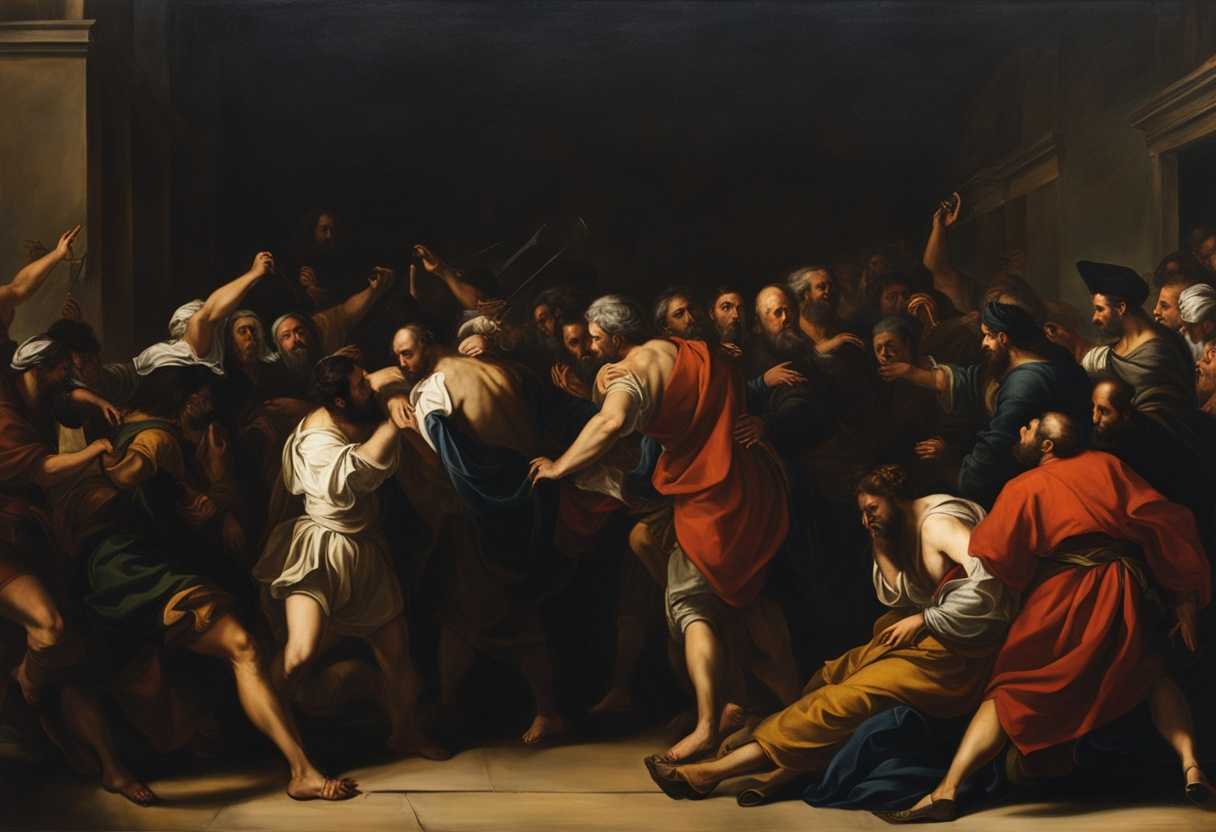
Setting the Scene for John 12:42
In John chapter 12, we find a scene where Jesus is in Jerusalem during the time of the Passover festival. The atmosphere is charged with anticipation and tension as many people have gathered to celebrate the religious festival. Among the crowd are various groups of people, including Pharisees, religious leaders, disciples, and curious onlookers.
In this particular verse, we see a group of Pharisees who are secretly following Jesus and observing His actions. They are intrigued by His teachings and miracles but are also wary of His growing popularity among the people. The Pharisees are conflicted between their curiosity about Jesus and their fear of losing their own power and influence.
The scene is set in a bustling marketplace where vendors are selling goods for the festival, and the air is filled with the sounds of people talking, animals braying, and the clinking of coins. Jesus is moving through the crowd, teaching and ministering to those who seek Him, while the Pharisees watch from a distance, trying to discern His true intentions.
What is John 12:42 about?
This verse highlights a common struggle that many people face when it comes to following their beliefs and convictions. It shows that even well-respected and influential individuals can grapple with the fear of judgment and rejection from their community. Have you ever found yourself in a situation where you believed in something strongly but hesitated to openly show your support because of what others might think?
It is essential to reflect on the importance of staying true to our beliefs, even when faced with potential criticism or backlash. This verse challenges us to consider whether we are letting external pressures dictate our actions or if we are standing firm in our convictions. We can strive towards living a more authentic and meaningful life by examining our own responses to fear and peer pressure. Have you ever felt torn between staying true to your beliefs and conforming to societal expectations? It is moments like these that test our integrity and courage to follow our hearts despite the challenges that may arise.
Understanding what John 12:42 really means
In the Gospel of John, which delves into the divinity of Jesus and His earthly mission, we encounter a pivotal moment in Chapter 12. Here, amidst the backdrop of varied reactions to Jesus’ teachings and miracles, we find a striking revelation about belief and fear. The verse in question sheds light on a group of individuals, including leaders, who held a belief in Jesus, yet hesitated to openly acknowledge it. This dichotomy between personal conviction and public confession is a theme that resonates through the ages.
The phrase “Many even among the leaders believed in him” underscores that faith in Jesus transcended societal boundaries, reaching even the influential echelons of society. However, the subsequent statement, “But because of the Pharisees they would not openly acknowledge their faith,” unveils a poignant truth. It exposes the palpable fear of repercussions, particularly the dread of being cast out of the synagogue, a severe social and religious consequence in that context.
This narrative finds echoes in other biblical passages, such as John 9:22, which also touches on the fear of expulsion from the synagogue. Moreover, in Matthew 10:32-33, Jesus emphasizes the significance of openly professing faith before others, promising divine acknowledgment for such boldness. Similarly, in Romans 10:9-10, Paul stresses the vital role of confession and belief in Jesus for salvation, highlighting the intertwining of faith and proclamation.
The relevance of this verse extends to contemporary settings, where believers often grapple with societal pressures and potential backlash for their faith. Just as the early followers faced dilemmas of confession, modern individuals navigate similar challenges in expressing their beliefs authentically. The call to exhibit courage in faith, despite external pressures, reverberates through time, urging believers to stand firm in their convictions.
Consider a scenario of a young professional in a secular workplace, wrestling with the tension between personal faith and professional environment. This individual resonates with the struggle depicted in John 12:42, finding solace in the reminder to seek supportive communities and draw strength from their beliefs. The verse serves as a beacon, guiding believers to introspect on their readiness to proclaim their faith openly, regardless of potential consequences.
In conclusion, John 12:42 encapsulates a profound truth about the complexities of belief and confession. It prompts believers to ponder their own stance on openly professing their faith, challenging them to embrace courage in the face of societal pressures. As we reflect on this verse, may we find inspiration to stand unwavering in our beliefs, fostering a community of support and resilience in our faith journey.
Are we more concerned with the approval of others?
Yes, the verse referenced in John 12:42 speaks about the religious leaders who believed in Jesus but did not confess their faith openly because they were more concerned about the approval of others than the approval of God. This implies that they prioritized the acceptance and esteem of fellow men over their relationship with God. It highlights a cautionary lesson for us all to not allow the opinions or praise of others to outweigh our commitment to God and His truth. It is easy to fall into the trap of seeking validation and approval from others rather than focusing on living a life that is pleasing to God in our daily lives. This can lead us to compromise our beliefs and actions to fit in or gain favor with people around us. However, the verse reminds us that true faith requires us to prioritize God’s approval above the approval of others, even if it means facing rejection or criticism from the world. The verse ultimately prompts us to reflect on our motivations and actions, encouraging us to align our choices and beliefs with the will of God rather than seeking validation from society. We can find true fulfillment and peace by staying faithful to God and His teachings, knowing that His approval is of greater value than any praise or acceptance we may receive from others.
Application
Think about your daily grind—work, family, commitments—and how standing firm for your faith can make all the difference. Imagine the power of bringing the same boldness you show at work into standing up for what you believe. Don’t let doubt silence you. Be the beacon others look to when they struggle. Will you rise to the occasion and live your faith openly and courageously?

Reverend Michael Johnson is an experienced Church Minister with a profound expertise in spirituality and guidance. With a serene presence and a compassionate heart, he has faithfully served his congregation for over 20 years, leading them on a spiritual journey towards inner peace and enlightenment. Reverend Johnson’s extensive knowledge of religious philosophies and profound understanding of human nature have made him a trusted confidant and mentor to many, as he seamlessly weaves his profound wisdom into life teachings. Reverend Johnson’s calming demeanor and empathetic nature continue to uplift and heal souls, nurturing a sense of unity and tranquility within his community.