
Jeremiah 6:26 is about the call for mourning and lamentation over the dire state of Jerusalem, symbolizing the deep sorrow and urgent need for repentance in the face of impending judgment and destruction due to the people’s unfaithfulness to God.
26 O daughter of my people, put on sackcloth, and roll in ashes; make mourning as for an only son, most bitter lamentation, for suddenly the destroyer will come upon us.
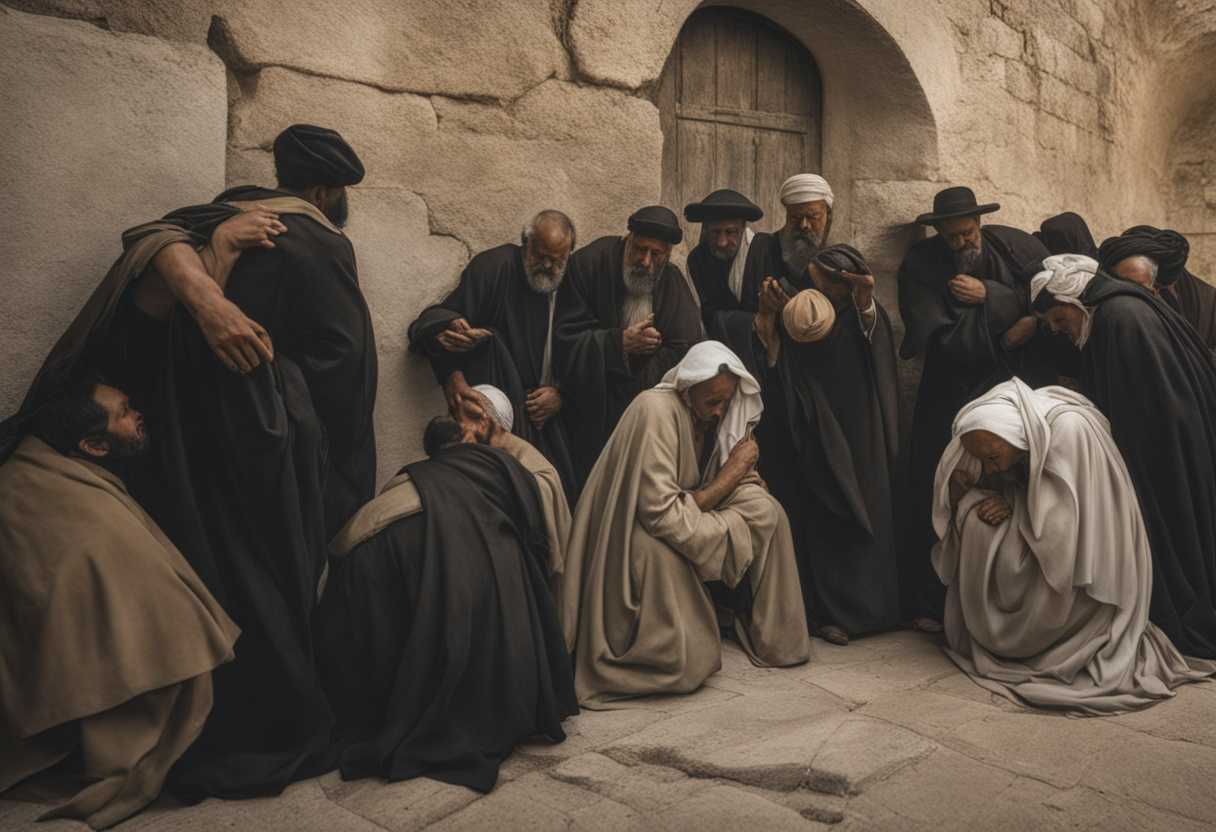
Setting the Scene for Jeremiah 6:26
In the heart of ancient Jerusalem, a city steeped in history and burdened by the weight of its own transgressions, a somber scene unfolds. The air is thick with tension, a palpable sense of foreboding hanging over the streets. The people, weary from years of conflict and moral decay, move about with a heavy heart, their faces etched with worry and despair. Among them stands Jeremiah, the prophet, a man chosen by God to deliver a message of warning and lamentation. Clad in simple robes, his eyes reflect the sorrow of a nation that has strayed far from its covenant with the Almighty. He is surrounded by a small group of followers, including Baruch, his faithful scribe, who diligently records the prophet’s words, and a few concerned citizens who have gathered to hear the urgent call for repentance.
As the sun begins to set, casting a golden hue over the crumbling walls of the city, Jeremiah raises his voice above the murmurs of the crowd. He speaks of impending judgment, urging the people to recognize the gravity of their sins. The streets, once vibrant with the sounds of commerce and celebration, now echo with the cries of the broken-hearted. The marketplace, filled with the remnants of a once-thriving economy, stands eerily quiet, as merchants and buyers alike are consumed by the weight of their collective guilt. The distant sound of a trumpet signals the approach of danger, a reminder of the armies that threaten to besiege the city. Jeremiah’s words resonate deeply, as he implores the people to mourn for their sins, to don sackcloth and ashes, and to seek the mercy of God before it is too late.
Surrounding Jeremiah and his followers, the landscape is a stark reminder of the consequences of disobedience. The once lush hillsides that cradle Jerusalem are now barren, and the rivers that once flowed with life are reduced to trickles. The temple, a symbol of divine presence, stands in the distance, its grandeur overshadowed by the spiritual decay that has taken root within the hearts of the people. As the shadows lengthen and the night begins to fall, the weight of Jeremiah’s message hangs heavy in the air. The prophet’s call to repentance is not merely a plea; it is a desperate cry for the people to awaken from their spiritual slumber and recognize the urgency of their situation. In this moment, the fate of Jerusalem hangs in the balance, and the choice to heed the warning lies in the hands of its inhabitants.
What is Jeremiah 6:26 about?
Jeremiah 6:26 calls for profound mourning and lamentation over the spiritual state of the people. This verse powerfully underscores the weight of sin, suggesting that it is not merely an individual failing but a communal crisis that warrants deep emotional response. Have you ever felt a profound sense of sorrow for the consequences of your own actions or those of others around you? The passage invites us to reflect on how our collective moral and spiritual conditions can bear grave implications not only for ourselves but for our communities as well.
The imagery of mourning evokes a sense of urgency and earnestness; it’s akin to a wake-up call about the spiritual malaise that threatens to envelop the people. The prophet Jeremiah is challenging us to reconsider our complacency in the face of wrongdoing. Are we too quick to dismiss the gravity of our transgressions, or do we take the time to truly feel the weight of our choices? This call to lamentation serves as a reminder that acknowledging our failings is a pivotal step towards healing and restoration. It prompts us to question whether we are as attuned to the spiritual well-being of those around us, and whether we are willing to engage in the difficult work of confronting these issues with compassion and humility. Jeremiah ultimately invites introspection through his call to mourning. It challenges us to look beyond surface-level grievances and consider the deeper implications of our actions and inactions. How might we cultivate a spirit of sensitivity towards our own sins and the sins of our community as we reflect on this passage? Are we prepared to engage with our spiritual burdens as a source of collective strength and renewal? We pave the way for grace, healing, and a more profound sense of purpose in our lives and the lives of those around us by acknowledging our failings. Let us not only mourn but also seek restoration and transformation.
Understanding what Jeremiah 6:26 really means
In Jeremiah 6:26, we encounter a powerful call to repentance that resonates deeply within the context of Israel’s tumultuous history. Jeremiah, as a prophet, stands as a voice of warning during a time when the people are straying from their covenant with God. This verse encapsulates the urgency of recognizing sin and the necessity of mourning over it. It serves as a poignant reminder that the path to restoration begins with a heartfelt acknowledgment of our shortcomings.
The phrase “O daughter of my people” establishes a profound connection between God and His people. It reflects not just a sense of distance but a familial bond that evokes sorrow when loved ones stray. This personal appeal underscores the emotional weight of the message. When God calls His people to “gird yourself with sackcloth,” He is inviting them to engage in a physical act of humility. Sackcloth, a traditional symbol of mourning, signifies a recognition of sinfulness and a desire to turn back to God. It’s a tangible expression of the internal state of the heart.
The urgency of the call is further emphasized by the phrases “wail and lament.” These words are not mere suggestions; they are commands that demand a deep emotional response. The gravity of the situation calls for a heartfelt reaction, one that acknowledges the spiritual state of the nation. This is not just about feeling sorry; it’s about a profound realization of the consequences of sin and the need for genuine repentance.
When we look at related biblical passages, such as Joel 2:12-13 and Matthew 5:4, we see a consistent theme of mourning leading to comfort and restoration. Joel emphasizes the need for a genuine return to God, while Matthew reminds us that those who mourn over their sins are blessed and will find comfort. Lamentations 3:40 encourages self-examination, reinforcing the idea that turning back to God is essential for healing. These connections highlight the timeless nature of Jeremiah’s message.
In our contemporary world, the relevance of this verse cannot be overstated. We live in an age filled with distractions and moral ambiguity, where the call to recognize our shortcomings is often drowned out. Many individuals experience a profound sense of disconnection from God, leading to feelings of emptiness. Jeremiah 6:26 serves as a reminder that acknowledging our need for God is the first step toward healing and restoration. It challenges us to confront our spiritual state honestly.
Consider a personal anecdote: think of a time when a friend faced the consequences of a poor choice. Initially, there may have been denial, but when they confronted the reality of their actions, it was through mourning and acknowledgment that they found a path to restoration. This mirrors the call in Jeremiah for the people to confront their sins and seek a return to God. It illustrates the transformative power of recognizing our need for repentance.
In conclusion, Jeremiah 6:26 is a timeless call to recognize our spiritual state, to mourn over our sins, and to seek a deeper relationship with God. It challenges us to take a hard look at our lives and encourages us to respond with humility and a desire for transformation. As we reflect on this verse, may we be inspired to embrace the call to repentance and find comfort in the promise of restoration that follows.
How can I truly mourn for the lost?
To truly mourn for the lost, one must adopt a deep sense of empathy and compassion for those who suffer. This involves recognizing the gravity of their sorrow and the weight of their struggles. It’s essential to allow oneself to feel the pain of others, understanding that their loss is also a collective human experience. A heartfelt mourning calls for self-reflection and a commitment to acknowledging that life’s fragility necessitates a supportive and caring community. This mourning becomes an act of solidarity, where one’s internal grief transforms into a powerful motivation for healing and support.
Additionally, true mourning is not just about feeling sorrow; it calls for action. It can inspire individuals to advocate for and uplift those who are hurting. Engaging in acts of kindness, offering support to grieving individuals, or even participating in community initiatives aimed at healing can create a genuine connection with the lost. This is an opportunity to honor their memory by making a meaningful contribution, helping to ensure that their stories are remembered, and their impact endures.
Finally, genuine mourning for the lost also involves an acknowledgment of the spiritual dimension of loss. It invites a contemplation of life and death, urging one to seek a deeper understanding of existence and purpose. This process may lead to personal transformation, fostering a more profound appreciation for life and a commitment to living fully in honor of those who are no longer present. Mourning can become both an expression of grief and a catalyst for growth in this way.
Application
Life is like a bustling city where each of us plays a vital role. Just as a watchman guards the streets, you have the power to protect your family and community from the injustices that surround you. Don’t just stand by and feel sadness; take action. Pray for guidance, lend a hand to those in need, or speak out for what’s right. Your choices can spark real change. Are you ready to answer the call and transform your world?

Reverend Michael Johnson is an experienced Church Minister with a profound expertise in spirituality and guidance. With a serene presence and a compassionate heart, he has faithfully served his congregation for over 20 years, leading them on a spiritual journey towards inner peace and enlightenment. Reverend Johnson’s extensive knowledge of religious philosophies and profound understanding of human nature have made him a trusted confidant and mentor to many, as he seamlessly weaves his profound wisdom into life teachings. Reverend Johnson’s calming demeanor and empathetic nature continue to uplift and heal souls, nurturing a sense of unity and tranquility within his community.