
Revelation 21:12-13 is about the description of the New Jerusalem, emphasizing its divine nature and completeness, symbolized by the twelve gates named after the twelve tribes of Israel and the foundations named after the twelve apostles, representing the unity of God’s people throughout history.
12 It had a great, high wall, with twelve gates, and at the gates twelve angels, and on the gates the names of the twelve tribes of the sons of Israel were inscribed—
13 On the east three gates, on the north three gates, on the south three gates, and on the west three gates.
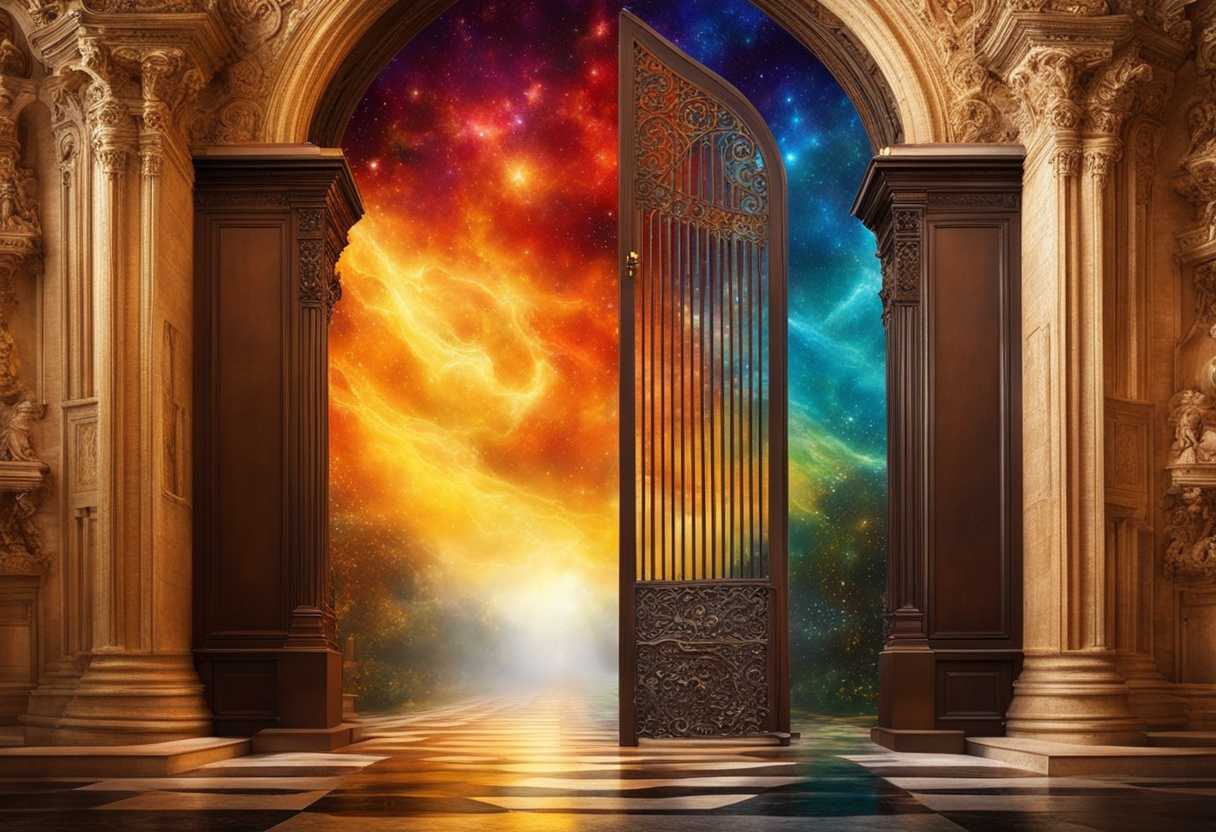
Setting the Scene for Revelation 21:12-13
In the final vision of the Book of Revelation, the scene unfolds in a breathtaking celestial landscape, where the New Jerusalem descends from heaven, adorned like a bride for her husband. The city is radiant, shimmering with the glory of God, and its walls are made of precious stones, reflecting a kaleidoscope of colors. As the camera pans across this magnificent city, we see the twelve gates, each one crafted from a single pearl, standing as a testament to the beauty and majesty of the divine. The gates are named after the twelve tribes of Israel, symbolizing the continuity of God’s covenant with His people throughout history. The air is filled with a sense of awe and reverence, as the faithful gather to witness this momentous occasion, their hearts brimming with hope and joy.
Among the crowd, we find familiar figures from biblical history, such as Abraham, Moses, and David, who have long awaited this fulfillment of God’s promise. They stand together, their faces illuminated by the light of the city, sharing stories of their journeys of faith and the trials they endured. The presence of the apostles, too, is palpable, as they recount their experiences with Christ and the establishment of the early church. Each individual, from the patriarchs to the saints of the New Testament, has come to this moment through a tapestry of faith, sacrifice, and divine grace, united in their anticipation of eternal life in the presence of God.
Surrounding the New Jerusalem is a vast expanse of tranquility, where the sounds of worship and praise echo through the air. The streets are paved with gold, and the river of life flows crystal clear, symbolizing the abundance and purity of God’s provision. The atmosphere is charged with a sense of completion, as the old order of things has passed away, and the new creation stands as a beacon of hope for all who have believed. In this sacred space, the faithful are reminded of their identity as children of God, heirs to the promise of eternal life, and participants in the divine narrative that has unfolded throughout the ages. The scene is a culmination of God’s redemptive plan, where heaven and earth meet, and the faithful rejoice in the fulfillment of His promises.
What is Revelation 21:12-13 about?
Revelation 21:12-13 presents us with a striking image of the New Jerusalem, a pivotal symbol in Christian eschatology. The depiction of twelve gates, each representing one of the tribes of Israel, serves as a powerful reminder of God’s covenant with His people. We might ask ourselves as we explore this imagery: What does it mean to have a city so intricately connected to its historical roots? The twelve gates not only honor the twelve tribes but also signify inclusivity and the fulfillment of God’s promises to His chosen people.
Imagine standing at the threshold of this New Jerusalem, with each gate welcoming you with the name of a tribe—Reuben, Judah, Levi, and others. Each gate is a reminder of the diverse heritage and journey of God’s people. It raises questions about our own identity and the places we belong. Do we recognize ourselves in this tapestry of faith? The presence of these gates illustrates that the new creation is not a rejection of the old, but a continuation and completion of God’s redemptive plan through history. Isn’t it encouraging to think that our understanding of community and belonging is intertwined with these ancient lineages?
Furthermore, the symbolism of the gates points to the accessibility of God’s salvation. No matter our background or past, there is an invitation for everyone to enter. Each tribe carries a unique story and heritage, speaking to God’s diverse people. So, as we ponder on this verse, we might reflect on our own lives. Are we open to embracing the diversity that God has woven into the fabric of our spiritual community? How can we extend the invitation of belonging to others, mirroring the welcome that the New Jerusalem offers? The image of these gates challenges us to find joy and connection in our shared faith journey, while honoring the paths that have led us here.
Understanding what Revelation 21:12-13 really means
Revelation 21:12-13 presents a vivid picture of the New Jerusalem, a city that embodies the culmination of God’s promises to His people. This passage is not merely a description of a physical structure; it is a profound declaration of hope and restoration. As we delve into these verses, we uncover layers of meaning that speak to both the ancient context and our contemporary lives.
The phrase “great and high wall” immediately captures our attention. In biblical times, walls were essential for the protection of a city, symbolizing security and safety. Here, the wall represents God’s unwavering protection over His people. It invites us to consider how we perceive safety in our own lives. Are we seeking refuge in the transient things of this world, or are we resting in the assurance of God’s eternal protection?
Next, we encounter the “twelve gates,” each one a powerful symbol of access and inclusivity. The number twelve resonates deeply within the biblical narrative, often representing God’s people, such as the twelve tribes of Israel. This imagery suggests that the gates of the New Jerusalem are open to all who belong to Him. In a time when many feel marginalized or excluded, this passage serves as a reminder that God’s kingdom is a place of welcome. How might we extend that same spirit of inclusivity in our communities today?
The mention of “twelve angels” at each gate adds another layer of significance. These angels symbolize divine guardianship, reminding us of the spiritual beings that play a role in God’s plan for humanity. Their presence at the gates emphasizes the importance of spiritual protection and guidance. It prompts us to reflect on the ways we might invite divine assistance into our lives. Are we aware of the spiritual support available to us as we navigate our daily challenges?
Cross-referencing other biblical passages enriches our understanding of this vision. Isaiah 60:11 speaks of gates that will always be open, symbolizing the eternal nature of God’s kingdom. Similarly, John 10:9 highlights Jesus as the door through which we gain access to God. These connections reinforce the idea that the New Jerusalem is not just a future hope but a present reality accessible through Christ. How does this understanding shape our relationship with Jesus and our approach to sharing the gospel?
In today’s world, filled with uncertainty and division, the imagery of the New Jerusalem offers profound hope. It reminds us that God has a plan for restoration and unity that transcends our current struggles. Many people today grapple with feelings of isolation, yet this passage reassures us that God’s kingdom is open to all who seek Him. How can we embody this message of hope and inclusion in our interactions with others?
To illustrate this, consider a community divided by conflict. A local church decides to host a gathering, inviting everyone, regardless of their differences. As people come together, barriers begin to break down, and relationships are formed. This mirrors the inclusivity of the New Jerusalem, where all are welcomed and valued. Just as the church creates a space for healing and unity, God’s kingdom invites us into a relationship with Him and with one another.
In conclusion, Revelation 21:12-13 serves as a powerful reminder of God’s faithfulness and the hope we have in Christ. It encourages us to embrace our identity as part of His family and to extend that welcome to others. As we reflect on this passage, let us commit to being agents of inclusion and grace, mirroring the love we have received from our Creator. How might we actively participate in building a community that reflects the beauty of the New Jerusalem?
What does it mean to belong to God’s chosen city?
Belonging to God’s chosen city signifies being part of a divine community characterized by holiness, divine protection, and the fulfillment of God’s promises. This city represents an eternal dwelling place where God’s presence is fully manifested, and its foundations symbolize both stability and the rich heritage of faith that has been established throughout the ages. The inclusion in this city often carries the assurance of belonging to a larger family of believers, transcending time and culture, and emphasizing unity under God’s sovereign rule.
The gates of this city, which are always open, reflect an invitation and accessibility to those who seek God. This openness suggests the inclusivity of God’s invitation to all humanity, while also underscoring the distinct nature of this city as set apart from the world, providing refuge and safety. The emphasis on the names inscribed on the gates further reiterates the personal connection and recognition between God and His people, highlighting their identity and place within His divine plan. To belong to this chosen city ultimately means experiencing the fulfillment of God’s love, grace, and justice in a tangible way. It embodies the hope for a reconciled relationship with the Creator, where peace reigns and the struggles of earthly existence are transformed into eternal joy. This belonging provides not only a sense of identity and purpose but also an assurance of the ultimate victory over sin and death, as believers look forward to the complete realization of God’s Kingdom.
Application
Imagine your life as a bustling city, with work and family as the foundations that shape your community. Just as the gates of God’s eternal kingdom symbolize belonging, your actions can create bonds that unite people from all walks of life. Are you stepping up to build those connections and share love in your everyday interactions? Let this idea inspire you to reach out, lend a hand, or simply connect with someone new today. How will you be a part of this community-building journey in your corner of the world?

Reverend Michael Johnson is an experienced Church Minister with a profound expertise in spirituality and guidance. With a serene presence and a compassionate heart, he has faithfully served his congregation for over 20 years, leading them on a spiritual journey towards inner peace and enlightenment. Reverend Johnson’s extensive knowledge of religious philosophies and profound understanding of human nature have made him a trusted confidant and mentor to many, as he seamlessly weaves his profound wisdom into life teachings. Reverend Johnson’s calming demeanor and empathetic nature continue to uplift and heal souls, nurturing a sense of unity and tranquility within his community.