
John 19:5 is about Pontius Pilate presenting Jesus to the crowd, symbolizing the contrast between the innocence of Jesus and the guilt of those who condemned him.
5 So Jesus came out, wearing the crown of thorns and the purple robe. Pilate said to them, “Behold the man!”
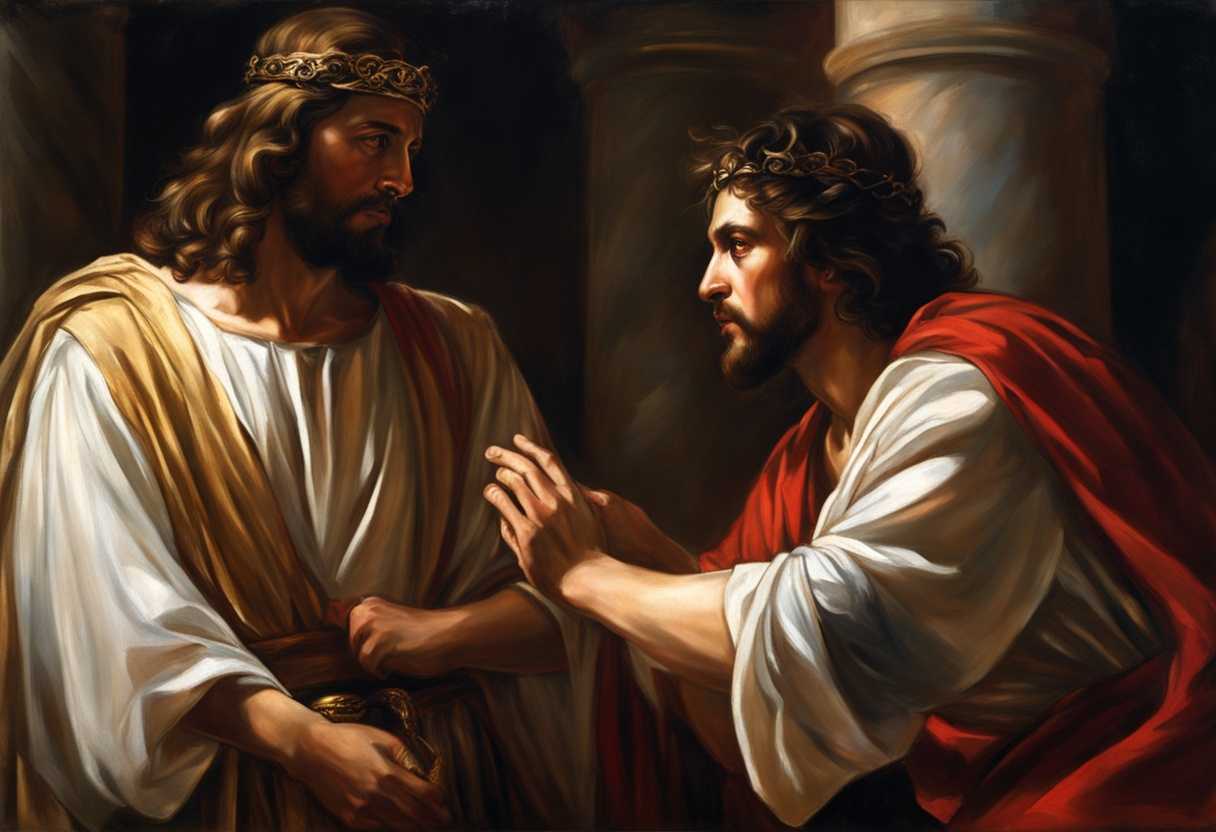
Setting the Scene for John 19:5
In John chapter 19, we find Jesus standing before Pontius Pilate, the Roman governor of Judea. The scene takes place in Jerusalem during the time of Passover, a significant Jewish festival. Pilate, a powerful and conflicted figure, is questioning Jesus, who has been brought before him by the religious leaders who seek his crucifixion.
Surrounded by a crowd of onlookers, including Roman soldiers, Jewish religious leaders, and curious bystanders, the tension in the air is palpable. Pilate, seated on his judgment seat, is trying to determine whether Jesus is guilty of the charges brought against him. Meanwhile, Jesus, calm and composed, responds to Pilate’s questions with wisdom and authority, leaving Pilate perplexed and unsure of what action to take.
As the dialogue between Pilate and Jesus unfolds, the weight of the impending decision hangs heavy in the air. The clash of political power, religious authority, and divine purpose converges in this moment, setting the stage for the pivotal events that will soon follow in the crucifixion and resurrection of Jesus.
What is John 19:5 about?
Jesus stands before a crowd in this verse, wearing a crown of thorns and a purple robe. This scene represents the culmination of Jesus’ suffering and humiliation before his crucifixion. The crown of thorns symbolizes the pain and mockery that Jesus endured, while the purple robe symbolizes the false royalty that was placed upon him in a cruel and demeaning manner.
This moment is significant as it underscores the deep sacrifice Jesus made for humanity, willingly enduring shame and suffering for the sake of forgiveness and salvation. It prompts us to reflect on the immense love and grace that Jesus showed through his sacrifice, challenging us to consider the depth of our own faith and commitment to following in his footsteps. We contemplate this image, remembering the sacrifice Jesus made out of love for us and feeling inspired to live out that same sacrificial love in our own lives.
Understanding what John 19:5 really means
In the poignant narrative of Jesus’ Passion, John 19:5 stands out as a moment of profound significance. As Jesus emerges before the crowd, clad in the crown of thorns and the purple robe, the scene symbolizes both mockery and majesty. The crown of thorns, a cruel emblem of derision, speaks to the depths of His suffering and the rejection of His kingship. Conversely, the purple robe, a color associated with royalty, paradoxically underscores His true kingship even in the midst of humiliation. This juxtaposition of symbols serves to highlight the dual nature of Jesus’ identity as both the suffering servant and the exalted King.
Pilate’s declaration, “Here is the man!” carries weighty implications beyond its surface meaning. In unwittingly acknowledging Jesus’ humanity, Pilate inadvertently points to His divinity as well. This statement echoes the prophetic imagery of the suffering servant in Isaiah 53, who was despised and rejected by men. Through Pilate’s words, we glimpse a glimpse of the profound mystery of the Incarnation, where the Son of God took on human form to redeem humanity.
Drawing parallels with related biblical passages enriches our understanding of the depth of Jesus’ sacrifice. Isaiah 53:3-5 vividly portrays the suffering servant who bore our griefs and sorrows, foreshadowing Jesus’ own path of suffering. Philippians 2:7-8 speaks of Jesus humbling Himself, taking on the form of a servant, and obediently embracing death on the cross. Hebrews 4:15 reassures us that Jesus, our compassionate high priest, can empathize with our weaknesses, having experienced the full range of human temptations yet remaining sinless.
The relevance of Jesus’ suffering and humility extends beyond the pages of Scripture to touch the lives of people today. His example of empathy and solidarity with the marginalized and oppressed resonates with those who experience pain, rejection, or injustice. In a world marked by power struggles and self-aggrandizement, Jesus’ model of true leadership shines brightly, emphasizing that greatness is found in humility and service rather than in dominance and control.
Consider a modern-day leader who mirrors Jesus’ sacrificial love and servant-hearted leadership. Picture a CEO who, despite holding immense power, chooses to stand alongside their employees during times of crisis, sharing in their struggles and working tirelessly for their well-being. Such a leader’s actions would inspire and uplift many, embodying the transformative principles exemplified by Jesus in John 19:5.
In conclusion, let us reflect on the humility and sacrifice of Jesus as portrayed in this verse. May His example inspire us to embrace empathy, humility, and a servant’s heart in our interactions with others, mirroring His love and compassion in our daily lives.
How do we respond to Jesus’ authority today?
Today, we respond to Jesus’ authority by recognizing that He is the ultimate source of power and truth. Jesus’ authority demands our humble submission and obedience. We are called to trust in His wisdom and sovereignty, acknowledging that He knows what is best for us. We, as followers of Christ, are to align our lives with His teachings, seeking to honor Him in all we do. Surrendering to Jesus’ authority helps us find peace, purpose, and eternal life in Him.
Furthermore, responding to Jesus’ authority means living a life that reflects His love and grace to others. We are called to serve one another in humility and compassion, following Jesus’ example of selfless sacrifice. We can find true guidance and direction in Christ alone in a world filled with conflicting messages and competing sources of authority. We can experience the transformative power of His love and grace in our lives by putting our faith in Him and aligning our lives with His will.
Application
Imagine you’re navigating a tough day at work or handling a family crisis. Reflect on how Jesus showed humility and surrendered during His trials. When life throws you a curveball, will you respond with grace and trust in a bigger plan ahead? Can you embrace humility and keep faith like He did?

Reverend Michael Johnson is an experienced Church Minister with a profound expertise in spirituality and guidance. With a serene presence and a compassionate heart, he has faithfully served his congregation for over 20 years, leading them on a spiritual journey towards inner peace and enlightenment. Reverend Johnson’s extensive knowledge of religious philosophies and profound understanding of human nature have made him a trusted confidant and mentor to many, as he seamlessly weaves his profound wisdom into life teachings. Reverend Johnson’s calming demeanor and empathetic nature continue to uplift and heal souls, nurturing a sense of unity and tranquility within his community.