
Acts 7:8 is about God’s promise to Abraham, showing that He would give Abraham’s descendants the land as their possession, despite the fact that Abraham did not yet have any children.
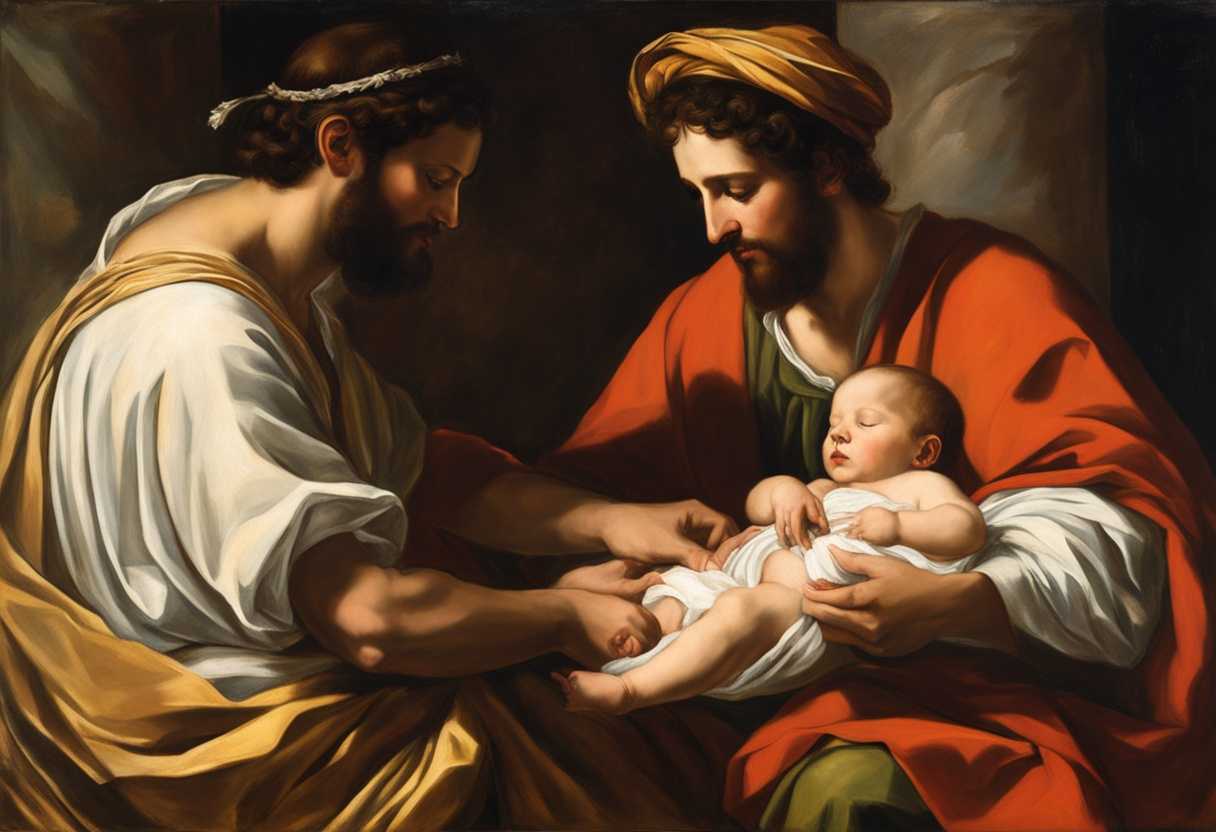
8 And he gave him the covenant of circumcision. And so Abraham became the father of Isaac, and circumcised him on the eighth day, and Isaac became the father of Jacob, and Jacob of the twelve patriarchs.
Setting the Scene for Acts 7:8
In Acts chapter 7, we find Stephen, one of the early Christian disciples, recounting the history of the Israelites to the Jewish religious leaders. As he speaks, he mentions the patriarch Joseph and his brothers. The scene shifts back to the time when Joseph’s brothers were filled with jealousy and sold him into slavery.
The setting is in Canaan, in the midst of a vast and fertile land. The brothers, including Reuben, Simeon, Levi, Judah, Issachar, Zebulun, Benjamin, Dan, Naphtali, Gad, Asher, and the youngest, Benjamin, are gathered together. They are surrounded by fields of grain and livestock, a testament to their father Jacob’s prosperity. The tension is palpable as Joseph, the favored son, approaches them in his coat of many colors. The jealousy and resentment among the brothers are evident as they plot to get rid of him.
As the brothers conspire against Joseph, the scene is fraught with emotion and betrayal. Their actions set in motion a series of events that will ultimately lead to Joseph’s rise to power in Egypt. This pivotal moment in biblical history serves as a reminder of the consequences of envy and the sovereignty of God’s plan.
What is Acts 7:8 about?
God established a covenant with Abraham through the practice of circumcision in this verse. This act symbolized a deep spiritual connection between God and Abraham, signifying their commitment to each other. God was showing his faithfulness and promise to bless Abraham with numerous descendants and a prosperous future by requiring circumcision as a sign of the covenant.
The covenant of circumcision not only had a physical significance but also a profound spiritual meaning. It was a way for Abraham to demonstrate his obedience and trust in God. Through this act, Abraham showed that he was willing to follow God’s commands and believed in the promises God had made to him. This verse serves as a reminder of the importance of faith, obedience, and trust in our relationship with God. We can ask ourselves: What symbols of faith and commitment do we have in our own lives as we reflect on this verse? How do we demonstrate our obedience and trust in God’s promises? Just like Abraham, may we be willing to follow God wholeheartedly, knowing that His covenant with us is built on love, faithfulness, and endless blessings.
Understanding what Acts 7:8 really means
Acts 7:8 takes us back to a pivotal moment in the history of Israel, as Stephen recounts the covenant of circumcision given to Abraham. This covenant was not merely a physical act but a symbol of a deeper commitment and identity as God’s chosen people. Through the lineage of Isaac, Jacob, and the twelve patriarchs, we see the continuity of God’s promises and faithfulness through generations. It is a reminder that God’s plan unfolds through a lineage of faith, connecting past, present, and future.
The covenant of circumcision was a tangible sign of God’s covenant with Abraham, marking a significant moment in the history of Israel. It symbolized not just a physical act but a spiritual commitment to God. This covenant was a foundational aspect of Israel’s identity, reminding them of their special relationship with the Almighty. It served as a visible reminder of God’s promises and their role as His chosen people.
In our modern context, the idea of a covenant relationship with God remains relevant. While we no longer practice physical circumcision as a sign of this covenant, we understand it through the New Covenant in Christ. Just as the covenant of circumcision signified a deeper commitment, our faith in Christ calls us to a profound relationship with God. Our spiritual identity and commitment are still crucial aspects of our faith journey, guiding us in living out our beliefs in practical ways.
Consider the significance of family traditions passed down through generations, like a treasured recipe or heirloom. These traditions connect us to our past, shaping our identity and reminding us of who we are. Similarly, the covenant of circumcision served as a reminder of God’s promises and the identity of His people. Today, our faith practices and commitments serve as reminders of our spiritual heritage and identity in Christ, connecting us to a larger story of faithfulness and promise.
As we reflect on Acts 7:8 and its implications for our lives, we are called to examine how we live out our faith daily. Our actions, attitudes, and choices should reflect our covenant relationship with God. Just as the covenant of circumcision was a visible sign of commitment, our lives should bear witness to our faith in Christ. Let us embrace the continuity of God’s promises, recognizing that we are part of a larger narrative that began with Abraham and continues through Christ.
How can we trust God’s timing and promises?
We can trust in God’s timing and promises by looking at the examples of faith in the Bible, like that of Abraham in Acts 7:8. Abraham remained faithful to God’s promises despite facing challenges and delays in the story. Abraham had to trust in God’s timing as he waited for the fulfillment of the promise of a son, and eventually, Isaac was born. This passage teaches us that God is faithful to His word and His timing is perfect, even if we may not understand it at the moment. We can also have faith that God will fulfill His promises in our lives, just as Abraham trusted in God’s promises and timing. We must remember that God’s plans are greater than our own, and He knows what is best for us. We can find peace and assurance in God’s timing by holding onto our faith and believing in His goodness. Even when circumstances may seem uncertain or difficult, we can rest in the knowledge that God is working all things together for our good. God’s promises are worth waiting for, and His timing is always perfect as we reflect on the story of Abraham in Acts 7:8. We can trust in His faithfulness and rely on His word, knowing that He will never fail us. We can experience the fulfillment of His promises in our lives and witness His faithfulness in action by holding onto our faith and staying patient in God’s timing.
Application
Just like how Abraham followed God’s direction without knowing the destination, let’s also trust in the path laid out for us. Are we ready to walk in faith even when faced with uncertainties and challenges? Let’s draw strength from Abraham’s unwavering faith and take bold steps in our own spiritual journey. Let’s not fear the unknown but embrace it with trust and courage. Will you dare to believe in the promises of God and take that first step today?

Reverend Michael Johnson is an experienced Church Minister with a profound expertise in spirituality and guidance. With a serene presence and a compassionate heart, he has faithfully served his congregation for over 20 years, leading them on a spiritual journey towards inner peace and enlightenment. Reverend Johnson’s extensive knowledge of religious philosophies and profound understanding of human nature have made him a trusted confidant and mentor to many, as he seamlessly weaves his profound wisdom into life teachings. Reverend Johnson’s calming demeanor and empathetic nature continue to uplift and heal souls, nurturing a sense of unity and tranquility within his community.