
Mark 14:22-26 is about the Last Supper where Jesus institutes the Holy Communion, emphasizing the sacrificial nature of his impending death and the importance of remembering his sacrifice through the sharing of bread and wine.
22 And as they were eating, he took bread, and after blessing it broke it and gave it to them, and said, “Take; this is my body.”
23 And he took a cup, and when he had given thanks he gave it to them, and they all drank of it.
24 And he said to them, “This is my blood of the covenant, which is poured out for many.
25 Truly, I say to you, I will not drink again of the fruit of the vine until that day when I drink it new in the kingdom of God.”
26 And when they had sung a hymn, they went out to the Mount of Olives.
Setting the Scene for Mark 14:22-26
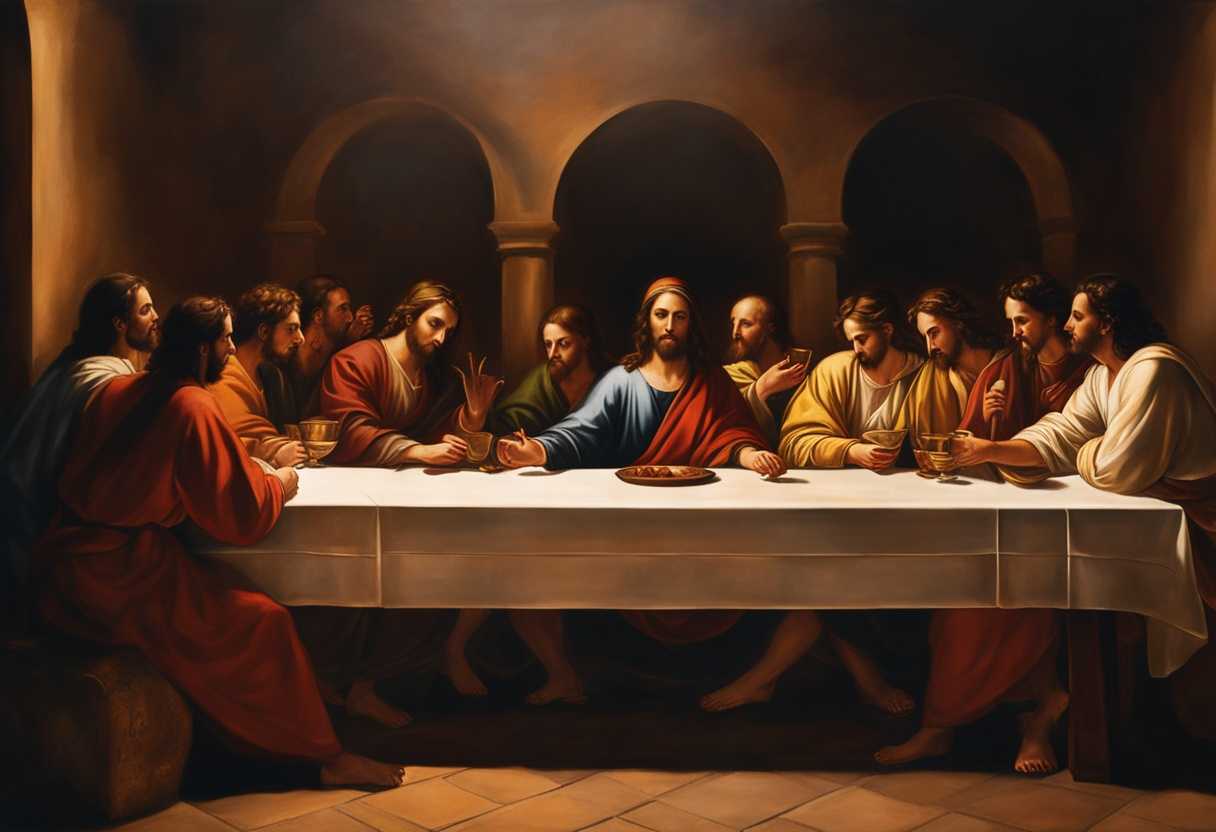
In Mark chapter 14, we find Jesus and his twelve disciples gathered together in an upper room in Jerusalem to celebrate the Passover meal. The room is dimly lit by oil lamps, casting a warm glow over the group as they recline around a low table laden with unleavened bread, bitter herbs, and wine. The air is filled with the scent of roasting lamb and the sound of quiet conversation as the disciples lean in close to listen to their beloved teacher.
Jesus, dressed in a simple tunic, takes a loaf of bread and blesses it before breaking it into pieces and passing it around to his disciples. He explains to them that the bread represents his body, which will be broken for them. Next, he pours wine into a cup and blesses it, telling them that it is his blood, which will be shed for the forgiveness of sins. The disciples listen intently, their faces reflecting a mix of confusion and awe at the weight of Jesus’ words.
As they partake of the bread and wine, a sense of solemnity settles over the room, mingled with a deep sense of camaraderie and love among this small band of followers. Jesus speaks of the new covenant he is establishing with them, one that will bring salvation to all who believe. The disciples, still grappling with the enormity of his words, share this sacred meal with reverence and gratitude, knowing that their lives are about to be forever changed by the events that will unfold in the coming days.
What is Mark 14:22-26 about?
Jesus is instituting the Lord’s Supper in this verse, also known as communion or the Eucharist. Jesus symbolically represents his body and blood by sharing bread and wine with his disciples, which will be sacrificed for the salvation of mankind. This act serves as a powerful reminder of the ultimate sacrifice that Jesus will make on the cross to redeem humanity from sin. The profound significance of the Lord’s Supper in the Christian faith reminds us as we reflect on this verse. It is a sacred act of remembrance and worship, where believers come together to partake in communion with Christ and each other. The bread and wine represent not only the physical elements of Jesus’ sacrifice but also the spiritual nourishment and unity that believers receive through their faith in him.
So, as we contemplate this verse, let us consider the depth of Jesus’ love for us, that he would offer himself as a sacrificial lamb for our sins. Approach the Lord’s Supper with reverence and gratitude, recognizing the profound meaning and significance of this act of remembrance in our journey of faith.
Understanding what Mark 14:22-26 really means
In the poignant setting of the Last Supper, a moment pregnant with significance, Jesus shared a meal with His disciples before His impending crucifixion. This passage from Mark 14:22-26 holds a pivotal place in Christian tradition, laying the foundation for the practice of Communion or the Eucharist, a sacred ritual observed by believers worldwide.
As the disciples gathered around the table, Jesus took bread, gave thanks, broke it, and shared it with them, declaring, “Take it; this is my body.” Here, the bread symbolizes Jesus’ body, soon to be broken for the sins of humanity. This act of breaking bread serves as a poignant reminder of Christ’s sacrificial love, urging us to remember His ultimate act of redemption. Just as a family meal fosters unity and shared memories, Communion strengthens our bond with Christ and underscores His sacrificial love for us.
Continuing the symbolic gestures, Jesus took a cup, gave thanks, and shared it with His disciples, saying, “This is my blood of the covenant, which is poured out for many.” The wine represents Jesus’ blood, sealing a new covenant between God and humanity. This new covenant, prophesied in the Old Testament and fulfilled in Christ, offers forgiveness and a direct relationship with God to all who believe. Like signing a life-altering contract, this divine covenant transforms our spiritual lives, offering eternal life and reconciliation with God.
Looking ahead with anticipation, Jesus proclaims, “I will not drink again from the fruit of the vine until that day when I drink it new in the kingdom of God.” This statement points to a future celebration in God’s kingdom, embodying hope and the promise of ultimate fulfillment. This promise of a future reunion echoes throughout Scripture, offering believers a glimpse of the joy and unity awaiting them in the presence of Christ in His kingdom.
After sharing the bread and wine, Jesus and His disciples sang a hymn before heading to the Mount of Olives. This act of worship and unity amidst impending trials underscores the power of praise in difficult times. Just as the disciples found solace in worship before facing the challenges ahead, believers today can draw strength and unity through worship, especially in times of uncertainty and trial.
In conclusion, the passage from Mark 14:22-26 serves as a profound reminder of Jesus’ sacrificial love, the establishment of a new covenant, and the hope of a future celebration in God’s kingdom. It calls us to remember Christ’s sacrifice, find spiritual nourishment in Him, embrace the new covenant, and anticipate the ultimate reunion with Him. In our daily lives, this passage encourages us to live in gratitude, unity, and hope, drawing strength from our faith and the community of believers around us.
What does it mean to truly remember Jesus’ sacrifice?
To truly remember Jesus’ sacrifice is to reflect on the symbolism and significance behind the act of communion. Believers are reminded of Jesus’s body broken and his blood shed for the forgiveness of sins when they partake of the bread and the wine. This act serves as a powerful reminder of the ultimate sacrifice made out of love for humanity. It calls for a deep sense of gratitude and humility, as well as a commitment to living a life that honors and reflects the selfless love demonstrated on the cross.
When we remember Jesus’ sacrifice, we are called to not only recall the historical event but also to internalize its profound message. It prompts us to examine our own lives and consider how we can emulate Christ’s sacrificial love in our relationships with others. Remembering Jesus’ sacrifice entails a spiritual connection that goes beyond mere recollection – it involves a transformative experience that shapes our beliefs, values, and actions. It serves as a reminder of the depth of God’s love for us and inspires us to strive for greater love, compassion, and selflessness in our own lives.
Application
Imagine juggling the demands of work and family, feeling the weight of responsibilities on your shoulders. In the midst of this, you find a moment to reconnect with what truly matters. Jesus’ sacrifice is the grounding force in your hectic life, symbolized through the bread and wine in communion. These simple elements are a powerful metaphor for His love and commitment to you. Will you take a moment from your busy day to honor Him, approaching the communion table with gratitude and devotion?

Reverend Michael Johnson is an experienced Church Minister with a profound expertise in spirituality and guidance. With a serene presence and a compassionate heart, he has faithfully served his congregation for over 20 years, leading them on a spiritual journey towards inner peace and enlightenment. Reverend Johnson’s extensive knowledge of religious philosophies and profound understanding of human nature have made him a trusted confidant and mentor to many, as he seamlessly weaves his profound wisdom into life teachings. Reverend Johnson’s calming demeanor and empathetic nature continue to uplift and heal souls, nurturing a sense of unity and tranquility within his community.