
Jeremiah 41:8-10 is about the tragic aftermath of the assassination of Gedaliah and the resulting violence and chaos that ensued among the people left behind in Judah, highlighting the destructive consequences of betrayal and rebellion against God’s appointed leaders.
8 But there were ten men among them who said to Ishmael, “Do not put us to death, for we have stores of wheat, barley, oil, and honey hidden in the fields.” So he refrained and did not put them to death with their companions.
9 Now the cistern into which Ishmael had thrown all the bodies of the men whom he had struck down along with Gedaliah was the large cistern that King Asa had made for defense against Baasha king of Israel; Ishmael the son of Nethaniah filled it with the slain.
10 Then Ishmael took captive all the rest of the people who were in Mizpah, the king’s daughters and all the people who were left at Mizpah, whom Nebuzaradan, the captain of the guard, had committed to Gedaliah the son of Ahikam. Ishmael the son of Nethaniah took them captive and set out to cross over to the Ammonites.
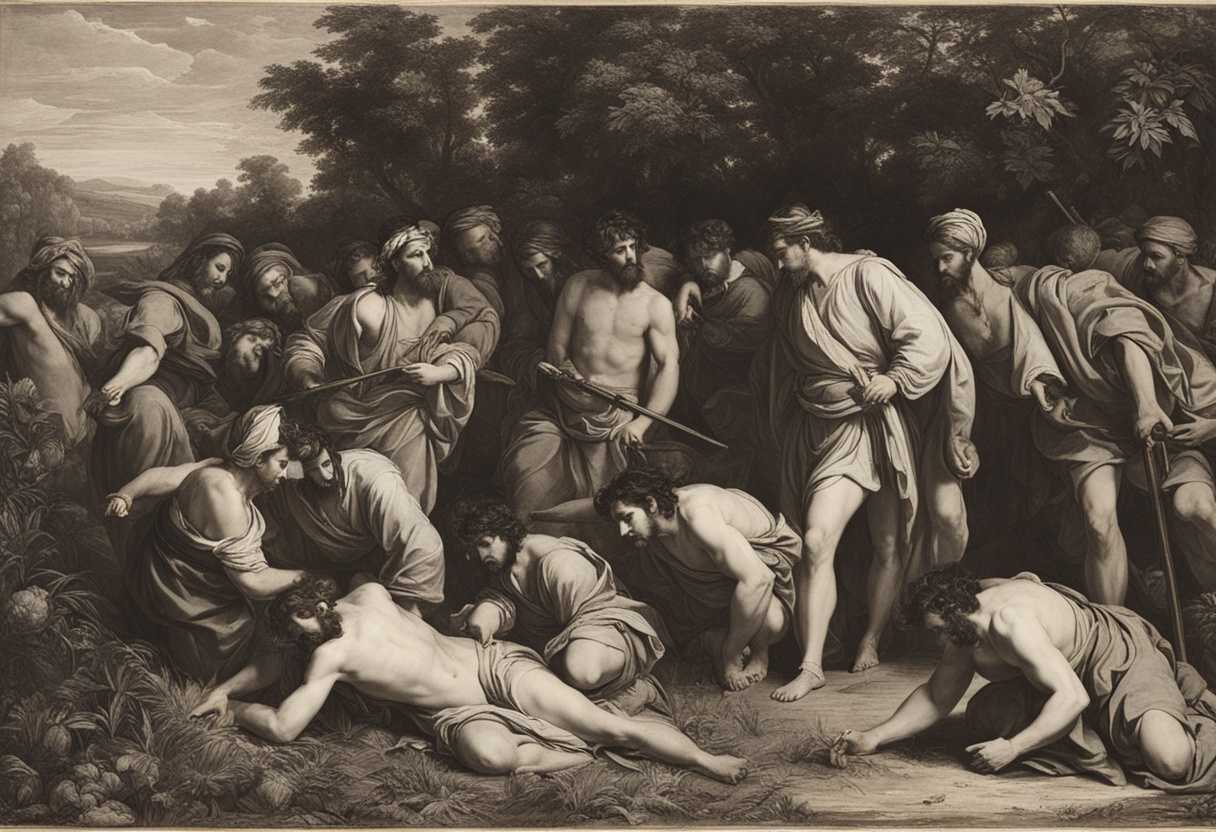
Setting the Scene for Jeremiah 41:8-10
In Jeremiah chapter 41, we find ourselves in the aftermath of a tragic event. Ishmael, a member of the royal family, has just carried out a brutal attack at Mizpah, resulting in the deaths of Gedaliah, the governor appointed by the Babylonians, and many others. The scene is chaotic and filled with grief as the remaining people try to make sense of the senseless violence that has unfolded before them.
Among the survivors are Johanan and his companions, who managed to escape the massacre. They are now faced with a difficult decision – whether to flee to Egypt for safety or stay in the land of Judah, which is now in turmoil. The tension is palpable as they weigh their options, knowing that their choice will have far-reaching consequences for their future.
The surroundings are bleak, with the once peaceful town of Mizpah now stained with blood and littered with the aftermath of the attack. Smoke rises from the ruins, and the cries of the wounded and grieving can be heard in the distance. Johanan and his companions huddle together, seeking comfort and guidance in this time of uncertainty and fear.
What is Jeremiah 41:8-10 about?
A tragic account of betrayal, violence, and deception is witnessed in Jeremiah 41:8-10. Ishmael, in a ruthless act of treachery, murders Gedaliah, the appointed governor of Judah, and many others gathered with him. This passage reminds us of the harsh realities of human nature, the consequences of greed, and the devastating impact of sin in our world. Reflecting on this verse prompts us to ponder the depths of human depravity and the horrifying effects of allowing evil to reign unchecked. It serves as a stark reminder of the importance of integrity, loyalty, and righteousness in our actions. We are challenged to examine our own hearts and consider how we can contribute to a world marked by love, justice, and compassion, rather than one tainted by violence and deceit. Let us take heed of the lessons found in Jeremiah 41:8-10 and strive to be beacons of light in a darkened world, standing against injustice and upholding the values of honesty, kindness, and mercy. May this passage serve as a call to action for us to actively promote peace, unity, and righteousness in our communities and beyond.
Understanding what Jeremiah 41:8-10 really means
In the Book of Jeremiah, amidst the turmoil following the Babylonian conquest of Judah, we encounter a poignant narrative in Jeremiah 41:8-10. These verses shed light on the aftermath of Gedaliah’s assassination and the subsequent actions of Ishmael, the leader of the assassins. The plea for mercy from the people, offering hidden resources of wheat, barley, oil, and honey, showcases their desperation and resourcefulness in negotiating for their lives. Ishmael’s decision to spare them, refraining from putting them to death, hints at a moment of mercy or perhaps a pragmatic choice driven by the resources offered.
The capture of the remaining people in Mizpah by Ishmael further underscores the chaos and instability prevailing in the region. This narrative resonates with other biblical passages, such as Genesis 42:1-2, where Joseph’s brothers seek grain in Egypt during a famine, emphasizing the critical importance of essential resources for survival. Proverbs 21:21 contrasts Ishmael’s actions, highlighting the rewards of pursuing righteousness and love. Similarly, Matthew 5:7 extols the value of mercy, a virtue briefly displayed by Ishmael but ultimately lacking in his broader actions.
The themes of desperation, resourcefulness, mercy, and leadership responsibility depicted in these verses remain relevant today. In times of crisis, individuals often resort to desperate measures to survive, facing economic hardships, natural disasters, or conflicts. The momentary mercy shown by Ishmael serves as a poignant reminder of the significance of compassion, even amidst dire circumstances. The chaos ensuing Gedaliah’s assassination serves as a cautionary tale about the consequences of poor leadership and the vital role of responsible governance.
Consider a scenario where a community grapples with a natural disaster, resources scarce, and desperation rampant. In such a situation, a local leader’s decision to hoard supplies for personal gain exacerbates the suffering. However, a group of individuals, despite their own struggles, pleads for mercy, offering what little they have to survive. The leader’s choice to show compassion or not significantly impacts the community’s recovery and morale, illustrating the profound implications of leadership decisions in times of crisis.
In conclusion, Jeremiah 41:8-10 prompts us to contemplate the dual nature of humanity, capable of both cruelty and mercy. These verses challenge us to reflect on our actions and the importance of compassion, particularly in moments of adversity. By drawing insights from other biblical teachings, we can glean guidance on acting righteously and leading with integrity, navigating the complexities of human nature and societal challenges with wisdom and compassion.
Are we seeking guidance from God in tough times?
We should seek guidance and support from God in times of trouble and hardship. We should turn to Him for strength, wisdom, and direction as we navigate through challenges and difficult situations. We can find comfort and assurance by placing our trust in God and seeking His guidance, knowing that He is with us every step of the way.
God’s guidance can provide clarity and understanding in times of adversity, helping us to make righteous decisions and stay on the right path. Through prayer, reflection on His Word, and seeking counsel from others who are also rooted in faith, we can invite God’s presence into our lives and allow His guidance to lead us forward. Trusting in God’s plans and seeking His guidance in tough times can ultimately bring peace, hope, and a sense of assurance that we are not walking through difficulties alone.
Application
Dear friend, just like in the story of Ishmael, our desires can sometimes lead us down destructive paths. Let’s take a moment to reflect on our own impulses and ensure they are not steering us away from what is truly important. It’s time to realign our actions with our higher purpose, just as we strive to maintain balance between our responsibilities at work and our duties to our families. Will you choose to walk in the path of righteousness today, despite the temptations that may come your way?

Reverend Michael Johnson is an experienced Church Minister with a profound expertise in spirituality and guidance. With a serene presence and a compassionate heart, he has faithfully served his congregation for over 20 years, leading them on a spiritual journey towards inner peace and enlightenment. Reverend Johnson’s extensive knowledge of religious philosophies and profound understanding of human nature have made him a trusted confidant and mentor to many, as he seamlessly weaves his profound wisdom into life teachings. Reverend Johnson’s calming demeanor and empathetic nature continue to uplift and heal souls, nurturing a sense of unity and tranquility within his community.