
Jeremiah 19:7-9 is about the consequences of Judah’s disobedience and idolatry, leading to the destruction of Jerusalem and the breaking of the clay jar as a symbol of the Lord’s judgment and wrath upon the nation.
7 And in this place I will make void the plans of Judah and Jerusalem, and will cause their people to fall by the sword before their enemies, and by the hand of those who seek their life. I will give their dead bodies for food to the birds of the air and to the beasts of the earth.
8 And I will make this city a horror, a thing to be hissed at. Everyone who passes by it will be horrified and will hiss because of all its wounds.
9 And I will make them eat the flesh of their sons and their daughters, and everyone shall eat the flesh of his neighbor in the siege and in the distress, with which their enemies and those who seek their life afflict them.’
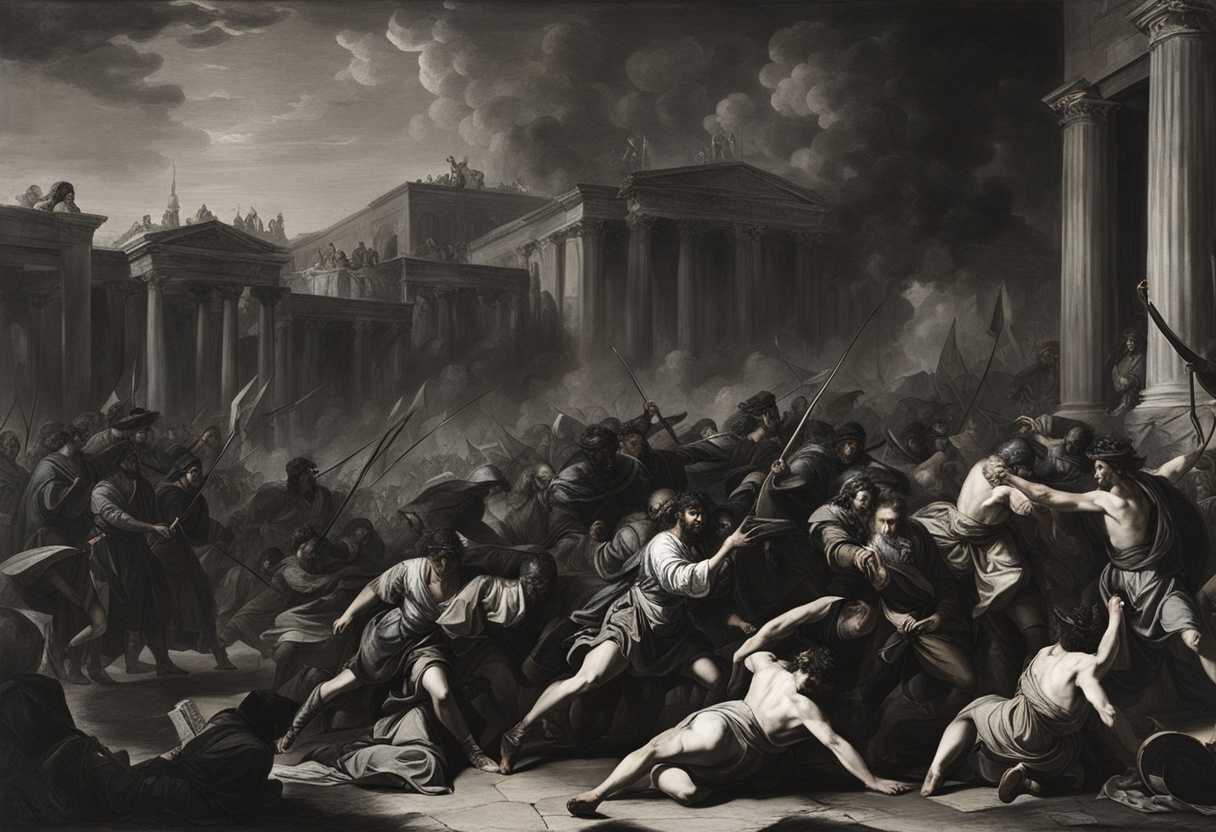
Setting the Scene for Jeremiah 19:7-9
In Jeremiah chapter 19, we find the prophet Jeremiah standing in the Valley of Ben Hinnom, also known as Gehenna, just outside the walls of Jerusalem. The valley was a place where pagan rituals, including child sacrifices to the god Moloch, took place. Jeremiah is accompanied by a group of elders from the city, as well as some of the priests and officials.
The scene is tense as Jeremiah holds a clay jar in his hands, symbolizing the impending destruction that will come upon Jerusalem because of its idolatry and disobedience to God. The prophet’s voice echoes through the valley as he delivers a powerful message of judgment and warning to the people of Judah. The elders and officials listen intently, some with fear and others with defiance, as Jeremiah paints a vivid picture of the devastation that awaits them if they do not turn back to God.
The air is heavy with the smell of incense from the pagan altars, and the distant sound of children playing serves as a stark contrast to the gravity of the situation. The sun beats down on the group gathered in the valley, adding to the somber mood of the scene. Jeremiah’s words hang in the air, a solemn reminder of the consequences of turning away from God and the importance of repentance.
What is Jeremiah 19:7-9 about?
Jeremiah is conveying a stern warning about the consequences of idolatry in this powerful verse. Just like a fragile clay jar that is shattered into irreparable pieces, so too will be the destruction that comes upon those who engage in idolatrous practices. The imagery of a broken jar symbolizes utter devastation and irreversibility. Reflect on the implications of worshipping false gods and placing anything above the one true God, I encourage you as a teacher. This verse serves as a reminder of the importance of staying true to our faith and not allowing anything to take precedence over our relationship with God in a broader sense. It prompts us to examine our own lives and ensure that we are not idolizing material possessions, status, or even our own desires above our devotion to God. Those who stray from God’s path and turn to idolatry will find themselves spiritually empty and devoid of His presence, just as a broken jar cannot hold anything anymore. Let this verse be a cautionary tale for us to always keep God at the center of our lives and avoid the pitfalls of worshipping false gods.
Understanding what Jeremiah 19:7-9 really means
Jeremiah 19:7-9 unveils a poignant message of impending judgment delivered by the prophet Jeremiah to the people of Judah and Jerusalem. The gravity of their disobedience and idolatry is vividly portrayed through the severe consequences outlined in these verses. The destruction of their plans, defeat by enemies, and extreme suffering serve as a stark warning of the repercussions of straying from God’s path.
In the broader biblical context, Deuteronomy 28:15-68 sets the stage by detailing the curses that will befall Israel for disobedience, providing a deeper understanding of the consequences foretold in Jeremiah. Lamentations 4:10 echoes the dire conditions during the siege of Jerusalem, resonating with the extreme suffering prophesied by Jeremiah. Similarly, Ezekiel 5:10 reinforces the theme of severe judgment and the harrowing outcomes of the people’s sins.
These verses resonate with contemporary audiences, underscoring the seriousness of turning away from God and the collective repercussions of disobedience. They emphasize the vital need for repentance and a return to God to avert such catastrophic outcomes. While the specific judgments may vary, the fundamental principles of divine justice and the call to faithfulness remain timeless and relevant.
To illustrate the significance of heeding warnings and effecting change, consider a community neglecting environmental conservation despite repeated alerts. Over time, their actions lead to irreversible environmental degradation and suffering, mirroring the warnings and consequences depicted in Jeremiah 19:7-9. This analogy underscores the critical importance of heeding warnings and taking corrective action before it is too late.
Delving into the meaningful phrases within these verses unveils profound insights. “I will make void the counsel of Judah and Jerusalem” signifies the futility of human wisdom without divine guidance. “I will cause them to fall by the sword before their enemies” emphasizes the tangible consequences of disobedience through defeat and destruction. “I will give their carcasses for meat to the fowls of the heaven” paints a grim picture of complete desolation and judgment. Lastly, “I will cause them to eat the flesh of their sons and the flesh of their daughters” portrays the extreme desperation and societal breakdown resulting from severe judgment.
By grasping the implications of these phrases, readers can comprehend the severity of the situation in Jeremiah 19:7-9 and the imperative of aligning with God’s will to avert such dire consequences. The timeless message of divine justice and the call to faithfulness resonates through the ages, urging individuals and communities to heed the warnings of disobedience and embrace the path of righteousness.
Are we truly seeking God with all our hearts?
The verse from Jeremiah speaks about seeking God with all our hearts and the consequences of not doing so. To answer your question directly, we can reflect on the importance of genuinely seeking God with all our hearts. This entails giving our whole selves over to God, not just going through the motions or offering superficial gestures of faith. When we seek God wholeheartedly, we are acknowledging His sovereignty in our lives and demonstrating our trust in His guidance.
Truly seeking God with all our hearts requires a deep and sincere commitment to our faith. It involves prioritizing our relationship with God above all else and actively seeking His presence, wisdom, and will in our lives. This kind of seeking requires humility, vulnerability, and a willingness to surrender our own desires and agendas to God’s perfect plan for us. When we seek God in this way, we open ourselves up to experiencing His transformative power and receiving His abundant blessings in return. The verse ultimately challenges us to reflect on the depth of our relationship with God and encourages us to examine whether we are truly seeking Him with all our hearts. It calls us to go beyond surface-level religiosity and instead cultivate a genuine, fervent pursuit of God. May we draw closer to God, experience His presence in our lives, and be transformed by His love and grace as we strive to seek Him wholeheartedly.
Application
Take a moment to reflect on your choices and ensure they resonate with your values in this busy digital world. Just like in managing projects at work or nurturing relationships with family, staying true to your beliefs is essential. Are you ready to realign your path with what truly matters in your life, following the guidance set in front of you?

Reverend Michael Johnson is an experienced Church Minister with a profound expertise in spirituality and guidance. With a serene presence and a compassionate heart, he has faithfully served his congregation for over 20 years, leading them on a spiritual journey towards inner peace and enlightenment. Reverend Johnson’s extensive knowledge of religious philosophies and profound understanding of human nature have made him a trusted confidant and mentor to many, as he seamlessly weaves his profound wisdom into life teachings. Reverend Johnson’s calming demeanor and empathetic nature continue to uplift and heal souls, nurturing a sense of unity and tranquility within his community.