
Luke 12:13-34 is about Jesus warning against the dangers of greed and emphasizing the importance of prioritizing spiritual wealth over material possessions.
13 Someone in the crowd said to him, “Teacher, tell my brother to divide the inheritance with me.”
14 But he said to him, “Man, who made me a judge or arbitrator over you?”
15 And he said to them, “Take care, and be on your guard against all covetousness, for one’s life does not consist in the abundance of his possessions.”
16 And he told them a parable, saying, “The land of a rich man produced plentifully,
17 And he thought to himself, ‘What shall I do, for I have nowhere to store my crops?’
18 And he said, ‘I will do this: I will tear down my barns and build larger ones, and there I will store all my grain and my goods.
19 And I will say to my soul, “Soul, you have ample goods laid up for many years; relax, eat, drink, be merry.”
20 But God said to him, ‘Fool! This night your soul is required of you, and the things you have prepared, whose will they be?’
21 So is the one who lays up treasure for himself and is not rich toward God.”
22 And he said to his disciples, “Therefore I tell you, do not be anxious about your life, what you will eat, nor about your body, what you will put on.
23 For life is more than food, and the body more than clothing.
Consider the ravens: they neither sow nor reap, they have neither storehouse nor barn, and yet God feeds them. How much more valuable are you than the birds!
25 And which of you by being anxious can add a single hour to his span of life?
26 If then you are not able to do as small a thing as that, why are you anxious about the rest?
27 Consider the lilies, how they grow: they neither toil nor spin, yet I tell you, even Solomon in all his glory was not arrayed like one of these.
28 But if God so clothes the grass, which is alive in the field today, and tomorrow is thrown into the oven, how much more will he clothe you, O you of little faith!
29 And do not seek what you are to eat and what you are to drink, nor be worried.
30 For all the nations of the world seek after these things, and your Father knows that you need them.
31 Instead, seek his kingdom, and these things will be added to you.
32 “Fear not, little flock, for it is your Father’s good pleasure to give you the kingdom.”
33 Sell your possessions, and give to the needy. Provide yourselves with moneybags that do not grow old, with a treasure in the heavens that does not fail, where no thief approaches and no moth destroys.
34 For where your treasure is, there will your heart be also.
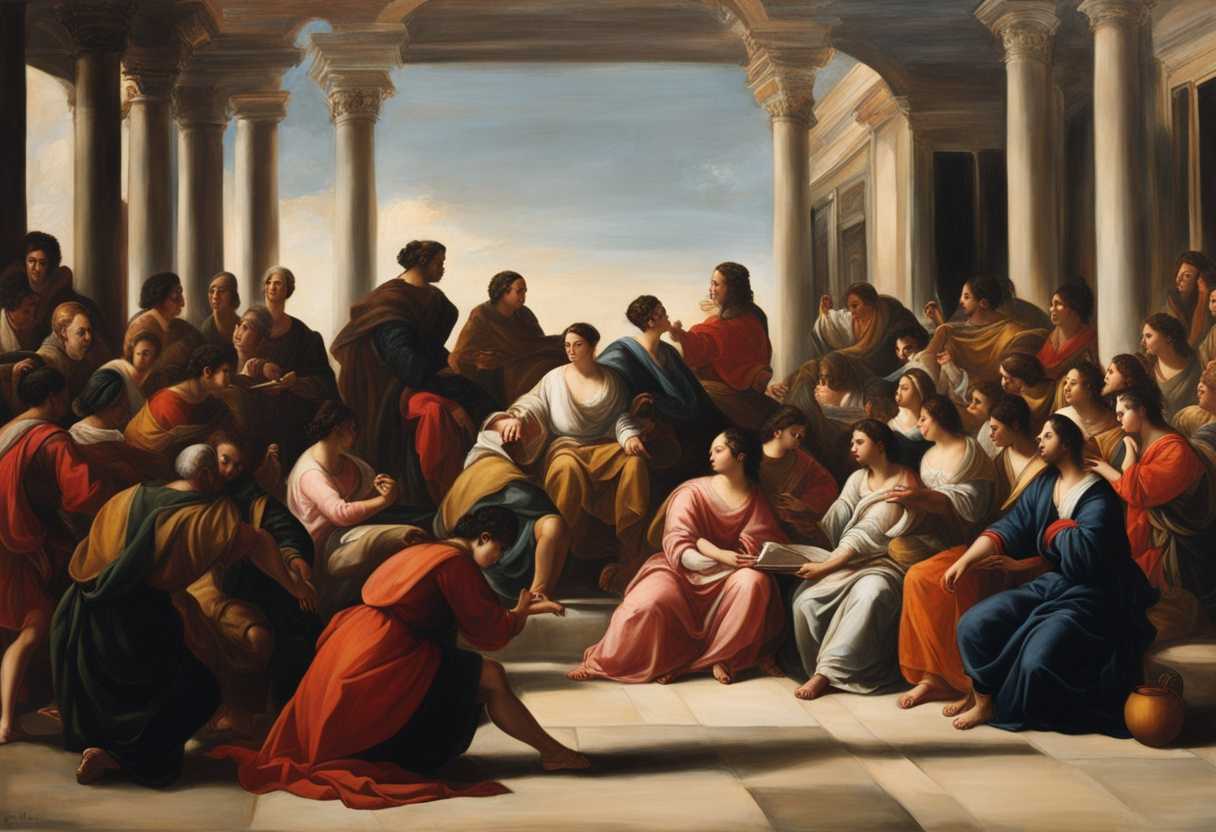
Setting the Scene for Luke 12:13-34
In Luke chapter 12, we find Jesus teaching a large crowd of people who had gathered to hear Him speak. The scene is set in a picturesque setting, with Jesus standing on a hillside overlooking the Sea of Galilee. The sun is beginning to set, casting a warm golden glow over the crowd as they sit on the grass, eagerly listening to His words.
Among the crowd is a man who speaks up, interrupting Jesus as He teaches. The man, later identified as someone in the crowd, asks Jesus to intervene in a family dispute over inheritance. Jesus uses this interruption as an opportunity to teach an important lesson about greed and the true treasures of life. He warns against covetousness and encourages the crowd to seek first the kingdom of God.
As Jesus continues to speak, His disciples, including Peter, John, and James, are seated nearby, absorbing His teachings and pondering the deeper meanings behind His words. The atmosphere is one of reverence and awe as Jesus imparts wisdom and guidance to those gathered, leaving a lasting impact on their hearts and minds.
What is Luke 12:13-34 about?
Jesus is cautioning us against the dangers of greed and materialism in this powerful verse. He is reminding us that our focus should not be on accumulating wealth or possessions, but on nurturing our faith and trust in God’s provision. Jesus is urging us to prioritize our spiritual well-being over worldly desires by warning us against greed. He is calling us to have a humble and content heart, trusting that God will provide for our needs. Let us reflect on this verse and ask ourselves: Are we seeking fulfillment in material possessions rather than in our relationship with God? Are we placing our trust in our own resources and abilities, rather than relying on God’s provision? Let us take this warning from Jesus to heart and strive for a more balanced and spiritually-centered approach to our lives. We can experience true contentment and fulfillment that transcends material wealth by trusting in God’s provision and seeking His kingdom above all else.
Understanding what Luke 12:13-34 really means
In Luke 12:13-34, we find Jesus addressing the crowd with profound teachings on greed, worry, and the significance of seeking God’s kingdom above all else. Jesus begins by cautioning, “Watch out! Be on your guard against all kinds of greed,” highlighting the perilous nature of greed and the deceptive allure of wealth. This warning echoes the sentiment in 1 Timothy 6:10, stating that the love of money is a root of various evils, emphasizing how greed can lead to moral and spiritual downfall, shifting our focus away from God.
Moreover, Jesus emphasizes that true life does not revolve around the accumulation of possessions, as material wealth does not bring lasting fulfillment. Drawing from Matthew 6:19-21, He urges His listeners to invest in heavenly treasures rather than earthly ones, underlining the eternal value of spiritual wealth and a deep relationship with God. Through a simple yet powerful illustration, Jesus points to the ravens, creatures that do not toil or store food, yet God provides for them. This serves as a reminder to trust in God’s provision and care, freeing us from the burden of worry.
By instructing His followers to seek God’s kingdom above all else, Jesus redirects their focus from material concerns to spiritual priorities. Matthew 6:33 reinforces this message, promising that when we prioritize God’s kingdom, our needs will be met. This call to seek God’s kingdom challenges us to reevaluate our values and priorities, placing our trust in God’s faithfulness rather than in worldly possessions.
In today’s context, where greed and materialism often dominate, Jesus’ teachings remain profoundly relevant. The pursuit of wealth can overshadow spiritual growth and relationships, leaving individuals spiritually impoverished. Stories abound of individuals who found true fulfillment not in riches but in serving others and deepening their faith, illustrating the enduring truth of Jesus’ words. Similarly, in a world plagued by anxiety and worry, Jesus’ assurance of God’s provision offers solace and hope. Countless individuals have experienced peace and provision by entrusting their needs to God during times of uncertainty, testifying to the power of faith over fear.
As we reflect on Jesus’ teachings in Luke 12:13-34, let us consider how we can apply these timeless truths to our lives. Prioritizing our spiritual well-being and nurturing our relationship with God should take precedence over the pursuit of material possessions. Engaging in prayer, serving our communities, and immersing ourselves in Scripture can help align our lives with God’s kingdom. May we heed Jesus’ call to seek first His kingdom, trusting in His provision and finding true fulfillment in Him. Let us pray for the grace to embrace these teachings and live them out in our daily lives, seeking God’s kingdom above all else.
What is the true source of our contentment?
The true source of our contentment lies in placing our trust in God rather than in material possessions. Jesus reminds us that life does not consist of an abundance of possessions, and that worrying about these things does not add anything to our lives. Instead, we are encouraged to seek the kingdom of God, as it is the Father’s good pleasure to give us the kingdom. We can find true contentment that surpasses material wealth and earthly concerns by focusing on a deeper, spiritual understanding of life and prioritizing our relationship with God.
Jesus uses the illustration of the birds and the flowers to emphasize how God provides for all of creation. If God takes care of these lesser creations, how much more will He care for us, His children? We are promised that all these things will be added unto us by seeking first God’s kingdom and His righteousness. Our contentment then comes from knowing that we are loved and provided for by our Heavenly Father, and that our ultimate treasure lies in our relationship with Him rather than in material possessions.
Application
Let’s pause and ponder the lesson from Luke 12:13-34—a gentle nudge to entrust our hearts to greater treasures beyond material wealth. It’s time to shift gears and set our sights on everlasting riches, putting God’s realm at the forefront. Reflect on your daily investments—time, money, effort. Are you nurturing fleeting earthly assets or nurturing celestial treasures that endure forever? So, ask yourself: what adjustments can I make now to harmonize my pursuits with the kingdom of God?

Reverend Michael Johnson is an experienced Church Minister with a profound expertise in spirituality and guidance. With a serene presence and a compassionate heart, he has faithfully served his congregation for over 20 years, leading them on a spiritual journey towards inner peace and enlightenment. Reverend Johnson’s extensive knowledge of religious philosophies and profound understanding of human nature have made him a trusted confidant and mentor to many, as he seamlessly weaves his profound wisdom into life teachings. Reverend Johnson’s calming demeanor and empathetic nature continue to uplift and heal souls, nurturing a sense of unity and tranquility within his community.