
Leviticus 8:7 is about the consecration of Aaron and his sons as priests, emphasizing the importance of their role in maintaining the sacred rituals and offerings before God.
7 And he put the coat on him and tied the sash around his waist and clothed him with the robe and put the ephod on him and tied the skillfully woven band of the ephod around him, binding it to him with the band.
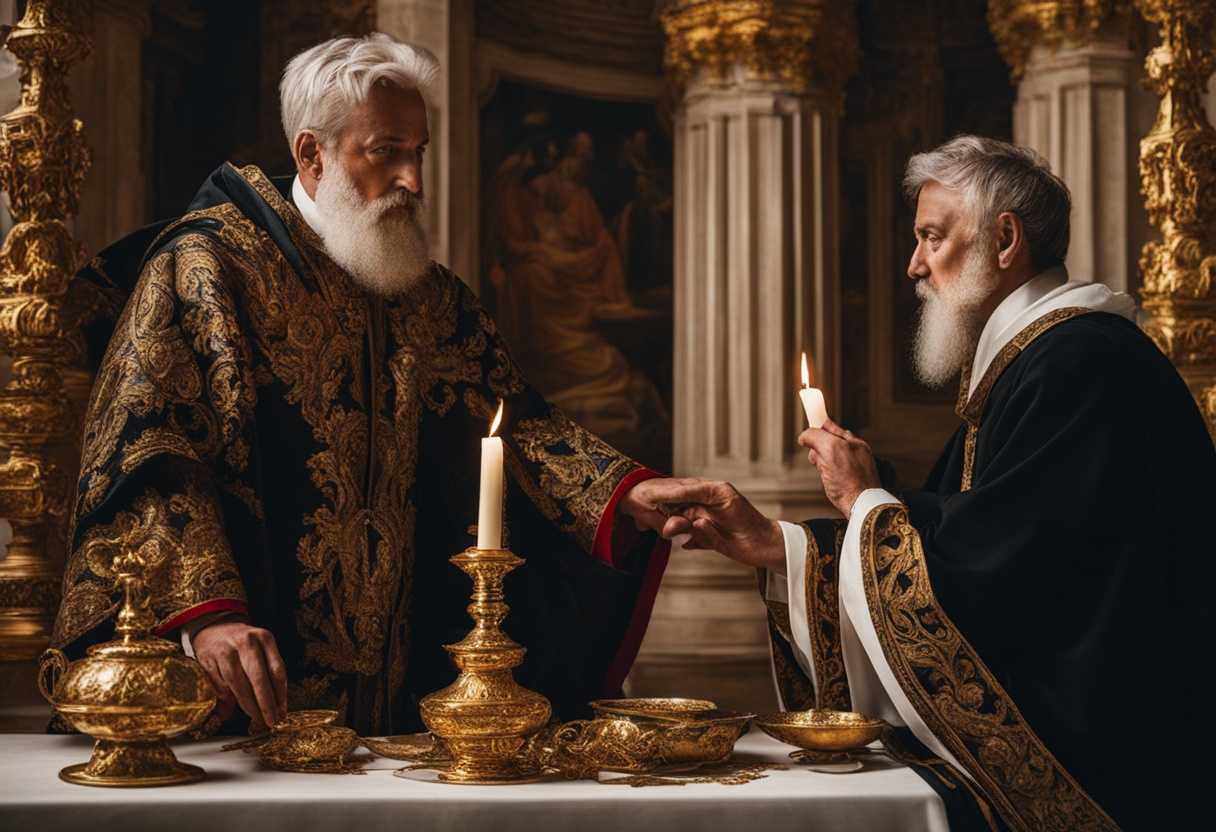
Setting the Scene for Leviticus 8:7
In Leviticus chapter 8, we find ourselves in the Tabernacle courtyard, a sacred space set up by the Israelites in the wilderness. The scene is filled with a sense of anticipation and reverence as Moses prepares to consecrate Aaron and his sons as priests. The air is heavy with the scent of burning incense and the sound of prayers being whispered.
Surrounded by the elders of Israel, Moses carefully anoints Aaron with oil, symbolizing his set-apartness for the service of God. Aaron’s sons, Eleazar and Ithamar, stand nearby, dressed in their priestly garments, their faces a mix of excitement and trepidation. The onlookers watch in awe as Moses follows the intricate instructions given by God, ensuring that every detail of the consecration ceremony is carried out with precision and care.
As the ceremony unfolds, a sense of holiness fills the courtyard, reminding everyone present of the sacred duty that Aaron and his sons are about to undertake. The scene is a powerful reminder of the importance of obedience and reverence in the service of God, setting the stage for the establishment of the priesthood in Israel.
What is Leviticus 8:7 about?
Moses carries out a significant ceremony of consecrating Aaron and his sons as priests before the Lord in Leviticus 8:7. The act of consecration involves setting them apart for a holy purpose and identifying them as chosen vessels to serve God and the community. Moses symbolizes their purification and dedication to their sacred role by anointing them with oil and consecrating them with specific rituals.
This verse reminds us of the solemnity and importance of our own callings and responsibilities in serving God. We too are called to live in a way that honors and glorifies God in all that we do, just as Aaron and his sons were consecrated for a special purpose. It challenges us to reflect on how we can consecrate ourselves daily for the tasks and roles we have been given, whether it be in our work, relationships, or other areas of life. How can we set ourselves apart in a world full of distractions and temptations to truly serve God with dedication and purity of heart? How can we emulate the spirit of consecration and commitment shown in this verse as we go about our own lives and service to others?
Understanding what Leviticus 8:7 really means
Leviticus 8:7 delves into the intricate details of the consecration of Aaron and his sons as priests, shedding light on the meticulous preparations required for their ordination. The verse highlights the significance of the priestly garments, each piece carrying symbolic weight in the sacred act of setting apart individuals for service to God. From the tunic symbolizing righteousness to the breastpiece signifying discernment, these garments were not merely clothing but representations of spiritual attributes essential for the priestly role.
In exploring related passages such as Exodus 28:2-4 and Hebrews 4:14-16, we uncover a broader context that connects the Old Testament priesthood to the ultimate priesthood of Christ. The intricate instructions for the priestly garments in Leviticus find their ultimate fulfillment in Jesus, our high priest, who intercedes for us before God. This linkage between the ancient rituals and the redemptive work of Christ underscores the continuity of God’s plan throughout history.
The relevance of Leviticus 8:7 extends beyond its historical context, resonating with believers today as a call to personal integrity and holiness. Just as Aaron was consecrated with specific garments, we are called to live lives that reflect our dedication to God. The meticulous preparation of the priestly garments serves as a poignant reminder of the importance of spiritual readiness and service in our walk with God.
Consider the analogy of a surgeon preparing for surgery—a meticulous process that ensures the success of the operation and the well-being of the patient. Similarly, the detailed preparation of Aaron’s garments underscores the necessity of being spiritually prepared to serve God and others. Each piece of the priestly attire carries profound symbolism, reminding us of the virtues we are called to embody as followers of Christ.
As we reflect on phrases like “He put the tunic on Aaron” and “Tied the sash around him,” we unravel deeper meanings embedded in these actions. The tunic, sash, robe, ephod, and breastpiece each convey essential aspects of our spiritual journey—righteousness, readiness, authority, mediation, discernment. Understanding the symbolism behind these garments enriches our understanding of the call to holiness and service that permeates our Christian walk.
In essence, Leviticus 8:7 beckons us to embrace a life of preparation, dedication, and integrity in our service to God. While rooted in ancient rituals, the timeless principles it conveys resonate with the contemporary believer, urging us to don the spiritual garments of righteousness, readiness, and discernment as we navigate our journey of faith. Just as Aaron was consecrated for a sacred purpose, may we too be set apart for God’s service, clothed in the virtues that reflect His glory and grace.
Are we fully consecrated before serving the Lord?
Leviticus 8:7 describes the consecration process for Aaron and his sons before they began serving as priests. The consecration involved specific steps and actions that were necessary before they could effectively serve the Lord in their priestly duties in this verse. The process included washing with water, putting on the priestly garments, anointing with oil, and offering sacrifices. These actions symbolized a separation and dedication to the service of God.
Similarly, as believers today, our consecration before serving the Lord should involve a deliberate separation from the ways of the world and a dedication to God’s service. It is a process of purification, anointing, and surrendering ourselves fully to God’s will. We also need to undergo a spiritual consecration before we can effectively serve the Lord in whatever capacity He calls us to, just as Aaron and his sons were set apart for the priesthood through a specific consecration process.
Before embarking on any ministry or service for the Lord, it is crucial to ensure that we are fully consecrated and dedicated to Him. This involves a commitment to live in obedience to His word, a willingness to be led by His Spirit, and a readiness to surrender our own desires and plans to His will. We should seek to be consecrated in every aspect of our lives before stepping into the roles and responsibilities God has prepared for us in His kingdom, just as the priests in Leviticus were consecrated before serving.
Application
Harness the power of God’s anointing in your life as Aaron did. Just as he was prepared for his divine mission with oil, how can you invite God’s touch into your own journey? Take a moment to connect your purpose with God’s plan and embolden your spirit to shine in your unique calling. Will you dare to seek God’s anointing in your life and walk in the light of your destiny?

Reverend Michael Johnson is an experienced Church Minister with a profound expertise in spirituality and guidance. With a serene presence and a compassionate heart, he has faithfully served his congregation for over 20 years, leading them on a spiritual journey towards inner peace and enlightenment. Reverend Johnson’s extensive knowledge of religious philosophies and profound understanding of human nature have made him a trusted confidant and mentor to many, as he seamlessly weaves his profound wisdom into life teachings. Reverend Johnson’s calming demeanor and empathetic nature continue to uplift and heal souls, nurturing a sense of unity and tranquility within his community.