
John 13:3-4 is about Jesus demonstrating humility and servanthood by washing his disciples’ feet, teaching them the importance of serving others with a humble heart.
3 Jesus, knowing that the Father had given all things into his hands, and that he had come from God and was going back to God,
4 rose from supper. He laid aside his outer garments, and taking a towel, tied it around his waist.
Setting the Scene for John 13:3-4
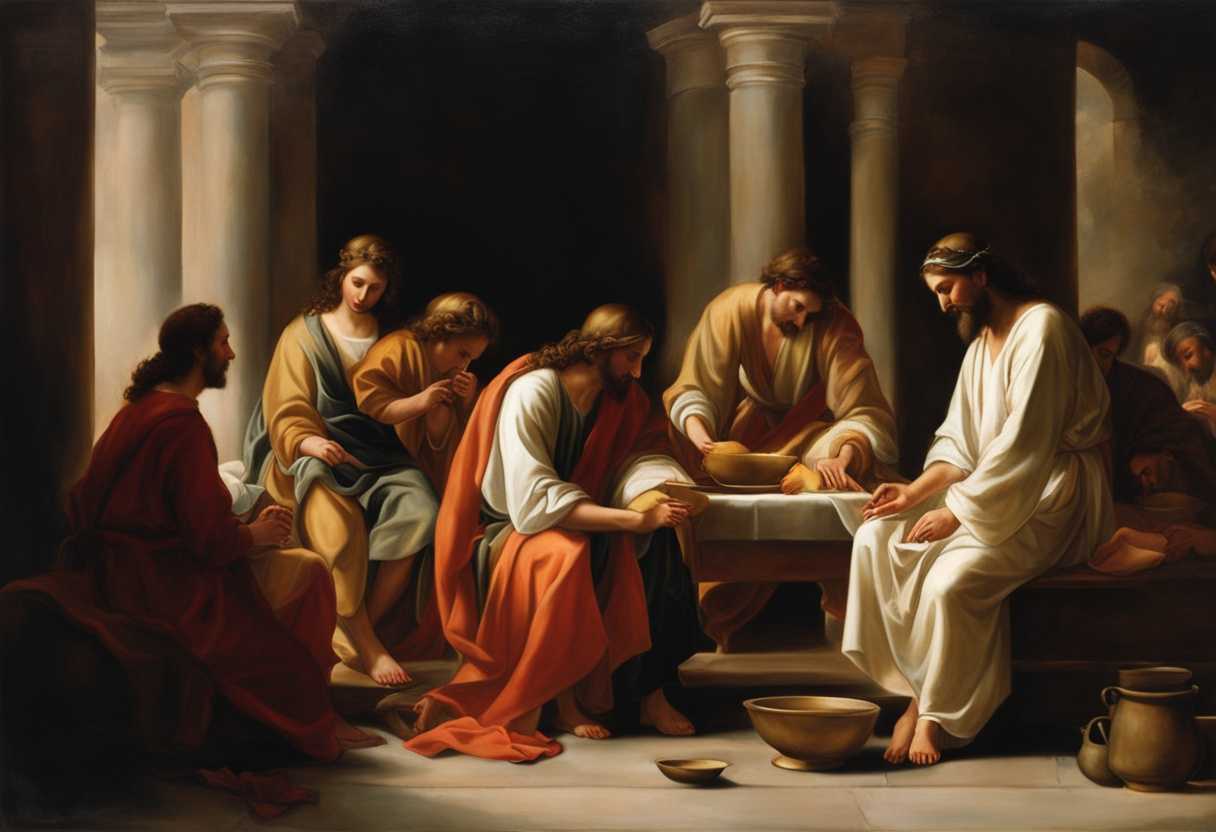
In John chapter 13, we find Jesus and his disciples gathered together in an upper room in Jerusalem to celebrate the Passover feast. The room is dimly lit by oil lamps, casting a warm glow over the group. The disciples, including Peter, James, John, and the others, are reclining at the table, their sandals kicked off and their feet dusty from the day’s journey.
As they begin to eat, Jesus rises from the table, removes his outer garment, and wraps a towel around his waist. The disciples watch in confusion as their teacher, the Son of God, takes on the role of a servant. Jesus then pours water into a basin and begins to wash the feet of each of his disciples, including Judas Iscariot, who would later betray him. The sound of the water splashing into the basin fills the room, mingling with the hushed whispers of the disciples.
In this humble act of service, Jesus sets an example of love and humility for his followers. The disciples are stunned by his actions, struggling to understand the significance of what is happening before their eyes. As Jesus washes their feet, he teaches them that true greatness comes from serving others, and that they too should follow his example in serving one another with love and compassion.
What is John 13:3-4 about?
Let’s take a moment to reflect on the powerful message behind this verse. Jesus, who is portrayed as the Son of God, the Savior, the Messiah, stoops down to wash the feet of his disciples. This simple act of washing their feet was a symbol of humility, love, and service. It challenges us to think about how we treat others around us. Are we willing to serve others, even in the most humble and menial tasks?
The act of washing feet was usually reserved for servants or lower-class individuals, but here we see Jesus, the highest authority, taking on this role. This teaches us that true leadership is not about power or status, but about serving others with humility and love. It prompts us to question our own values and actions – do we seek recognition and praise, or are we willing to put others’ needs above our own? Let us strive to emulate Jesus’ example of selfless service and love in our interactions with those around us as we ponder on this verse.
Understanding what John 13:3-4 really means
In the poignant narrative of the Last Supper, a moment of profound significance unfolds as Jesus, the Son of God, takes on the role of a humble servant. Despite His divine authority and omnipotence, Jesus chooses to perform an act of humility by washing the feet of His disciples. The verses in John 13:3-4 capture this powerful scene, where Jesus, fully aware of His heavenly origin and impending return to God, rises from the meal, removes His outer clothing, and wraps a towel around His waist. This simple yet profound gesture symbolizes humility and servanthood, setting a timeless example for all believers.
The phrase “Jesus knew that the Father had put all things under his power” underscores the divine authority of Jesus, highlighting His sovereignty over all creation. Yet, in a striking display of humility, He willingly takes on the role of a servant, demonstrating that true greatness lies in serving others. As Jesus acknowledges His divine origin and destiny, the act of washing His disciples’ feet becomes a powerful visual representation of His sacrificial love and servant leadership.
These verses resonate with other biblical passages that emphasize the importance of humility and service. In Philippians 2:5-8, Paul extols the humility of Christ, who obediently embraced the cross for the sake of humanity. Similarly, in Matthew 20:28 and Mark 10:43-45, Jesus teaches about the essence of true greatness in God’s kingdom, which is rooted in selfless service and sacrificial love. These passages collectively reinforce the transformative power of humility and servanthood in the life of a believer.
The relevance of John 13:3-4 extends beyond the historical context of the Last Supper, speaking directly to the contemporary world. In a society that often values power, prestige, and self-promotion, the example set by Jesus challenges us to reevaluate our priorities. By embodying the spirit of humility and service in our daily interactions, we can emulate the selfless love of Christ and impact those around us positively.
Imagine a scenario where a CEO chooses to work alongside their employees, understanding their challenges, and serving them with humility. This act of servant leadership can transform the workplace culture, fostering respect, unity, and a sense of shared purpose. Similarly, in our personal lives, we are called to emulate Jesus’ example by prioritizing the needs of others above our own, fostering a spirit of compassion, empathy, and selflessness.
As we reflect on the profound message of John 13:3-4, we are prompted to examine our lives and consider how we can practice humility and servanthood in practical ways. By following Jesus’ example of selfless love and sacrificial service, we can make a tangible difference in our relationships, workplaces, and communities. Let us ponder how we can leverage our positions, resources, and abilities to serve those around us, embodying the transformative power of humility and love in a world that yearns for authentic expressions of grace and compassion.
How can we humbly serve others like Jesus did?
We can humbly serve others like Jesus did by setting aside our own pride and ego. Jesus, who was the Son of God, demonstrated humility by taking on the role of a servant and washing the feet of his disciples. We can show humility in our actions by putting the needs of others before our own and serving them with love and compassion.
Another way we can serve others like Jesus is by showing kindness and generosity. Jesus consistently showed love and compassion to those around him, always looking for ways to meet their needs and provide for them. We can follow his example by being kind and generous towards others, offering our time, resources, and support to help those in need.
Lastly, we can serve others like Jesus did by practicing forgiveness and grace. Jesus showed immense grace and forgiveness towards even those who betrayed and hurt him. We can emulate his example by choosing to forgive others, letting go of grudges and extending grace to those who may not deserve it. We reflect the love of Christ to the world and demonstrate true servant-heartedness by showing forgiveness and grace.
Application
In the hustle of your workday and the bustle of family life, are you willing to hit pause and serve others like Jesus did? Imagine washing the feet of those around you, embracing humility and selfless love. How can you make someone’s load lighter today? Will you step up to offer genuine acts of kindness? Are you ready to become the change in your world?

Reverend Michael Johnson is an experienced Church Minister with a profound expertise in spirituality and guidance. With a serene presence and a compassionate heart, he has faithfully served his congregation for over 20 years, leading them on a spiritual journey towards inner peace and enlightenment. Reverend Johnson’s extensive knowledge of religious philosophies and profound understanding of human nature have made him a trusted confidant and mentor to many, as he seamlessly weaves his profound wisdom into life teachings. Reverend Johnson’s calming demeanor and empathetic nature continue to uplift and heal souls, nurturing a sense of unity and tranquility within his community.