
Genesis 41:25-36 is about Joseph interpreting Pharaoh’s dreams as a warning of seven years of abundance followed by seven years of famine, emphasizing the importance of wise stewardship and preparation for future challenges.
25 Then Joseph said to Pharaoh, “The dreams of Pharaoh are one; God has revealed to Pharaoh what he is about to do.
26 The seven good cows are seven years, and the seven good ears are seven years; the dreams are one.
27 The seven lean and ugly cows that came up after them are seven years, and the seven empty ears blighted by the east wind are also seven years of famine.
28 It is as I told Pharaoh; God has shown to Pharaoh what he is about to do.
29 Seven years of great abundance are coming throughout the land of Egypt,
30 but after them there will arise seven years of famine, and all the plenty will be forgotten in the land of Egypt. The famine will consume the land,
31 and the plenty will be forgotten in the land of Egypt.
32 And the doubling of Pharaoh’s dream means that the thing is fixed by God, and God will shortly bring it about.
33 Now therefore let Pharaoh select a discerning and wise man, and set him over the land of Egypt.
34 Let Pharaoh proceed to appoint overseers over the land and take one-fifth of the produce of the land of Egypt during the seven plentiful years.
35 They should gather all the food of these good years that are coming and store up grain under the authority of Pharaoh for food in the cities, and let them keep it.
36 And that food shall be a reserve for the land against the seven years of famine that are to occur in the land of Egypt, so that the land may not perish through the famine.”
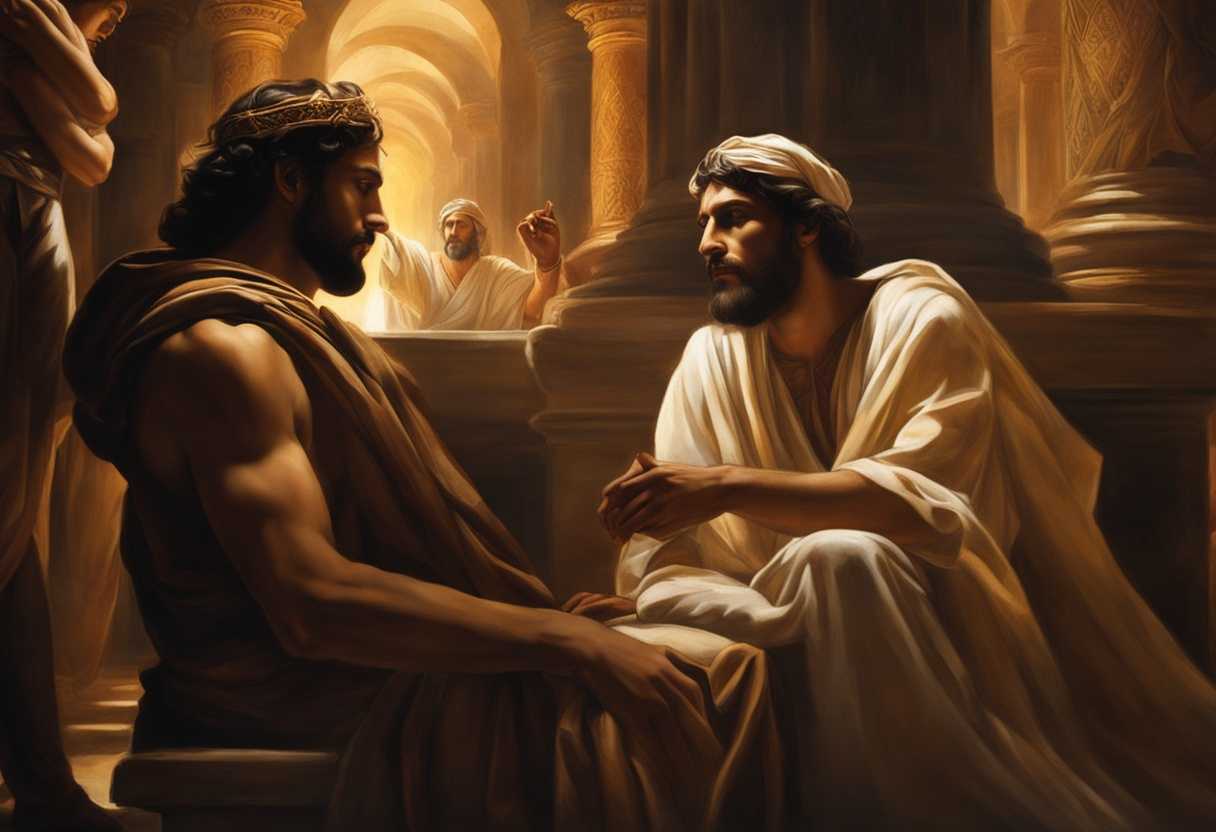
Setting the Scene for Genesis 41:25-36
In Genesis chapter 41, we find ourselves in the grand palace of Pharaoh in ancient Egypt. The scene is set in a lavish throne room, adorned with intricate hieroglyphics and golden ornaments. Pharaoh, the ruler of Egypt, is seated on his majestic throne, surrounded by his courtiers and advisors. The air is filled with a sense of anticipation as Pharaoh prepares to hear from Joseph, a Hebrew prisoner who has been brought before him.
Joseph, a young man with a reputation for interpreting dreams, was summoned from the dungeon where he had been imprisoned. His sudden appearance in the throne room has caused a stir among the courtiers, who are curious to see if he can unravel the mystery of Pharaoh’s troubling dreams. As Joseph stands before Pharaoh, his humble demeanor and unwavering faith in God’s guidance contrast sharply with the opulence and power of the Egyptian court.
Pharaoh recounts his dreams to Joseph, who listens intently before offering his interpretation. With wisdom and clarity, Joseph explains that the dreams foretell seven years of abundance followed by seven years of famine. Impressed by Joseph’s insight, Pharaoh appoints him as the second-in-command of Egypt, tasking him with overseeing the preparations for the impending famine. The scene is a pivotal moment in Joseph’s life, as he rises from a lowly prisoner to a position of great authority, fulfilling God’s plan for him and ultimately saving his family from starvation.
What is Genesis 41:25-36 about?
This verse highlights the importance of interpreting dreams as a way of understanding and preparing for the future. God chose Joseph to receive and understand Pharaoh’s dreams, which were a divine message about the upcoming events in Egypt. God was ensuring that the people of Egypt would be prepared for the seven years of abundance followed by the seven years of famine by revealing the meaning of the dreams to Joseph.
Reflecting on this verse, it prompts us to ponder on the significance of being open to receiving messages from a higher power and being prepared for the challenges that lie ahead. It also emphasizes the idea that sometimes, we may need to rely on others who have been chosen by God to help interpret and understand important signs and messages. We too may encounter individuals who are meant to guide us through difficult times or help us make sense of important messages in our lives, just as Joseph was chosen to interpret Pharaoh’s dreams. It serves as a reminder to trust in divine guidance and be open to the wisdom and insights that others may have to offer.
Understanding what Genesis 41:25-36 really means
In the narrative of Genesis 41:25-36, we witness Joseph interpreting Pharaoh’s dreams, a pivotal moment that underscores the sovereignty and wisdom of God. The phrase “God has revealed to Pharaoh what he is about to do” serves as a powerful declaration of divine revelation and God’s ultimate control over future events. It sets the stage for the unfolding of a plan that encompasses both abundance and famine, symbolizing periods of prosperity and hardship that are part of God’s larger design.
As Joseph foretells, seven years of great abundance will grace the land of Egypt, followed by seven years of devastating famine. This dichotomy mirrors the ebb and flow of life’s seasons, reminding us of the cyclical nature of blessings and challenges. The call for Pharaoh to appoint a discerning and wise leader to oversee the land speaks to the importance of wisdom and prudent leadership in navigating times of plenty and scarcity.
Drawing parallels from related biblical passages such as Proverbs 3:5-6, James 1:5, and Matthew 6:34, we are urged to trust in the Lord wholeheartedly, seek divine wisdom in times of need, and relinquish our worries about the future to God’s providence. These verses reinforce the central theme of relying on God’s guidance and provision in all circumstances, echoing the lessons gleaned from Joseph’s counsel to Pharaoh.
The timeless relevance of Genesis 41:25-36 resonates with us today in various ways. It prompts us to engage in prudent planning and preparation for the future, mirroring Joseph’s advice to Pharaoh. Moreover, it encourages us to trust in God’s overarching plan, whether we find ourselves in times of abundance or scarcity, knowing that He holds the master blueprint of our lives.
In a practical anecdote, envision a family facing sudden unemployment who, inspired by Joseph’s story, choose to trust in God’s plan. Through budgeting wisely, seeking new opportunities, and leaning on their faith community for support, they not only weather the storm but emerge stronger, embodying the resilience and faithfulness exemplified in Genesis 41:25-36.
In conclusion, Genesis 41:25-36 serves as a beacon of divine wisdom, urging us to prepare diligently, trust unwaveringly, and seek God’s guidance persistently. It prompts us to be wise stewards of the resources and opportunities entrusted to us, fostering a deeper reliance on God’s providence and a steadfast commitment to His plan for our lives.
How can we trust in God during uncertainty?
We can find trust in God by looking at the example of Joseph in Genesis during times of uncertainty. Joseph interpreted Pharaoh’s dreams, which depicted an upcoming famine. Despite the uncertainty of the future, Joseph remained faithful and displayed trust in God’s plan. We too can trust in God’s guidance and provision when faced with uncertainty, just as Joseph leaned on God during challenging times.
When we feel uncertain about the future, we can remind ourselves of God’s faithfulness throughout history. Reflecting on how God has been faithful in the past can help build our trust in Him for the present and the future. We can find assurance in knowing that God’s plans are for our welfare and not for harm, to give us a future with hope. We can surrender our worries and anxieties to God by trusting in Him during uncertainty. Instead of trying to control every outcome, we can place our faith in God’s sovereignty and wisdom. We can experience a sense of peace and security knowing that God is in control, even when circumstances appear uncertain.
Application
Just as Joseph wisely planned for the famine, let’s also make smart choices for our future. Are we ready to act boldly and plan ahead in our own lives, like Joseph did in his time? Let’s heed the lessons from Genesis and take charge of our destiny. The time to act is now. Will you step up and shape your own path forward?

Reverend Michael Johnson is an experienced Church Minister with a profound expertise in spirituality and guidance. With a serene presence and a compassionate heart, he has faithfully served his congregation for over 20 years, leading them on a spiritual journey towards inner peace and enlightenment. Reverend Johnson’s extensive knowledge of religious philosophies and profound understanding of human nature have made him a trusted confidant and mentor to many, as he seamlessly weaves his profound wisdom into life teachings. Reverend Johnson’s calming demeanor and empathetic nature continue to uplift and heal souls, nurturing a sense of unity and tranquility within his community.