
Luke 18:18-20 is about a wealthy ruler who asks Jesus how to inherit eternal life, revealing the importance of recognizing and overcoming the obstacles of material wealth in achieving spiritual salvation.
18 A ruler asked him, “Good Teacher, what must I do to inherit eternal life?”
19 And Jesus said to him, “Why do you call me good? No one is good except God alone.
20 You know the commandments: ‘Do not commit adultery, Do not murder, Do not steal, Do not bear false witness, Honor your father and mother.’”
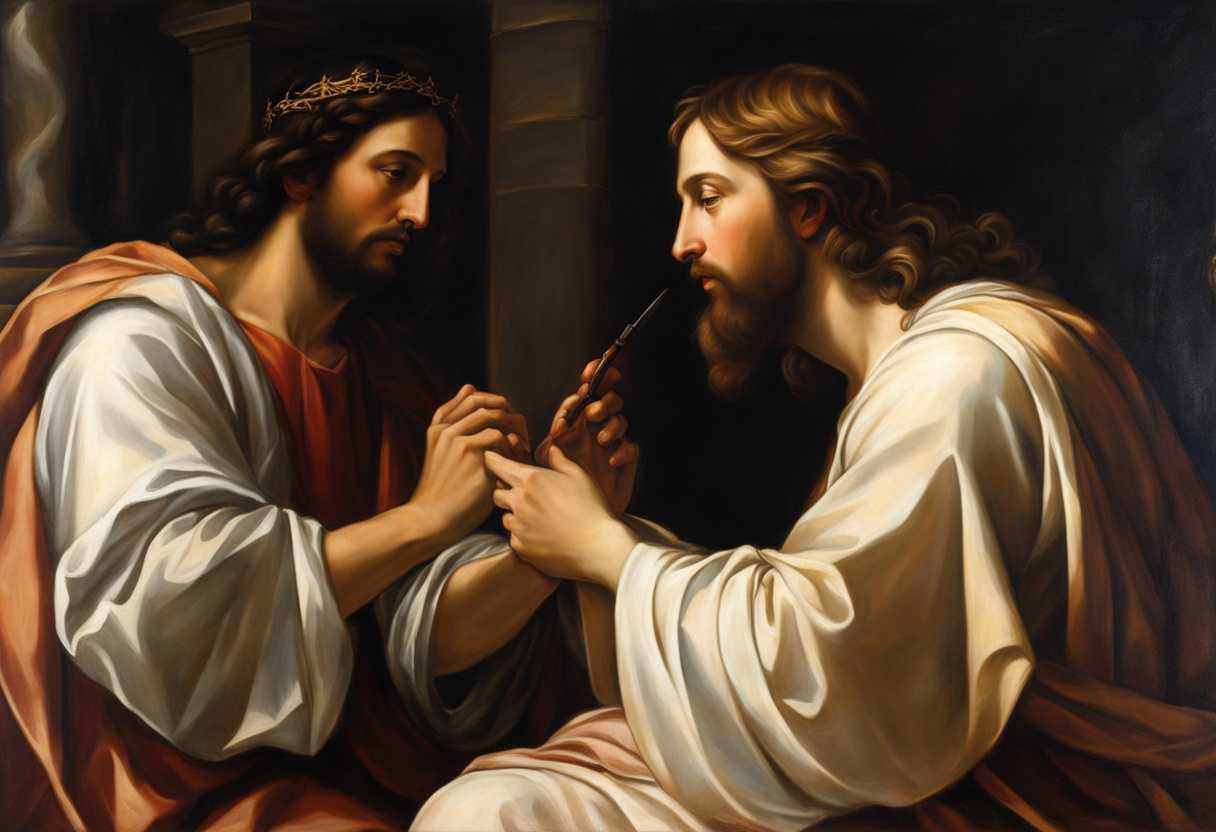
Setting the Scene for Luke 18:18-20
In Luke chapter 18, we find Jesus teaching a crowd of people who have gathered around Him. Among the crowd is a rich young ruler, a man of great wealth and influence in the community. He approaches Jesus with a burning question in his heart, seeking guidance on how to inherit eternal life. The young ruler is earnest and sincere in his inquiry, genuinely seeking spiritual truth.
The scene is set in a bustling marketplace, with vendors selling their wares and people going about their daily activities. The sun is shining brightly overhead, casting a warm glow on the dusty streets. Jesus, dressed in simple robes, sits under the shade of a large tree, surrounded by His disciples and a curious crowd eager to hear His teachings. The rich young ruler, with a look of earnestness on his face, approaches Jesus with humility and respect, eager to learn from the renowned teacher.
As the rich young ruler stands before Jesus, the air is filled with anticipation and expectation. The crowd watches intently as the young man poses his question, his voice filled with a mix of hope and uncertainty. Jesus, with compassion in His eyes, listens attentively to the young ruler’s query, knowing the inner turmoil that lies beneath the surface. The stage is set for a profound and life-changing interaction between the wealthy young man and the Son of God.
What is Luke 18:18-20 about?
A rich ruler approaches Jesus with a question that many of us may have wondered about at some point in our lives in this verse: how can we inherit eternal life? The ruler’s inquiry reflects a desire for knowledge and a recognition of the importance of spiritual matters. Jesus, in his response, does not provide a complex formula or a set of rituals. Instead, he points the ruler back to the basics – following the commandments.
Jesus’s instruction to the ruler to follow the commandments serves as a reminder that living a life in alignment with our values and principles is crucial in our spiritual journey. It prompts us to reflect on whether our actions and choices are in accordance with what we believe in and strive for. Jesus emphasizes the importance of moral conduct, justice, and compassion in our quest for eternal life by focusing on the commandments. This verse challenges us to examine our own lives and question whether we are truly living out our beliefs in a way that leads us towards spiritual fulfillment and connection with the divine.
Understanding what Luke 18:18-20 really means
This passage from Luke 18:18-20 captures a poignant conversation between Jesus and a rich young ruler who approaches Him with a pressing question about inheriting eternal life. The young man, addressing Jesus as “Good Teacher,” seeks guidance on what actions he must undertake to secure eternal life, reflecting a common human desire for spiritual assurance and moral direction.
To gain a deeper understanding of this encounter, we can look at parallel passages in Matthew 19:16-22 and Mark 10:17-22, which offer additional insights into the rich young ruler’s interaction with Jesus. Furthermore, referencing Exodus 20:12-16, where the commandments Jesus mentions are rooted in the Ten Commandments, helps us grasp the ethical and moral framework underpinning this dialogue. Paul’s words in Romans 3:20 further illuminate the futility of seeking righteousness through adherence to the law alone, highlighting the need for a deeper spiritual transformation.
The relevance of this passage extends to contemporary audiences, prompting reflection on the pursuit of eternal life and the role of material wealth in our lives. It challenges us to evaluate our priorities and consider whether our focus is on accumulating earthly possessions or nurturing a heart aligned with God’s will. The story serves as a timeless reminder that true fulfillment and eternal life are not earned through human effort but are gifts from God, requiring a surrender of our hearts to His divine purpose.
To illustrate the message conveyed in this passage, envision a successful individual who, despite worldly achievements, grapples with a sense of emptiness. Seeking counsel, they are reminded that genuine fulfillment stems from a life characterized by love, generosity, and faith, echoing the rich young ruler’s quest for deeper meaning and Jesus’ transformative response.
Key phrases in this passage, such as the young ruler’s address of “Good Teacher,” reveal both respect and a misconception about goodness. Jesus redirects the focus to God, emphasizing His ultimate goodness and the source of true righteousness. The question posed by the young ruler about inheriting eternal life reflects a common belief in earning salvation through deeds, prompting Jesus to address the deeper issue of the heart’s alignment with God’s will. By referencing the commandments, Jesus underscores the importance of moral living while also highlighting the need for inner transformation beyond mere rule-following.
In conclusion, this passage invites us to introspection, urging a shift from self-reliance to reliance on God’s grace for salvation. It emphasizes the significance of a heart fully surrendered to God, transcending mere external observance of religious or moral laws. The narrative of the rich young ruler stands as a timeless reminder that true fulfillment and eternal life are discovered in a relationship with God, rather than in the accumulation of material possessions or human accolades.
How can we approach God with humility and obedience?
Approaching God with humility and obedience involves recognizing our own limitations and placing ourselves under His authority. It means acknowledging that God is the ultimate source of wisdom and guidance, and that we are called to submit to His will. We demonstrate a willingness to listen and obey His commands without hesitation or resistance by humbling ourselves before God.
Obedience to God requires a surrender of our own desires and preferences in favor of following His instructions. It involves trusting in His divine plan and recognizing that His ways are higher than our ways. When we approach God with humility and obedience, we are acknowledging His sovereignty and trusting that His guidance will lead us on the path of righteousness and fulfillment. This attitude of submission allows us to receive His blessings and to experience the peace that comes from aligning our lives with His will.
Application
Embrace the wisdom of Jesus in Luke 18:18-20, urging us to evaluate our adherence to His teachings. Are we embodying values that genuinely resonate with God? Let’s scrutinize our intentions and conduct to confirm we are faithfully upholding His guidance. Will you commit today to harmonizing your existence with the divine plan?

Reverend Michael Johnson is an experienced Church Minister with a profound expertise in spirituality and guidance. With a serene presence and a compassionate heart, he has faithfully served his congregation for over 20 years, leading them on a spiritual journey towards inner peace and enlightenment. Reverend Johnson’s extensive knowledge of religious philosophies and profound understanding of human nature have made him a trusted confidant and mentor to many, as he seamlessly weaves his profound wisdom into life teachings. Reverend Johnson’s calming demeanor and empathetic nature continue to uplift and heal souls, nurturing a sense of unity and tranquility within his community.