
John 19:39-40 is about Joseph of Arimathea and Nicodemus preparing Jesus’ body for burial with reverence and care, symbolizing the importance of honoring and respecting the physical remains of the deceased as an act of love and devotion.
39 Nicodemus also, who earlier had come to Jesus by night, came bringing a mixture of myrrh and aloes, about seventy-five pounds in weight.
40 So they took the body of Jesus and bound it in linen cloths with the spices, as is the burial custom of the Jews.
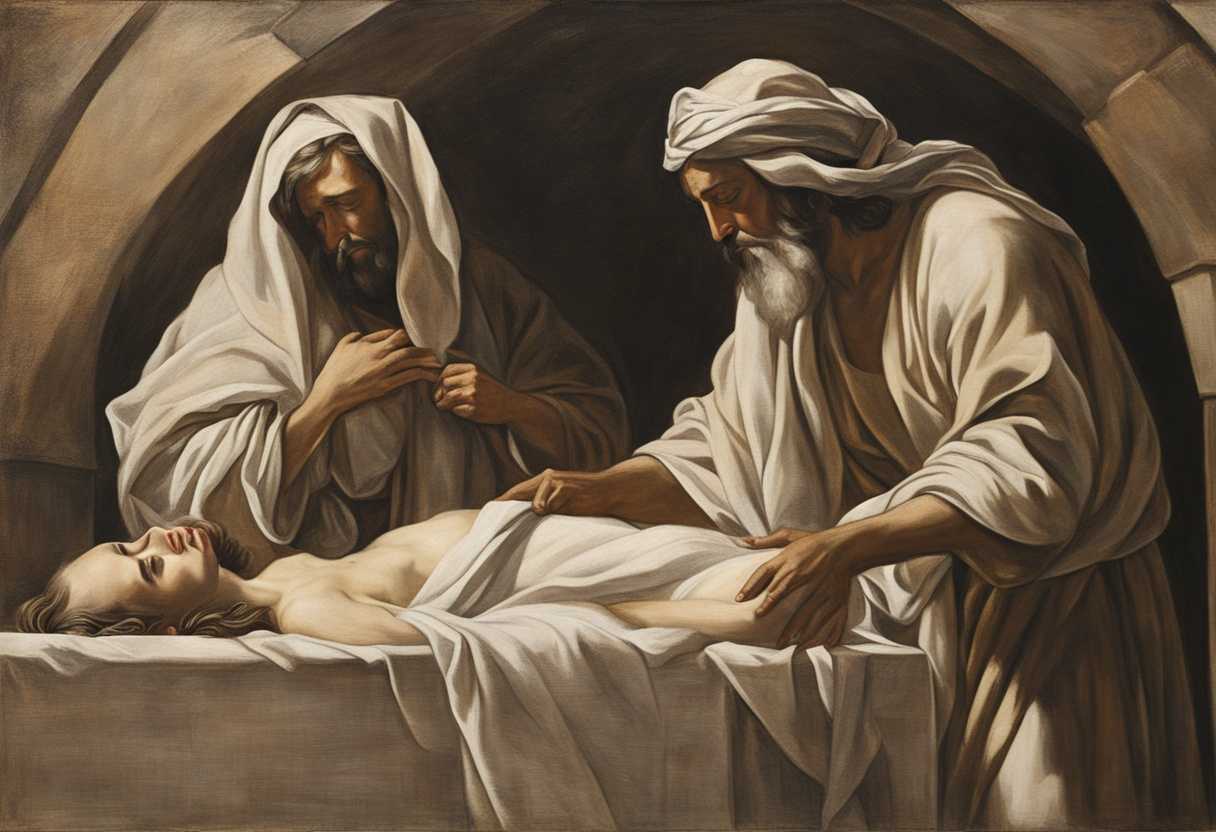
Setting the Scene for John 19:39-40
The scene in John chapter 19 takes place after the crucifixion of Jesus. Joseph of Arimathea, a respected member of the Jewish council, and Nicodemus, a Pharisee and member of the Sanhedrin, come together to take down Jesus’ body from the cross. They are joined by a few other followers of Jesus who had been standing nearby, witnessing the events of the crucifixion.
The atmosphere is heavy with grief and sorrow as they carefully remove Jesus’ body from the cross. The sky is dark, and the air is filled with a sense of mourning. The group works quietly and reverently, their actions speaking volumes about their love and respect for Jesus. Joseph of Arimathea provides a linen cloth for Jesus’ body, while Nicodemus brings a mixture of myrrh and aloes to anoint the body, in accordance with Jewish burial customs.
As they work together to prepare Jesus for burial, there is a sense of unity and solidarity among this small group of followers. Despite the danger and persecution they may face for their association with Jesus, they remain steadfast in their devotion to him. The scene is a poignant reminder of the love and sacrifice that Jesus inspired in those who believed in him.
What is John 19:39-40 about?
This verse offers a poignant culmination to the story of Jesus’ death, showcasing the compassion and reverence of Joseph of Arimathea and Nicodemus. After Jesus’ crucifixion, these two men, who were previously described as secret followers of Jesus due to their positions and societal expectations, step forward to honor him in death. They provide a burial with spices, not only acting as a final expression of their devotion but also fulfilling an important prophecy. This act emphasizes the themes of redemption, sacrifice, and the ultimate victory over death that are central to Christian belief. These two men choose to publicly align themselves with Jesus, despite the risks to their own reputations and safety, in his most vulnerable moment. Their courage and willingness to support Jesus show the transformative power of faith and the deep impact of witnessing Christ’s teachings firsthand. The act of burial with spices also holds symbolic weight, as it harkens back to the customs of honoring and preserving the deceased, underscoring the sacredness and importance of Jesus’ life and message. So, ask yourself, in what ways do Joseph of Arimathea and Nicodemus exemplify the virtues of loyalty, bravery, and humility? How does their act of burial serve as a profound testament to the enduring legacy of Jesus and the fulfillment of divine prophecy?
Understanding what John 19:39-40 really means
The verses in John 19:39-40 depict a poignant moment after the crucifixion of Jesus, where Nicodemus and Joseph of Arimathea step forward to honor Jesus in death. These two men, who had previously operated in the shadows of secrecy, now boldly take a stand for their faith by preparing Jesus’ body for burial. Nicodemus, known for his clandestine meeting with Jesus in John 3:1-21, undergoes a remarkable transformation, showcasing newfound courage and conviction in his beliefs. Their actions align with the prophecy in Isaiah 53:9, emphasizing the significance of the burial of the Messiah among the rich.
In today’s world, the example set by Nicodemus and Joseph of Arimathea resonates deeply. Their courage in the face of adversity challenges us to stand firm in our faith, even when confronted with opposition or hardship. Their journey from secrecy to boldness serves as a reminder that faith is a dynamic process that can lead to personal growth and transformation over time. As modern believers, we are encouraged to emulate their unwavering commitment and willingness to serve, even in the most challenging circumstances.
Consider a contemporary parallel where an individual courageously upholds their faith in a hostile environment, akin to Nicodemus and Joseph’s bold actions. Initially concealing their beliefs, this person eventually finds the strength to openly express their faith, becoming a beacon of inspiration to others and leaving a lasting impact on those around them. This narrative mirrors the transformative journey of Nicodemus and Joseph, illustrating the power of faith to overcome fear and uncertainty.
The detailed account of Nicodemus bringing a substantial amount of myrrh and aloes, around seventy-five pounds, underscores the depth of his reverence for Jesus. This act of generosity and devotion symbolizes the profound respect he held for Christ, emphasizing the importance of honoring the sacrificial love of Jesus. The meticulous care taken in wrapping Jesus’ body with spices in linen strips reflects the reverence and love we should demonstrate towards Christ and others, highlighting the significance of serving with humility and compassion.
By meditating on the actions of Nicodemus and Joseph of Arimathea, we are prompted to live out our faith with boldness, allowing it to shape and refine our character. Their example challenges us to embrace transformation, serve others selflessly, and honor Christ’s sacrifice with unwavering devotion. Just as Nicodemus and Joseph displayed courage, faith, and service, may we too be inspired to walk in their footsteps, embodying the love and grace of Christ in our daily lives.
What role do our attitudes play in our faith?
Our attitudes play a significant role in our faith as they often reflect the condition of our hearts and minds. When it comes to matters of faith and belief, our attitudes shape how we approach and respond to the teachings and guidance we receive. Joseph of Arimathea and Nicodemus filled their attitudes with respect, honor, and love for Jesus in the context of the verse, despite the risks involved in publicly supporting Him.
Their attitudes of reverence and courage led them to take action by providing a proper burial for Jesus, even in the face of potential backlash from the religious authorities. Our attitudes can inspire us to take steps of faith and obedience, even when they may seem difficult or unpopular. We can deepen our faith and draw closer to God by adopting attitudes of humility, love, and trust, and following His will with boldness and conviction.
Application
Think about Joseph of Arimathea and Nicodemus, who selflessly prepared Jesus’ body for burial. What sacrifices can you make to honor Christ in your community? How can you show the same courage and care for those around you who are in need? Will you step up and serve others just as they did for Jesus? The world needs your acts of kindness now more than ever. What’s stopping you?

Reverend Michael Johnson is an experienced Church Minister with a profound expertise in spirituality and guidance. With a serene presence and a compassionate heart, he has faithfully served his congregation for over 20 years, leading them on a spiritual journey towards inner peace and enlightenment. Reverend Johnson’s extensive knowledge of religious philosophies and profound understanding of human nature have made him a trusted confidant and mentor to many, as he seamlessly weaves his profound wisdom into life teachings. Reverend Johnson’s calming demeanor and empathetic nature continue to uplift and heal souls, nurturing a sense of unity and tranquility within his community.