
Daniel 3:1-6 is about the unwavering faith and loyalty of Shadrach, Meshach, and Abednego who refused to worship the golden statue as an act of defiance against idolatry, and their subsequent miraculous deliverance by God’s intervention in the fiery furnace.
1 King Nebuchadnezzar made an image of gold, whose height was sixty cubits and its breadth six cubits. He set it up on the plain of Dura, in the province of Babylon.
2 Then King Nebuchadnezzar sent to gather the satraps, the prefects, and the governors, the counselors, the treasurers, the justices, the magistrates, and all the officials of the provinces to come to the dedication of the image that King Nebuchadnezzar had set up.
3 Then the satraps, the prefects, and the governors, the counselors, the treasurers, the justices, the magistrates, and all the officials of the provinces gathered for the dedication of the image that King Nebuchadnezzar had set up. And they stood before the image that Nebuchadnezzar had set up.
4 And the herald proclaimed aloud, “You are commanded, O peoples, nations, and languages,
5 that when you hear the sound of the horn, pipe, lyre, trigon, harp, bagpipe, and every kind of music, you are to fall down and worship the golden image that King Nebuchadnezzar has set up.
6 And whoever does not fall down and worship shall immediately be cast into a burning fiery furnace.
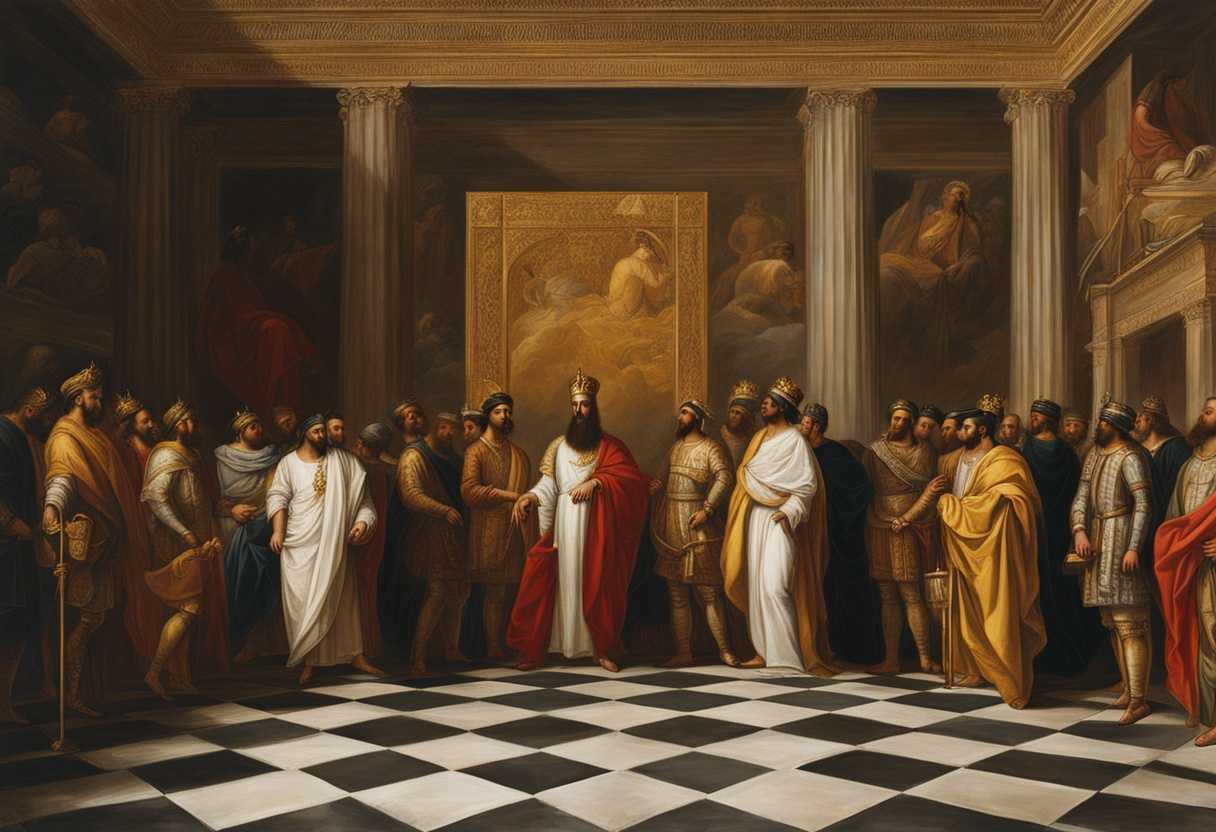
Setting the Scene for Daniel 3:1-6
In Daniel chapter 3, we find King Nebuchadnezzar of Babylon constructing a massive golden statue. The king gathers together all the officials of his kingdom, including the satraps, prefects, governors, counselors, treasurers, judges, magistrates, and all the other provincial officials, to come to the dedication of the statue. The scene is set in the plain of Dura, a vast open space outside the city where the statue is erected.
The king commands that when the music plays, everyone must bow down and worship the golden statue. Among the officials present are three Jewish men named Shadrach, Meshach, and Abednego, who were appointed by the king to high positions in Babylon. However, these three men refuse to bow down and worship the statue, as it goes against their faith in the one true God. Their defiance sets the stage for a dramatic confrontation with the king and a powerful display of faith and courage in the face of adversity.
What is Daniel 3:1-6 about?
This verse from the book of Daniel tells the story of three courageous men, Shadrach, Meshach, and Abednego, who stood firm in their faith and refused to bow down to the golden image that King Nebuchadnezzar had set up for worship. Despite the king’s commands and the threat of being thrown into a fiery furnace, these three men chose to remain faithful to their beliefs and their God. Their refusal to worship the golden image was not an act of stubbornness or rebellion, but rather a demonstration of unwavering faith and loyalty to their Lord.
This verse is a powerful reminder of the importance of staying true to one’s beliefs and principles, even in the face of adversity and pressure from others. It challenges us to reflect on our own values and the things we hold dear, prompting us to consider whether we would have the same courage and conviction as Shadrach, Meshach, and Abednego in standing up for what we believe in, no matter the consequences. It serves as an inspiration for us to be steadfast in our faith and to trust in God’s plan, even when faced with challenges or opposition.
Understanding what Daniel 3:1-6 really means
In the historical account found in Daniel 3:1-6, we are introduced to King Nebuchadnezzar’s grandiose creation of a golden statue, a symbol of his authority and power. The king’s decree demands universal worship of this statue, threatening severe consequences for those who refuse. This narrative sets the stage for the courageous stand taken by Shadrach, Meshach, and Abednego, who choose to remain faithful to their beliefs despite the immense pressure to conform.
The image of the “golden statue” in this passage serves as a potent symbol of idolatry, representing the allure of material wealth and worldly power that can lead individuals away from true devotion to God. The command for “all peoples, nations, and languages” to bow down underscores the pervasive nature of societal expectations and the challenge of maintaining one’s faith in the face of overwhelming conformity.
The looming threat of the “blazing furnace” in Nebuchadnezzar’s decree symbolizes the intense persecution and trials that believers may face when standing firm in their convictions. It serves as a stark reminder of the sacrifices and risks involved in remaining faithful to God in a world that often values compromise over integrity.
Drawing parallels to other biblical passages such as Exodus 20:3-5, Matthew 4:10, and Acts 5:29, we see a consistent theme of prioritizing God above all else and obeying His commands even in the face of opposition. These verses reinforce the timeless truth that true worship and allegiance belong solely to God, regardless of the pressures exerted by society.
The relevance of this narrative to contemporary audiences is striking, as we navigate a world filled with distractions and competing allegiances. Just as Shadrach, Meshach, and Abednego faced the temptation to bow to the golden statue, we too encounter modern-day “idols” that vie for our devotion, whether in the form of material possessions, societal approval, or personal ambitions.
Consider the scenario of a young professional confronted with ethical dilemmas in the workplace, akin to the fiery furnace faced by the three Hebrew men. By choosing to uphold their integrity and faith in the midst of adversity, individuals today can emulate the unwavering commitment displayed by Shadrach, Meshach, and Abednego, demonstrating courage in the face of opposition.
In conclusion, the story of the golden statue and the blazing furnace serves as a poignant reminder of the importance of unwavering faithfulness and the courage to resist societal pressures that may lead us astray. It prompts us to reflect on our own lives, identifying and dismantling any “idols” that threaten to overshadow our devotion to God. May we draw inspiration from the steadfastness of these biblical figures and strive to emulate their resolute commitment to God above all else.
How can we resist conforming to worldly values?
We can resist conforming to worldly values by keeping our focus on God and His truth. We too can stand firm in our beliefs, just as Shadrach, Meshach, and Abednego remained steadfast in their faith even when faced with pressure to conform. We can find the strength and courage to resist the temptations of the world by seeking guidance from God’s word and staying rooted in prayer.
Furthermore, surrounding ourselves with a community of believers who share our values can provide support and encouragement in times of challenge. When we stand together in faith, we can help each other stay true to our beliefs and resist the pressures to conform to worldly standards. We can strengthen our resolve to live according to God’s principles rather than the values of the world by leaning on each other and holding each other accountable. Being a child of God, not conforming to the world’s expectations, ultimately determines our identity and worth. We can resist the lure of worldly values and live in a way that honors and pleases God by focusing on our relationship with Him and seeking His guidance above all else.
Application
Just like Shadrach, Meshach, and Abednego, we are faced with challenges every day that test our resolve. Let’s channel their unwavering faith and stand strong in the fire of our own trials. Embrace your beliefs with courage and trust that the universe has your back. Will you rise above the flames of adversity and show the world the strength of your faith?

Reverend Michael Johnson is an experienced Church Minister with a profound expertise in spirituality and guidance. With a serene presence and a compassionate heart, he has faithfully served his congregation for over 20 years, leading them on a spiritual journey towards inner peace and enlightenment. Reverend Johnson’s extensive knowledge of religious philosophies and profound understanding of human nature have made him a trusted confidant and mentor to many, as he seamlessly weaves his profound wisdom into life teachings. Reverend Johnson’s calming demeanor and empathetic nature continue to uplift and heal souls, nurturing a sense of unity and tranquility within his community.