
Matthew 16:18-20 is about Jesus establishing the foundation of the Christian church, emphasizing Peter’s role as a leader through whom the teachings and authority of Jesus are passed down.
18 And I tell you, you are Peter, and on this rock I will build my church, and the gates of hell shall not prevail against it.
19 I will give you the keys of the kingdom of heaven, and whatever you bind on earth shall be bound in heaven, and whatever you loose on earth shall be loosed in heaven.”
20 Then he strictly charged the disciples to tell no one that he was the Christ.
Setting the Scene for Matthew 16:18-20
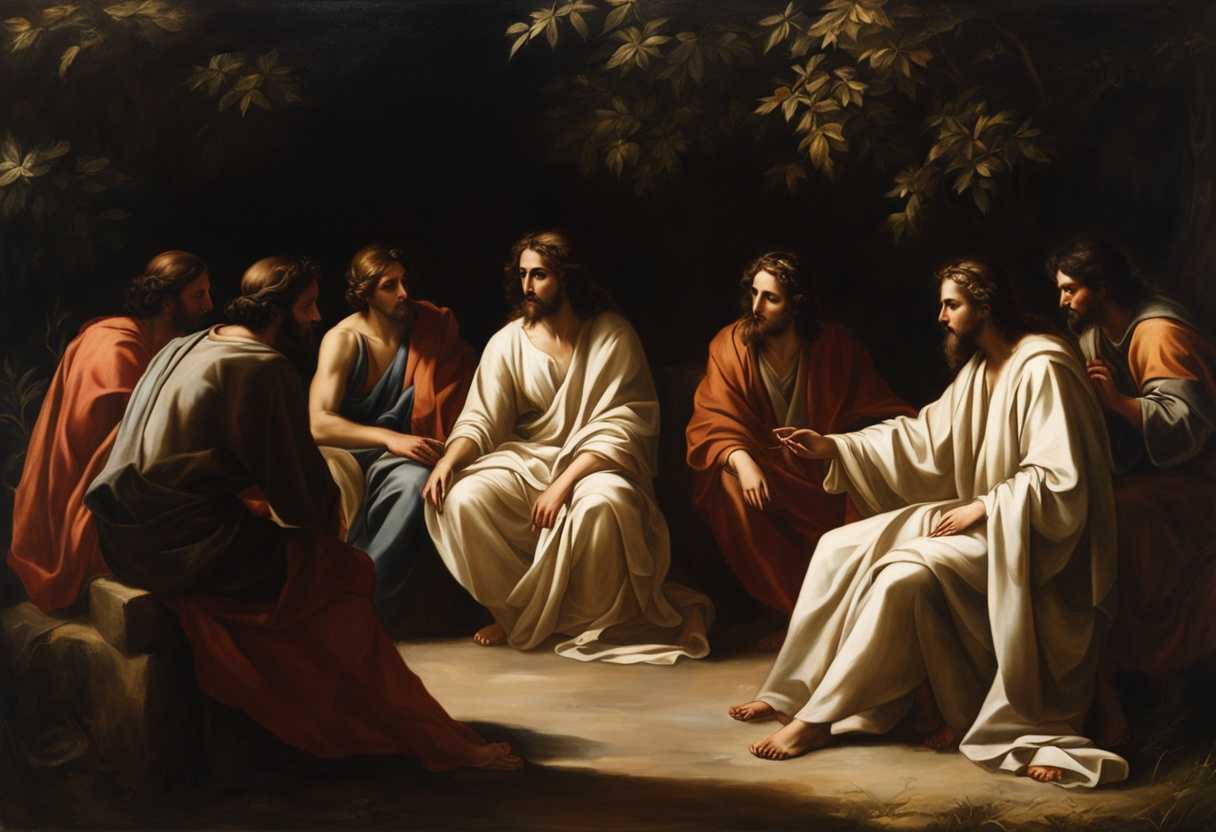
In Matthew chapter 16, we find Jesus with his disciples in the region of Caesarea Philippi. The scene is set against the backdrop of a rocky landscape, with the majestic Mount Hermon towering in the distance. The disciples are gathered around Jesus, their faces reflecting a mixture of curiosity and reverence as they listen to his teachings.
Among the disciples present are Peter, Andrew, James, and John, who have been following Jesus closely and witnessing his miracles and teachings. The atmosphere is charged with anticipation as Jesus poses a question to his disciples, asking them, “Who do people say the Son of Man is?” The disciples offer various responses, reflecting the confusion and speculation surrounding Jesus’ identity at that time.
It is in this setting that Peter makes his famous declaration, proclaiming, “You are the Messiah, the Son of the living God.” Jesus commends Peter for his faith and reveals that upon this rock, he will build his church. The moment is profound, marking a pivotal point in Jesus’ ministry as he begins to prepare his disciples for the challenges that lie ahead.
What is Matthew 16:18-20 about?
This verse holds significant meaning within Christian theology, as Jesus is essentially entrusting Peter with a leadership role in the early Christian community. Jesus symbolically highlights Peter’s steadfastness, faith, and role as a foundational figure within the faith by proclaiming him as the “rock” on which He will build His church. This declaration also marks a moment of commissioning and empowerment for Peter, as he is given a special place of authority and responsibility within the community of believers.
Have you ever thought about the significance of this moment in Peter’s life? It is a powerful reminder that God sees our potential and uses imperfect individuals to carry out His divine plans. Just like Peter, each of us has unique gifts and strengths that can be used to build up the church and serve others. This verse challenges us to reflect on our own roles within the Christian community and consider how we can be a solid foundation, just like Peter, upon which the church can grow and thrive.
Understanding what Matthew 16:18-20 really means
In Matthew 16:18-20, we find Jesus speaking directly to His disciple Peter, emphasizing the foundational role Peter will play in the establishment of the Church. The significance of this passage lies in its foundational nature for understanding the authority and endurance of the Church. When Jesus declares, “You are Peter, and on this rock I will build my church,” He not only acknowledges Peter’s name, which means “rock,” but also alludes to the foundational role Peter will have in the Church’s establishment. The term “rock” can also symbolize Peter’s confession of faith in Jesus as the Messiah, highlighting the importance of faith as the bedrock of the Church’s existence.
Moreover, Jesus assures Peter and the disciples that “the gates of Hades will not overcome” the Church, indicating the Church’s enduring presence and victory over evil. This assurance symbolizes the eternal nature of the Church and the divine protection it receives from God. Additionally, when Jesus mentions giving Peter “the keys of the kingdom of heaven,” He bestows upon Peter and, by extension, the Church, the authority and responsibility to govern spiritual matters. The imagery of keys represents access and control over spiritual realms, emphasizing the authority vested in Peter and the Church.
Furthermore, the statement, “Whatever you bind on earth will be bound in heaven, and whatever you loose on earth will be loosed in heaven,” underscores the authority given to Peter and the Church to make decisions with spiritual significance. This authority includes the power to permit or forbid actions in alignment with God’s will. Drawing parallels from the Old Testament, Isaiah 22:22 speaks of entrusting keys to a steward, reflecting the authority given to Peter in his role within the Church. Similarly, Ephesians 2:19-20 emphasizes the foundational role of the apostles and Jesus as the cornerstone upon which the Church is built.
In today’s context, this passage holds relevance by assuring believers of the Church’s enduring presence and divine protection amidst uncertainties. It also calls Christians to recognize their responsibility in upholding and spreading the faith, emphasizing the importance of a strong, faith-based community rooted in the teachings of Jesus and the apostles. Just as a local church serves as a refuge in times of crisis, providing shelter and hope, believers are reminded of their role in being a beacon of light and support in their communities.
In conclusion, Matthew 16:18-20 serves as a foundational passage highlighting the divine foundation and enduring strength of the Church. It prompts believers to understand and embrace their spiritual responsibilities, recognizing the authority and role entrusted to them in upholding the faith and supporting their communities.
How can we use our spiritual gifts to serve others?
We can use our spiritual gifts to serve others by fulfilling the purpose that God has set for us. Just like Peter was given the keys to the kingdom of heaven, each of us has been given unique gifts and abilities by God to build up and strengthen the body of Christ. We can contribute to the growth and edification of the church and bring glory to God by recognizing and utilizing these gifts.
It is important to remember that our spiritual gifts are not meant for our own benefit but for the benefit of others. We are called to serve one another with love and humility, using our gifts to support, encourage, and uplift those around us. We can make a positive impact on the lives of those we encounter by embracing and sharing our gifts with a spirit of servant leadership, reflecting the love and grace of Christ to the world.
Application
Just like managing a project at work or nurturing your family, being a follower of Christ carries profound responsibility. Your words and actions can help build God’s kingdom here on earth. Be the foundation Christ needs to strengthen His church and spread love everywhere. Will you step up and be a beacon of light in a world craving hope and redemption?

Reverend Michael Johnson is an experienced Church Minister with a profound expertise in spirituality and guidance. With a serene presence and a compassionate heart, he has faithfully served his congregation for over 20 years, leading them on a spiritual journey towards inner peace and enlightenment. Reverend Johnson’s extensive knowledge of religious philosophies and profound understanding of human nature have made him a trusted confidant and mentor to many, as he seamlessly weaves his profound wisdom into life teachings. Reverend Johnson’s calming demeanor and empathetic nature continue to uplift and heal souls, nurturing a sense of unity and tranquility within his community.