
Matthew 22:18-22 is about the Pharisees attempting to trap Jesus with a question about paying taxes to Caesar, but Jesus cleverly responds by emphasizing the importance of giving to both Caesar and God what belongs to them, teaching a lesson on balancing secular and spiritual duties.
18 But Jesus, aware of their malice, said, “Why put me to the test, you hypocrites?
19 Show me the coin for the tax.” And they brought him a denarius.
20 And he said to them, “Whose likeness and inscription is this?”
21 They said to him, “Caesar’s.” Then he said to them, “Therefore render to Caesar the things that are Caesar’s, and to God the things that are God’s.”
22 When they heard it, they marveled. And they left him and went away.
Setting the Scene for Matthew 22:18-22
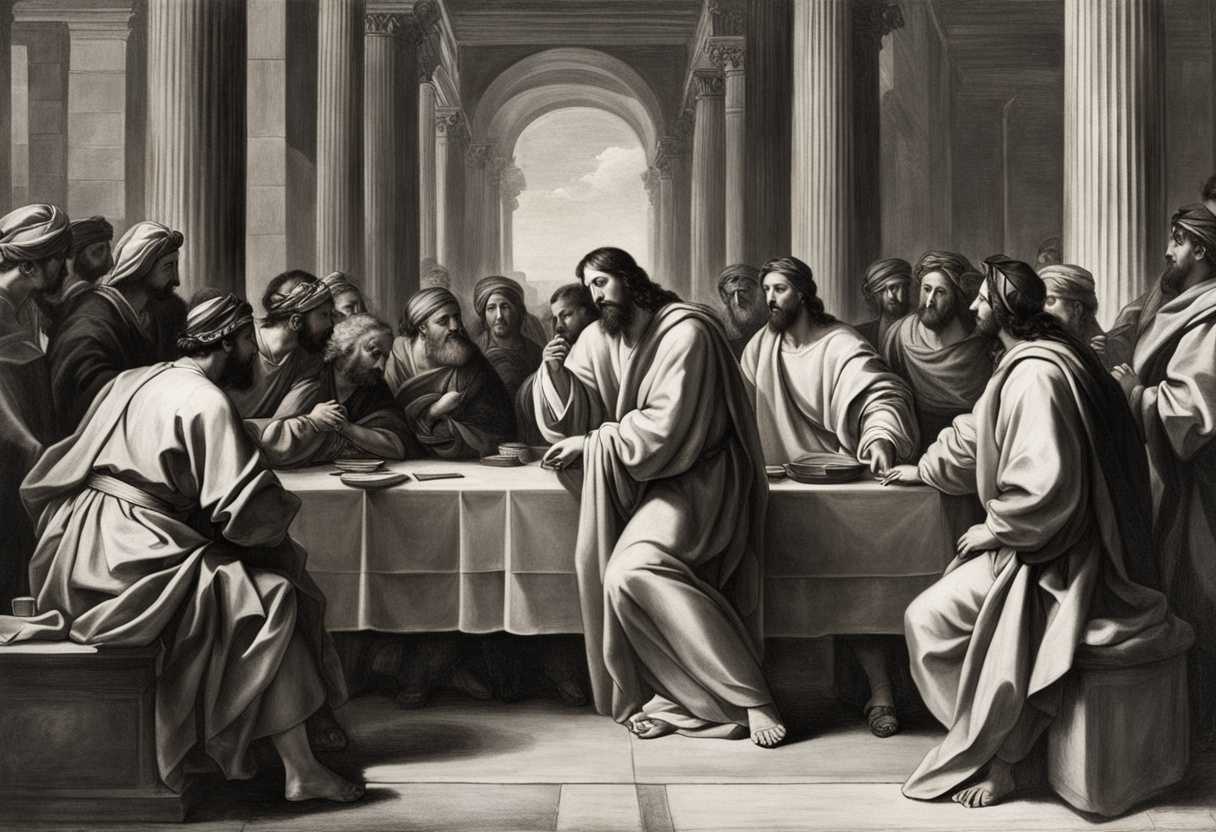
In Matthew chapter 22, we find Jesus engaged in a heated discussion with the Pharisees and Herodians in the temple in Jerusalem. The Pharisees, known for their strict adherence to Jewish law, and the Herodians, supporters of King Herod and the Roman occupation, have come together to challenge Jesus. The scene is tense as they try to trap Jesus with their questions, hoping to discredit him in front of the crowds.
The setting is the temple courtyard, bustling with people coming to worship and offer sacrifices. The air is filled with the sounds of prayers, animal sacrifices, and the chatter of the crowd. Jesus stands in the midst of the Pharisees and Herodians, his disciples nearby, listening intently to the exchange. The sun beats down on the stone courtyard, casting long shadows as the group debates the issue of paying taxes to Caesar.
As the Pharisees and Herodians try to entrap Jesus with their question about paying taxes, Jesus responds with wisdom and insight that leaves them amazed. The tension in the air is palpable as Jesus navigates the tricky political and religious landscape, ultimately revealing a deeper truth about the relationship between God and earthly authorities. The scene is a powerful example of Jesus’ ability to navigate complex situations with grace and truth.
What is Matthew 22:18-22 about?
This powerful verse from the Bible holds a profound message about the importance of balancing our earthly obligations with our spiritual duties. Jesus is reminding us that as members of society, we have responsibilities to fulfill, such as paying taxes and obeying laws established by earthly authorities. At the same time, we are also called to honor our spiritual commitments and devote ourselves to the worship and service of God.
Think about it, dear reader: How can we navigate the complexities of living in this world while remaining true to our faith? We can fulfill both sets of obligations without compromise by understanding that. Recognizing that serving God does not mean neglecting our responsibilities in society, but rather integrating our spiritual values into our everyday actions.
So, the next time you find yourself torn between worldly duties and spiritual commitments, remember Jesus’ wise words: give to Caesar what is Caesar’s and to God what is God’s. Strive to find harmony in fulfilling both, knowing that by honoring both realms, you are living a life aligned with your beliefs and values.
Understanding what Matthew 22:18-22 really means
In the narrative of Matthew 22:18-22, we witness a profound interaction between Jesus and the Pharisees and Herodians, who seek to entrap Him with a question about paying taxes to Caesar. Jesus astutely perceives their deceitful motives, addressing them as “hypocrites,” which immediately exposes their insincerity. By asking to see the coin used for paying the tax, Jesus employs a tangible object to ground His teaching in a practical example, making His message accessible and relatable.
When Jesus inquires about the image and inscription on the coin, He shifts the focus from the political realm to the spiritual, prompting contemplation on deeper allegiances and identities. His response, “Give back to Caesar what is Caesar’s, and to God what is God’s,” draws a clear distinction between civic obligations and spiritual devotion. This statement underscores the importance of fulfilling both sets of responsibilities, emphasizing the need for integrity and balance in our lives.
The relevance of this passage extends to contemporary society, where individuals often grapple with the intersection of civic duties and spiritual commitments. Jesus’ teaching offers a framework for navigating these complexities, encouraging us to honor both our earthly responsibilities and heavenly obligations. By reflecting on the principle of rendering to each their due, we are reminded to live with integrity and to uphold our civic and spiritual duties with diligence.
In practical terms, this passage can guide individuals facing ethical dilemmas, such as a Christian business owner navigating conflicting government regulations and faith principles. By contemplating Jesus’ words, they may find clarity in balancing their obligations to the state while remaining true to their spiritual convictions. This reflective process can lead to a harmonious integration of civic responsibilities and spiritual values, fostering a life marked by integrity and faithfulness.
Ultimately, Matthew 22:18-22 challenges us to examine our loyalties and responsibilities, urging us to live authentically in both our civic and spiritual spheres. By delving into the deeper meanings of Jesus’ teachings and applying them to our contemporary context, we can navigate the complexities of modern life with wisdom and steadfastness. May we heed the call to uphold integrity and balance in all aspects of our lives, honoring both our earthly duties and heavenly calling.
Is it right to prioritize God over worldly concerns?
Jesus is answering a question about paying taxes in the passage you are referring to. He responds by pointing out the distinction between the things that belong to God and the things that belong to the world. Jesus emphasizes the importance of prioritizing God over worldly concerns by instructing to give to Caesar what belongs to Caesar and to give to God what belongs to God.
This verse indicates that while we are called to fulfill our obligations in the world, such as paying taxes, our ultimate allegiance and devotion should be to God. We demonstrate our faith and trust in God above all else by prioritizing Him over worldly concerns. This means seeking first the Kingdom of God and putting Him at the center of our lives, trusting that He will provide for our needs and guide us in all aspects of our lives. Prioritizing God over worldly concerns ultimately allows us to live in alignment with His will and purposes. We acknowledge God’s sovereignty and invite His presence and blessing by recognizing that everything belongs to Him and giving Him the rightful place in our lives. This verse serves as a reminder to keep our focus on God and to trust in Him above all else, knowing that He is the source of true fulfillment and security.
Application
Think about your busy day — balancing work calls, family time, and personal obligations. Are you also carving out moments to honor your spiritual commitments? Just like you manage your tasks at work and home, ensure you’re giving to God what is God’s and to society what is society’s. Align your actions with both spiritual and earthly duties. Are you living with integrity in every aspect of your life?

Reverend Michael Johnson is an experienced Church Minister with a profound expertise in spirituality and guidance. With a serene presence and a compassionate heart, he has faithfully served his congregation for over 20 years, leading them on a spiritual journey towards inner peace and enlightenment. Reverend Johnson’s extensive knowledge of religious philosophies and profound understanding of human nature have made him a trusted confidant and mentor to many, as he seamlessly weaves his profound wisdom into life teachings. Reverend Johnson’s calming demeanor and empathetic nature continue to uplift and heal souls, nurturing a sense of unity and tranquility within his community.