
Luke 5:3-4 is about Jesus teaching the importance of faith and humility through the symbolic act of getting into Simon Peter’s boat to continue teaching the crowds.
3 And he got into one of the boats, which was Simon’s, and asked him to put out a little from the land. And he sat down and taught the people from the boat.
4 And when he had finished speaking, he said to Simon, “Put out into the deep and let down your nets for a catch.”
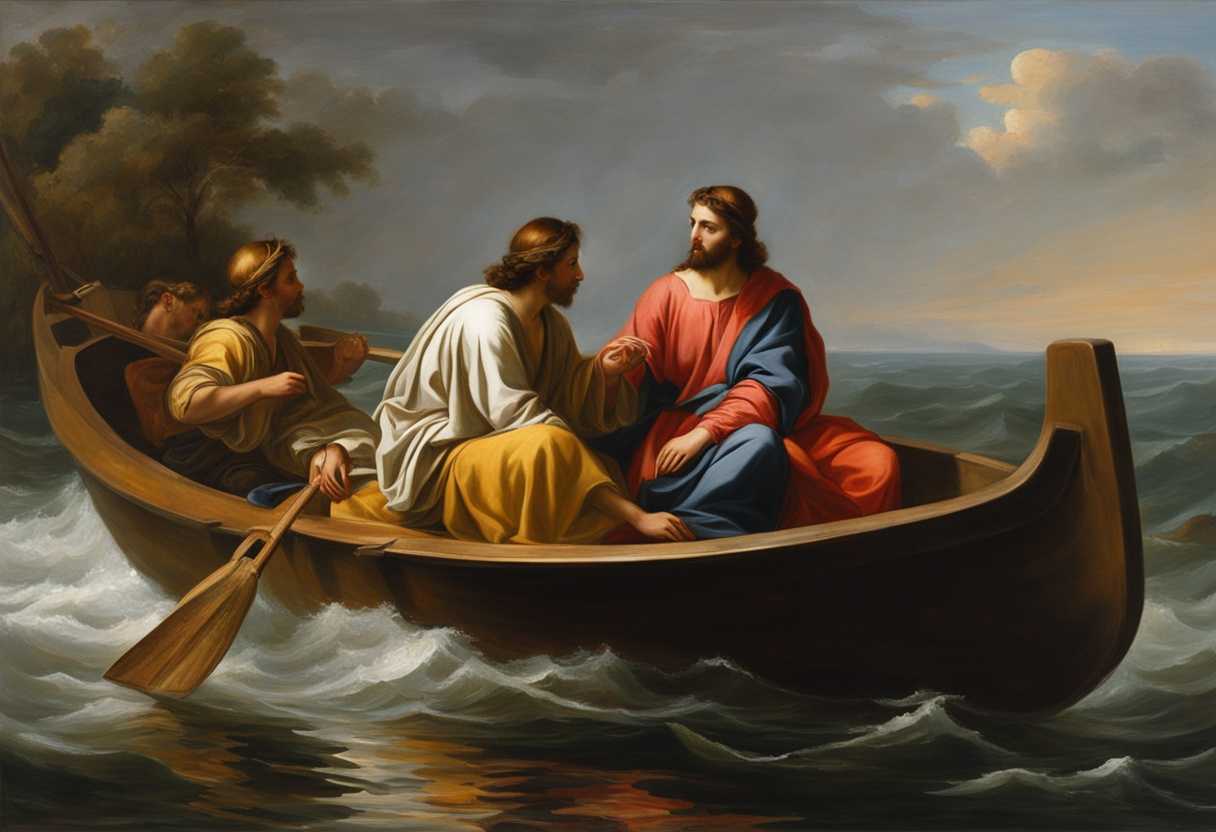
Setting the Scene for Luke 5:3-4
In Luke chapter 5, we find Jesus teaching by the Sea of Galilee. The scene is set on a beautiful morning, with the sun rising over the calm waters of the sea. A crowd has gathered on the shore to listen to Jesus speak, eager to hear His words of wisdom and witness the miracles He performs.
Among the crowd are Simon Peter, Andrew, James, and John, who are fishermen by trade. They had been out all night fishing but had caught nothing. Jesus sees their empty boats and asks Simon Peter to take Him out a little from the shore so He can continue teaching the crowd. After finishing His teaching, Jesus tells Simon to go out into the deep water and let down their nets for a catch.
Simon, hesitant at first due to their unsuccessful night of fishing, obeys Jesus and lets down the nets. What happens next is nothing short of miraculous – the nets become so full of fish that they begin to break, and they have to call for help from their partners in the other boat. This incredible catch of fish leads Simon Peter to recognize Jesus’ power and authority, prompting him to fall at Jesus’ knees and acknowledge Him as Lord.
What is Luke 5:3-4 about?
Jesus uses a boat as a platform to teach the crowd gathered on the shore in this verse. This setting highlights the practical ways in which Jesus used everyday objects and situations to convey his messages. Imagine the scene: Jesus, the teacher, speaking wisdom from a boat while the people listened attentively from the shore. This visual not only brings the lesson to life but also shows the importance of adapting one’s environment for effective communication.
Then comes the miraculous catch of fish. Jesus tells Simon, a fisherman, to cast his nets even though they had been out all night without catching anything. This moment is a powerful display of Jesus’s authority over nature and his ability to provide abundantly when least expected. It challenges us to trust in Him even when our efforts seem futile. Have you ever experienced a situation where you felt like giving up, only to be surprised by a miraculous turn of events? The story of the miraculous catch of fish reminds us that with faith and obedience, God can bring about blessings beyond our imagination.
Understanding what Luke 5:3-4 really means
Jesus found Himself teaching by the tranquil shores of the Lake of Gennesaret, also known as the Sea of Galilee. As He observed two boats resting by the water, left behind by fishermen who were tidying their nets after a night of toiling, He chose to board Simon Peter’s boat. Requesting Simon to push the boat slightly away from the shore, Jesus sat down and began imparting wisdom to the eager crowd gathered on the beach.
The seemingly simple instruction for Simon to “put out a little from shore” carries profound significance. It symbolizes the initial step of obedience and trust required for a greater miracle to unfold. By complying with this minor directive, Simon sets the stage for a divine intervention that defies human logic. Jesus then challenges Simon further, urging him to venture into deeper waters and cast his nets for a catch, prompting a test of faith and action beyond the familiar and comfortable.
This narrative echoes a recurring theme in the Bible, where obedience to God’s commands leads to miraculous outcomes. In John 21:6, post-resurrection, Jesus directs the disciples to cast their nets on the right side of the boat, resulting in an abundant catch. This reinforces the principle that obedience to divine guidance often precedes unexpected blessings. Proverbs 3:5-6 further emphasizes the importance of trusting in the Lord wholeheartedly, rather than relying solely on human understanding, for a straight and purposeful path.
The account of Jesus and Simon Peter resonates with contemporary audiences, urging reflection on the intertwined concepts of faith and obedience. Just as Simon had to trust in Jesus’ words over his own expertise, individuals today are challenged to relinquish control and rely on God’s guidance, even when it contradicts conventional wisdom. The call to “put out into deep water” serves as a metaphor for stepping out of comfort zones, embracing risks, and entrusting the outcomes to a higher power.
Consider a seasoned professional accustomed to relying on their strategies suddenly prompted to adopt a counterintuitive approach. Despite initial doubts, following this divine nudge leads to unprecedented success. This anecdote mirrors Simon Peter’s experience, highlighting the transformative power of trusting in God’s wisdom above human reasoning. By contemplating this passage, individuals are encouraged to assess areas where self-reliance hinders divine intervention and to embrace the challenge of stepping into deeper waters of faith.
Engaging in personal reflection on instances of over-reliance on human understanding can unveil opportunities where God beckons to trust Him more deeply. Sharing experiences of stepping out in faith with a supportive community fosters mutual encouragement and reinforces the belief in God’s providential plans, even amidst uncertainty. Through the lens of Luke 5:3-4, believers are reminded of the profound impact of faith and obedience, inspiring them to embark on journeys of trust and obedience, knowing that divine guidance leads to remarkable outcomes.
How can we have faith to follow Jesus?
Having faith to follow Jesus means trusting in Him and His teachings and being willing to step out in obedience, even when it may not make complete sense to us. Simon Peter initially expresses doubt because they had already been fishing all night without success when Jesus tells him to go out into deep water and let down the nets for a catch in the referenced verse. However, despite his doubts, Simon Peter chooses to have faith in Jesus and his obedience leads to a miraculous catch of fish.
To have faith to follow Jesus means being able to recognize His authority and power, even in situations that seem impossible or unlikely. It requires letting go of our doubts and fears, and instead entrusting ourselves fully into His hands. When we have faith to follow Jesus, we are willing to step out of our comfort zone, take risks, and follow His leading wherever it may take us.
Having faith to follow Jesus also involves a deep belief that He knows what is best for us and that His plans are always good, even if we may not immediately see or understand them. It means surrendering our own will and desires to His, and allowing Him to guide us even when the path ahead seems uncertain or challenging. Having faith to follow Jesus ultimately requires a willingness to trust in His goodness, wisdom, and love, and to walk in obedience to Him no matter the circumstances.
Application
Just as the disciples dropped their nets without hesitation when Jesus called them, let’s leave behind our doubts and fears, and fully embrace His guidance. It’s time to step out in faith, just like Peter and the others did. Are you ready to trust, take a leap of faith, and move boldly towards your calling today?

Reverend Michael Johnson is an experienced Church Minister with a profound expertise in spirituality and guidance. With a serene presence and a compassionate heart, he has faithfully served his congregation for over 20 years, leading them on a spiritual journey towards inner peace and enlightenment. Reverend Johnson’s extensive knowledge of religious philosophies and profound understanding of human nature have made him a trusted confidant and mentor to many, as he seamlessly weaves his profound wisdom into life teachings. Reverend Johnson’s calming demeanor and empathetic nature continue to uplift and heal souls, nurturing a sense of unity and tranquility within his community.