
Matthew 17:1-4 is about the transfiguration of Jesus on a high mountain, revealing to his disciples Peter, James, and John his divine nature and glory as the Son of God.
1 And after six days Jesus took with him Peter and James, and John his brother, and led them up a high mountain by themselves.
2 And he was transfigured before them, and his face shone like the sun, and his clothes became white as light.
3 And behold, there appeared to them Moses and Elijah, talking with him.
4 And Peter said to Jesus, “Lord, it is good that we are here. If you wish, I will make three tents here, one for you and one for Moses and one for Elijah.”
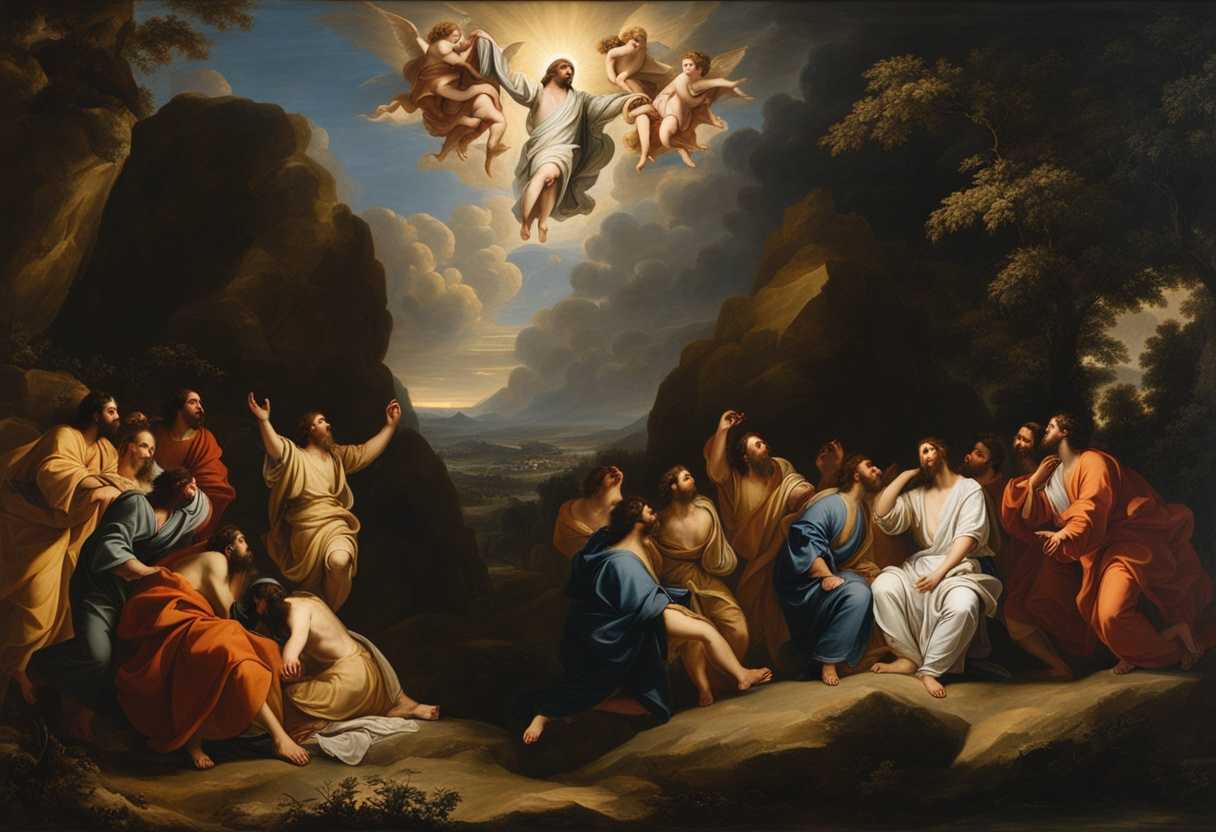
Setting the Scene for Matthew 17:1-4
In Matthew chapter 17, we find Jesus taking Peter, James, and John up a high mountain. The scene is set in the late afternoon, with the sun casting a warm golden glow over the landscape. As they ascend the mountain, the disciples are filled with a sense of anticipation and wonder, unsure of what is about to unfold.
Upon reaching the summit, Jesus is transfigured before them, his face shining like the sun and his clothes becoming as white as light. Suddenly, Moses and Elijah appear, talking with Jesus. Peter, James, and John are awestruck by this incredible sight, witnessing a moment of divine revelation as they see Jesus in his glorified state conversing with two of the greatest figures in Jewish history.
Overwhelmed by the experience, Peter suggests building shelters for Jesus, Moses, and Elijah. However, before he can finish speaking, a bright cloud envelops them, and a voice from the cloud declares, “This is my Son, whom I love; with him I am well pleased. Listen to him!” In this powerful moment, the disciples are filled with fear and fall face down to the ground, realizing the magnitude of the divine presence surrounding them.
What is Matthew 17:1-4 about?
The Transfiguration of Jesus on the mountain is a pivotal event in the Gospels, where Jesus’ divine nature is revealed before some of his closest disciples. Jesus’ appearance changes in this extraordinary moment, and he is seen speaking with Moses and Elijah, two prominent figures from the Old Testament. This event emphasizes Jesus’ continuity with the Jewish tradition while also highlighting his unique role as the Son of God.
Imagine witnessing this incredible scene on the mountain – the radiant glory of Jesus, the presence of Moses representing the Law, and Elijah representing the prophets. It is a powerful image of continuity between the old and new covenants, as Jesus fulfills the prophecies and teachings of the Old Testament. Through the Transfiguration, Jesus offers a glimpse of his true identity, preparing his disciples for the challenges ahead and affirming his divine mission. This moment serves as a profound revelation of Jesus’ deity and a foreshadowing of his ultimate glorification through his death and resurrection.
Understanding what Matthew 17:1-4 really means
The passage in Matthew 17:1-4 recounts the Transfiguration of Jesus, a significant event where Jesus reveals His divine glory to three of His disciples on a high mountain. This setting on a mountain is not incidental; in biblical tradition, mountains often symbolize places of divine encounter and revelation, echoing Moses’ experience on Mount Sinai. As Jesus is transfigured before them, His face shines like the sun, symbolizing the brilliance and purity of His divine nature, while His clothes become as white as light, signifying holiness and the presence of God. The presence of Moses and Elijah alongside Jesus represents the fulfillment of the Law and the Prophets in Him, emphasizing His divine authority and role as the culmination of God’s promises.
The imagery in this passage, such as Jesus’ radiant appearance and the appearance of Moses and Elijah, carries deep symbolic meaning. It serves to affirm Jesus’ identity as the Son of God and the fulfillment of God’s plan for salvation. Peter’s response, expressing a desire to remain in that moment of divine revelation, reflects the awe and reverence inspired by the Transfiguration. This event not only reveals Jesus’ divine nature but also underscores His authority and the continuity between the Old Testament prophecies and His ministry.
The Transfiguration is not merely a historical event but holds relevance for believers today. It serves as a reminder of Jesus’ divine glory and His ultimate fulfillment of God’s promises. Just as Peter, James, and John witnessed the Transfiguration, believers are encouraged to seek moments of divine encounter and transformation in their own lives. In times of doubt or difficulty, reflecting on the Transfiguration can provide reassurance of Jesus’ authority and offer hope and strength.
Consider a scenario where an individual facing challenges in their faith attends a spiritual gathering and experiences a profound sense of God’s presence during worship. This moment of divine encounter, akin to the Transfiguration, renews their faith and equips them with the strength to navigate their struggles with renewed hope and confidence. The Transfiguration, with its vivid imagery and theological significance, invites believers to seek and cherish moments of divine revelation in their lives, reminding them of the glory and hope found in Christ.
In conclusion, the Transfiguration stands as a powerful testament to Jesus’ divine nature and His pivotal role in fulfilling God’s redemptive plan. It beckons believers to seek divine encounters, reminding them of the transformative power of encountering God’s presence. This passage not only affirms Jesus’ identity as the Son of God but also offers a source of hope and strength for believers navigating the challenges of life. Just as Peter, James, and John were privileged to witness the Transfiguration, believers today are invited to seek moments of divine revelation and experience the transformative power of encountering the glory of Christ.
How can we recognize God’s presence in our lives?
We can recognize God’s presence in our lives through moments of clarity and revelation that bring us closer to Him. God may reveal Himself to us through moments of deep understanding, insight, or spiritual experiences, just as Jesus revealed His glory to His disciples on the mountain. These moments can serve as a powerful reminder of God’s active presence in our lives and His desire for us to draw near to Him.
Furthermore, God’s presence can also be recognized through the peace, comfort, and guidance He provides in our daily lives. Like how Jesus comforted His disciples when they were fearful, God is present in our lives to offer us reassurance, strength, and help in times of trouble. When we feel His peace and guidance leading us through challenges, uncertainties, and difficulties, we can be sure of His ever-present care and love for us. Recognizing God’s presence in our lives ultimately requires openness, faith, and a willingness to seek Him in all circumstances. We can cultivate a deeper awareness of God’s presence and experience His transformative power in our lives by staying attuned to His voice, guidance, and the signs of His work around us. We too can recognize and be deeply touched by God’s presence when we are receptive to His leading and work in our lives, just as the disciples recognized Jesus’ presence on the mountain and were profoundly impacted.
Application
Embrace the transformative message found in Matthew 17:1-4. Let the radiant display on the mountain illuminate your path and remind you of the boundless power of our Savior. Dive deep into the essence of faith and grasp the magnitude of Jesus as the Son of God. Use this powerful encounter to invigorate your faith journey and bring you closer to the divine. How will you align yourself with the majestic authority of Christ in your life?

Reverend Michael Johnson is an experienced Church Minister with a profound expertise in spirituality and guidance. With a serene presence and a compassionate heart, he has faithfully served his congregation for over 20 years, leading them on a spiritual journey towards inner peace and enlightenment. Reverend Johnson’s extensive knowledge of religious philosophies and profound understanding of human nature have made him a trusted confidant and mentor to many, as he seamlessly weaves his profound wisdom into life teachings. Reverend Johnson’s calming demeanor and empathetic nature continue to uplift and heal souls, nurturing a sense of unity and tranquility within his community.