
Matthew 23:13-33 is about Jesus criticizing the religious leaders of his time for their hypocrisy, emphasizing that true righteousness is found in humble service and genuine love for God and others.
13 “But woe to you, scribes and Pharisees, hypocrites! For you shut the kingdom of heaven in people’s faces. For you neither enter yourselves nor allow those who would enter to go in.”
14 Woe to you, scribes and Pharisees, hypocrites! For you devour widows’ houses and for a pretense you make long prayers; therefore you will receive the greater condemnation.
15 “Woe to you, scribes and Pharisees, hypocrites! For you travel across sea and land to make a single proselyte, and when he becomes a proselyte, you make him twice as much a child of hell as yourselves.”
16 “Woe to you, blind guides, who say, ‘If anyone swears by the temple, it is nothing, but if anyone swears by the gold of the temple, he is bound by his oath.’”
17 You blind fools! For which is greater, the gold or the temple that has made the gold sacred?
18 And you say, ‘If anyone swears by the altar, it is nothing, but if anyone swears by the gift that is on the altar, he is bound by his oath.’
19 You blind men! For which is greater, the gift or the altar that makes the gift sacred?
20 Whoever swears by the altar swears by it and by everything on it.
21 And whoever swears by the temple swears by it and by him who dwells in it.
22 And whoever swears by heaven swears by the throne of God and by him who sits upon it.
23 “Woe to you, scribes and Pharisees, hypocrites! For you tithe mint and dill and cumin, and have neglected the weightier matters of the law: justice and mercy and faithfulness. These you ought to have done, without neglecting the others.”
24 You blind guides, straining out a gnat and swallowing a camel!
25 “Woe to you, scribes and Pharisees, hypocrites! For you clean the outside of the cup and the plate, but inside they are full of greed and self-indulgence.
26 You blind Pharisee! First clean the inside of the cup and the plate, that the outside also may be clean.
27 “Woe to you, scribes and Pharisees, hypocrites! For you are like whitewashed tombs, which outwardly appear beautiful, but within are full of dead people’s bones and all uncleanness.”
28 So you also outwardly appear righteous to others, but within you are full of hypocrisy and lawlessness.
29 “Woe to you, scribes and Pharisees, hypocrites! For you build the tombs of the prophets and decorate the monuments of the righteous,
30 and say, ‘If we had lived in the days of our fathers, we would not have taken part with them in shedding the blood of the prophets.’
31 Thus you witness against yourselves that you are sons of those who murdered the prophets.
32 Fill up, then, the measure of your fathers.
33 You serpents, you brood of vipers, how are you to escape being sentenced to hell?
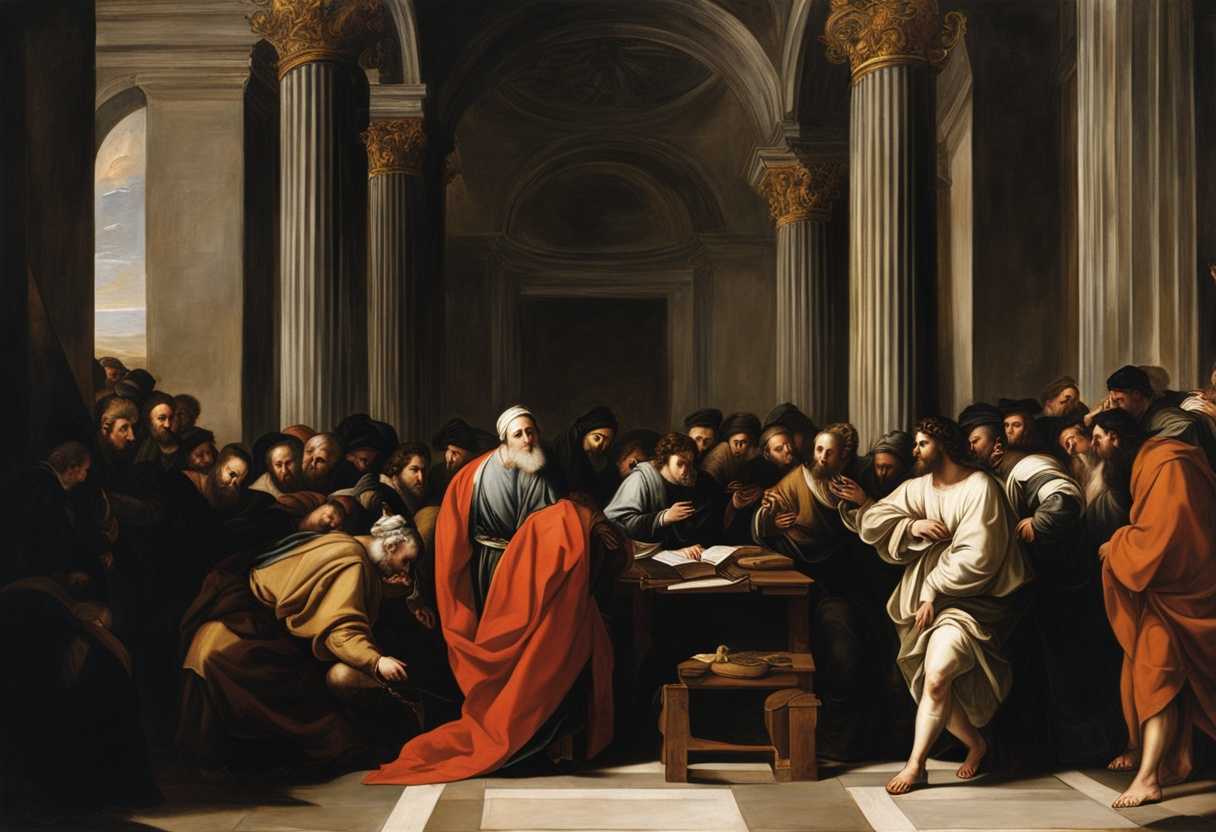
Setting the Scene for Matthew 23:13-33
In Matthew chapter 23, Jesus is addressing a crowd of people and his disciples in the temple in Jerusalem. The scene is intense as Jesus confronts the religious leaders of the time, the Pharisees and the teachers of the law, for their hypocrisy and lack of true righteousness. The atmosphere is charged with tension as Jesus delivers a series of woes, denouncing their outward piety while condemning their inward corruption.
The Pharisees and teachers of the law, who had gathered to challenge Jesus and test his teachings, find themselves on the receiving end of his scathing rebuke. Jesus calls them out for their pride, greed, and legalism, warning them of the consequences of their actions. The disciples, who are witnessing this exchange, are likely feeling a mix of shock and awe at Jesus’ boldness and authority.
The temple surroundings provide a fitting backdrop for this confrontation, with its grand architecture and bustling crowds. The air is thick with emotion as Jesus speaks truth to power, challenging the religious elite to examine their hearts and turn back to God. This pivotal moment in Jesus’ ministry serves as a powerful lesson on the importance of humility, sincerity, and true devotion in following God.
What is Matthew 23:13-33 about?
This verse serves as a powerful reminder for all of us to reflect on our own actions and intentions. Jesus condemns the Pharisees for focusing on outward displays of righteousness while neglecting the true essence of righteousness: having a sincere and genuine heart. It challenges us to consider whether our own actions are driven by a desire to truly do good or simply to display a facade of righteousness for others to see. I often ask my students to think about their motivations behind their actions as a teacher. Are they doing something because it is the right thing to do, or are they seeking praise and recognition from others? Jesus’s words urge us to prioritize authenticity and integrity in our moral conduct, rather than being driven by the desire to appear righteous in the eyes of society. We can truly embody the principles of righteousness and avoid falling into the trap of hypocrisy by focusing on cultivating genuine goodness within ourselves. Let us strive to act with humility and sincerity, rather than seeking validation from external sources.
Understanding what Matthew 23:13-33 really means
In Matthew 23:13-33, Jesus delivers a scathing rebuke to the scribes and Pharisees, exposing their hypocrisy and legalism. He condemns their outward displays of piety while neglecting justice, mercy, and faithfulness. The context of Jesus’ words is crucial, as he addresses those who should have been spiritual leaders but had strayed from the heart of God’s teachings. By calling them hypocrites, Jesus highlights the disconnect between their actions and their professed beliefs, emphasizing the importance of genuine faith over mere religious appearances.
One key phrase, “Woe to you, teachers of the law and Pharisees, you hypocrites!” encapsulates Jesus’ strong condemnation of the religious leaders. He accuses them of shutting the door of the kingdom of heaven in people’s faces, indicating how their legalistic approach hindered others from experiencing God’s grace. The imagery of straining out a gnat but swallowing a camel vividly portrays their misplaced priorities, focusing on minor details while neglecting weightier matters like justice and mercy.
Related passages such as Matthew 7:5, Micah 6:8, and James 1:27 echo the themes present in Jesus’ words to the Pharisees. They emphasize the importance of self-examination, acting justly, loving mercy, and caring for the vulnerable. These passages serve as a reminder of the core values that God values, contrasting with the Pharisees’ emphasis on external rituals and legalism.
The relevance of Jesus’ message to contemporary society is striking. Today, individuals can still fall into the trap of hypocrisy, prioritizing outward appearances over genuine faith. The dichotomy between legalism and compassion remains a pertinent issue, challenging us to prioritize love, mercy, and justice in our interactions with others. Self-examination is crucial, prompting us to reflect on our own lives before passing judgment on others.
An anecdote illustrating the dangers of misplaced priorities in religious practice further drives home the message of Matthew 23:13-33. The story of a church leader who neglected his family while focusing on external religious observances serves as a cautionary tale. It underscores the importance of living out one’s faith through love, compassion, and humility, rather than mere adherence to religious rules.
In conclusion, Jesus’ words serve as a call to action for believers today. We are encouraged to examine our lives, ensuring that our actions align with the core values of our faith. Striving to embody genuine faith characterized by love, mercy, and humility is paramount, transcending mere religious rituals. Let us heed Jesus’ warning against hypocrisy and legalism, embracing a faith that reflects the heart of God.
Are we truly living out our faith?
The verse reminds us that it is not enough to just outwardly appear religious or to give off the appearance of living out our faith. We must look deeper within ourselves and examine if we are truly embodying the values and principles of our faith. It emphasizes the importance of authenticity and sincerity in our spiritual practices.
It challenges us to reflect on whether our actions align with our beliefs and if our faith is reflected in the way we treat others and live our daily lives. The verse serves as a reminder that true faith requires more than just adhering to religious rituals or traditions; it requires genuine love, compassion, and righteousness. The verse urges us to seek a genuine and personal relationship with our faith, rather than just going through the motions. It calls us to live out our faith in a way that truly reflects the teachings and values of our beliefs, both in our words and our actions.
Application
Embrace the teachings of Matthew 23:13-33 and let them guide you to a life filled with humility, compassion, and integrity. It’s time to move beyond just talking the talk and start walking the walk by embodying love and grace in every action. Take a moment to look within, commit to living out the wisdom of Jesus, and make a difference in the world around you. Will you rise to the challenge and transform your daily life with the teachings of Matthew 23:13-33?

Reverend Michael Johnson is an experienced Church Minister with a profound expertise in spirituality and guidance. With a serene presence and a compassionate heart, he has faithfully served his congregation for over 20 years, leading them on a spiritual journey towards inner peace and enlightenment. Reverend Johnson’s extensive knowledge of religious philosophies and profound understanding of human nature have made him a trusted confidant and mentor to many, as he seamlessly weaves his profound wisdom into life teachings. Reverend Johnson’s calming demeanor and empathetic nature continue to uplift and heal souls, nurturing a sense of unity and tranquility within his community.