
Mark 10:17-18 is about Jesus reminding everyone that no one is inherently good except for God, and challenging a rich man to recognize that true goodness comes from following Him and not just through material wealth.
17 And as he was setting out on his journey, a man ran up and knelt before him and asked him, “Good Teacher, what must I do to inherit eternal life?”
18 And Jesus said to him, “Why do you call me good? No one is good except God alone.
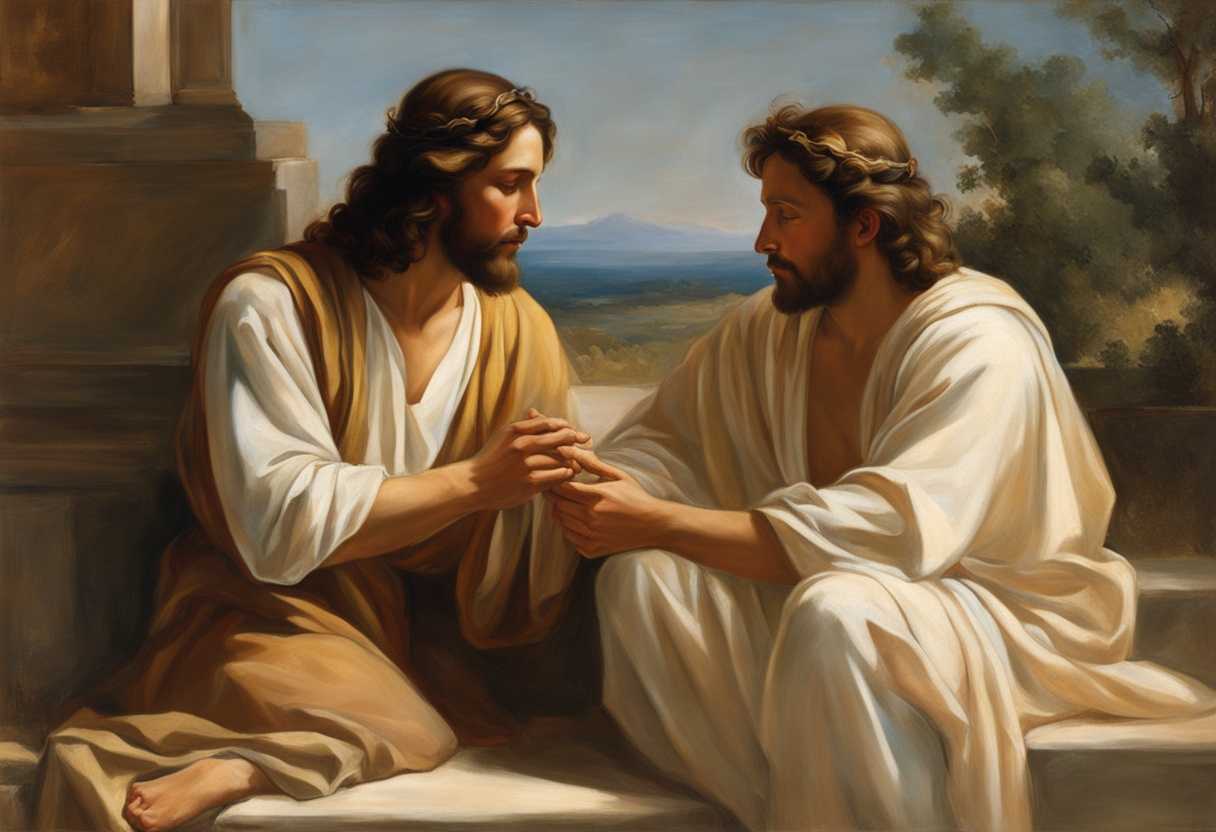
Setting the Scene for Mark 10:17-18
The scene in Mark chapter 10:17-18 takes place in the region of Judea, near the Jordan River. Jesus is surrounded by a large crowd of people who have been following Him, eager to hear His teachings and witness His miracles. Among the crowd is a wealthy young man, known for his devout observance of the Jewish laws and commandments.
The young man approaches Jesus with a sense of urgency and humility, kneeling before Him as a sign of respect. His eyes are filled with a mixture of curiosity and reverence as he addresses Jesus, seeking guidance on how to inherit eternal life. Jesus, perceiving the sincerity of the young man’s heart, looks at him with love and compassion, knowing the inner struggle that the young man is facing.
As the conversation unfolds between Jesus and the young man, the atmosphere is charged with anticipation and tension. The young man’s question reveals a deep longing for spiritual fulfillment, while Jesus’ response challenges him to confront the true condition of his heart. The encounter between the two figures becomes a pivotal moment in the young man’s journey of faith, as he grapples with the radical call to surrender his earthly possessions and follow Jesus wholeheartedly.
What is Mark 10:17-18 about?
This verse focuses on the concept of spiritual wealth and the true cost of following Christ. Jesus challenges the rich man to let go of his material possessions in exchange for a life of discipleship. This interaction highlights the importance of priorities and values in the Christian faith. Jesus is showing that true richness comes from the state of one’s heart and their commitment to Him.
Have you ever thought about what you value most in life? This verse encourages us to reflect on our own attachments to material possessions and consider if they are hindering our relationship with God. It prompts us to ask ourselves: Are we willing to give up everything for the sake of following Christ wholeheartedly? It challenges us to evaluate where our true treasure lies and whether we are willing to prioritize our faith above all else. This verse serves as a reminder that our devotion to God should surpass any attachment we have to wealth or material goods. It calls us to reexamine our priorities and commit ourselves fully to the teachings and example of Jesus. This challenge to the rich man is a call for us to let go of anything that hinders our spiritual growth and to embrace a life centered on following Christ, no matter the cost.
Understanding what Mark 10:17-18 really means
In the Gospel of Mark, we encounter the intriguing story of the rich young ruler who approaches Jesus with a burning question about eternal life. This narrative unfolds against the backdrop of a society where wealth was often equated with divine favor, adding layers of complexity to the young man’s inquiry. As the young man addresses Jesus as “Good Teacher,” he not only acknowledges Jesus’ moral and spiritual authority but also reveals his earnest quest for spiritual truth. His question, “What must I do to inherit eternal life?” reflects a common belief of the time that eternal life could be attained through righteous deeds, showcasing his desire for assurance about his spiritual destiny.
Jesus’ response, “Why do you call me good? No one is good except God alone,” serves as a profound challenge to the young man’s perception of goodness. By redirecting the focus from earthly actions to the ultimate source of goodness, Jesus prompts a shift in perspective towards recognizing the divine origin of all goodness. This pivotal moment invites us to ponder the nature of true goodness and to acknowledge that it emanates solely from God, transcending human achievements and standards.
Parallel passages such as Matthew 19:16-17, Romans 3:10-12, and Ephesians 2:8-9 further illuminate the themes of goodness and salvation woven into this encounter. These passages reinforce the notion that righteousness cannot be attained through human efforts alone, emphasizing the essential role of God’s grace in the gift of salvation. In a contemporary context, where societal norms often equate goodness with external actions and accomplishments, this biblical narrative challenges us to reevaluate our understanding of goodness and to recognize the intrinsic connection between goodness and God.
The relevance of this passage extends to modern-day seekers grappling with questions of purpose and eternal significance. Just as the rich young ruler sought answers from Jesus, many individuals today yearn for meaning and assurance regarding their spiritual journey. This story serves as a timeless reminder to look beyond our own striving for righteousness and to embrace the profound truth that eternal life is a gift bestowed by God’s grace. It beckons us to embark on a deeper quest for a relationship with the ultimate source of goodness and fulfillment.
To illustrate the enduring relevance of this narrative, consider a successful individual who, despite worldly achievements, feels a profound sense of emptiness and seeks spiritual fulfillment. Approaching a spiritual mentor for guidance, they echo the rich young ruler’s question, yearning to understand what more they must do to find true peace. In response, the mentor, echoing Jesus’ words, challenges their conventional notions of success and goodness, guiding them towards a deeper, more profound source of fulfillment rooted in a divine relationship.
In conclusion, the encounter between Jesus and the rich young ruler in Mark 10:17-18 beckons us to reassess our understanding of goodness, salvation, and the pursuit of eternal life. It prompts us to acknowledge that true goodness emanates from God alone and that salvation is a gift beyond human merit. This narrative stands as a timeless invitation to embark on a transformative journey towards a deeper relationship with the divine source of all goodness and fulfillment.
What must I do to inherit eternal life?
To inherit eternal life, one must recognize that only God is truly good. This acknowledgment points to the understanding that eternal life is something that can only be attained through God and His righteousness. It highlights the importance of recognizing God’s greatness and our own flaws and limitations in comparison.
Additionally, one must come to Jesus with a humble and sincere heart, seeking His guidance and following His teachings. This involves surrendering one’s own desires and ambitions for the will of God and walking in obedience to His commands. One can inherit the gift of eternal life by living a life in accordance with God’s ways and seeking a personal relationship with Him. A deep commitment to God, a willingness to follow His commands, and a recognition of His supreme goodness ultimately require inheriting eternal life. It is a journey of faith and obedience, trusting in God’s grace and seeking to align one’s life with His will. Those who love Him can experience the fullness of eternal life that God promises.
Application
Think of your life as a crowded inbox or a family dinner table. Amidst the chaos, are you allowing room for true goodness? Reflect on Mark 10:17-18; it’s a reminder that only God is truly good. As followers of Christ, isn’t it our duty to strive for that goodness, to mirror Jesus’s example in everything we do? Ask yourself, are your actions and decisions genuinely reflecting the goodness of God? What will you change today to truly honor our Creator?

Reverend Michael Johnson is an experienced Church Minister with a profound expertise in spirituality and guidance. With a serene presence and a compassionate heart, he has faithfully served his congregation for over 20 years, leading them on a spiritual journey towards inner peace and enlightenment. Reverend Johnson’s extensive knowledge of religious philosophies and profound understanding of human nature have made him a trusted confidant and mentor to many, as he seamlessly weaves his profound wisdom into life teachings. Reverend Johnson’s calming demeanor and empathetic nature continue to uplift and heal souls, nurturing a sense of unity and tranquility within his community.