
Mark 14:12 is about Jesus instructing his disciples to prepare for the Passover meal, symbolizing the upcoming sacrifice of himself as the ultimate Passover Lamb.
12 And on the first day of Unleavened Bread, when they sacrificed the Passover lamb, his disciples said to him, “Where will you have us go and prepare for you to eat the Passover?”
Setting the Scene for Mark 14:12
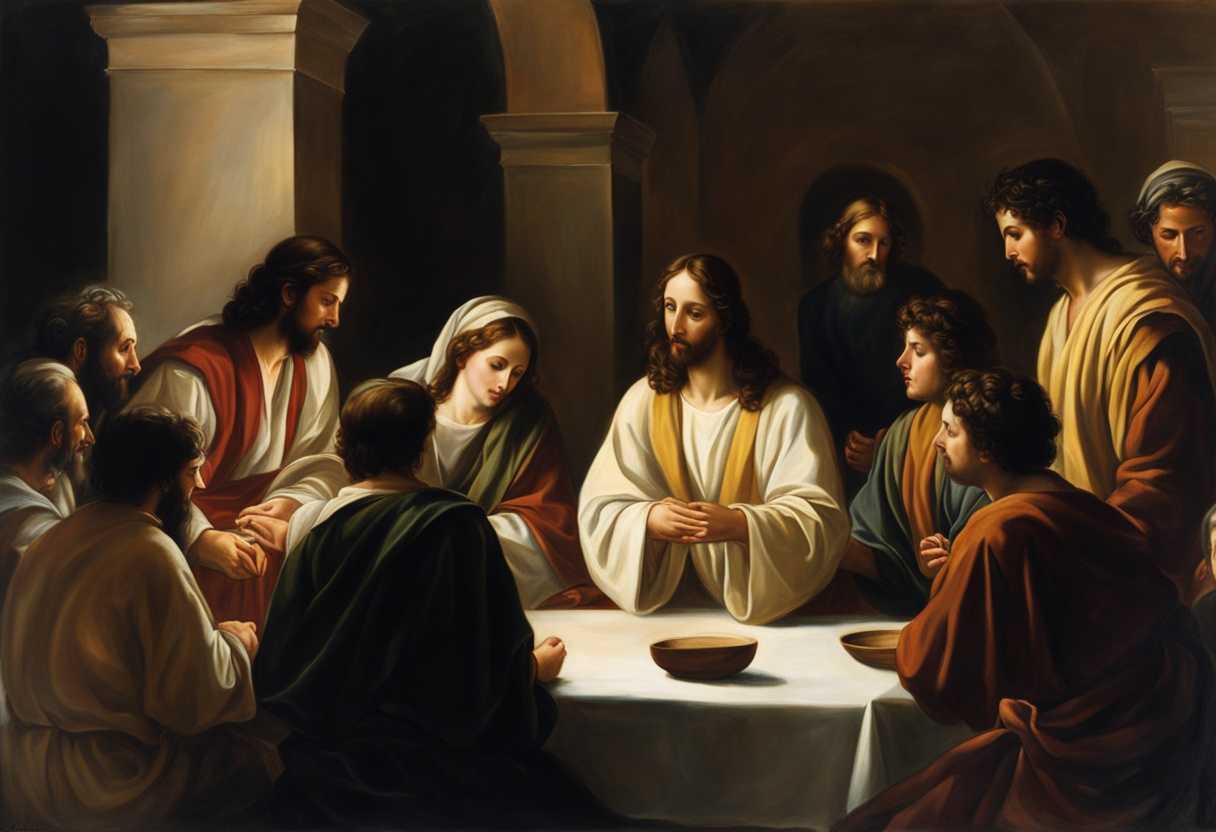
In Mark chapter 14, we find Jesus instructing his disciples to prepare for the Passover meal. The scene is set in Jerusalem, just days before Jesus is to be crucified. The disciples, including Peter, James, John, and the others, have been following Jesus throughout his ministry and are now gathered with him in a large upper room.
The disciples had asked Jesus where they should make preparations for the Passover meal, and he directed them to a specific house in the city. As they arrived at the house, they found a large, furnished upper room ready for them. The disciples began to make the necessary arrangements for the meal, including procuring the lamb, unleavened bread, bitter herbs, and wine.
As evening approached, Jesus and his twelve disciples reclined at the table in the upper room, ready to partake in the Passover meal. This intimate setting would soon become the backdrop for the significant events that would unfold, including Jesus instituting the Lord’s Supper and foretelling his betrayal by one of his own. The atmosphere is tense yet filled with a sense of solemnity as Jesus prepares to fulfill his ultimate purpose on earth.
What is Mark 14:12 about?
Jesus provides guidance to his disciples about preparing for the Passover meal in this verse. This moment is significant because Passover is a deeply symbolic and sacred Jewish tradition commemorating the Israelites’ liberation from slavery in Egypt. Jesus is not only participating in this important tradition but also foreshadowing the upcoming events of his crucifixion and resurrection by instructing his disciples to make preparations for the Passover meal, which would ultimately be linked to the Passover.
Imagine being one of the disciples at that moment, receiving these instructions from Jesus. You would likely feel a mix of anticipation, curiosity, and perhaps even confusion about the deeper meaning behind his words. Jesus, as a teacher, often used everyday activities and rituals to impart profound spiritual lessons. He invited his disciples to prepare for the Passover meal, inviting them to participate in a physical act that held deep spiritual significance, ultimately preparing them for the ultimate sacrifice and redemption that would soon follow. This verse serves as a reminder to us all that even in the midst of mundane tasks like meal preparation, there can be profound lessons and spiritual truths waiting to be discovered.
Understanding what Mark 14:12 really means
During the time of the Passover, a festival steeped in historical and theological significance, Jesus and His disciples were preparing for the Last Supper, a momentous event that would lead to the establishment of the Eucharist. This setting adds depth to the actions and conversations taking place, highlighting the importance of what was about to unfold in the narrative.
In Exodus 12:1-14, the original Passover event is described, laying the foundation for the festival’s importance. This historical context helps us grasp the gravity of the moment as Jesus and His disciples engage in their own preparations. Luke 22:7-13 offers a parallel account, emphasizing the disciples’ obedience and trust as they follow Jesus’ instructions. These passages intertwine to paint a vivid picture of the events leading up to the Last Supper.
Paul’s reference to Christ as our Passover lamb in 1 Corinthians 5:7 bridges the gap between the Old Testament traditions and Jesus’ sacrificial death. This connection underscores the theological significance of Jesus’ role in fulfilling the symbolism of the Passover lamb. It serves as a reminder of the ultimate sacrifice made for humanity’s redemption.
As we reflect on this verse today, we are reminded of the importance of preparation and obedience in our walk with Christ. Just as the disciples readied themselves for the Passover, we are called to prepare our hearts and lives for the presence of Jesus. This preparation involves trust in God’s plan and a willingness to align our actions with His will.
The communal aspect of the Passover meal also speaks to the significance of fellowship and unity within the body of Christ. Just as the disciples gathered around Jesus for this sacred meal, we are encouraged to seek community with fellow believers, sharing in the remembrance of Christ’s sacrifice and the unity it brings. This sense of togetherness strengthens our faith and reinforces the bonds we share as members of God’s family.
In our daily lives, the remembrance of Jesus’ sacrifice at the Last Supper calls us to reflect on the profound impact of His death and resurrection. This act of remembrance is not merely a ritual but a profound moment of introspection and gratitude for the salvation we have received through Christ. It prompts us to live in light of this sacrifice, allowing its transformative power to shape our thoughts, words, and actions.
Consider a family preparing for a significant holiday like Thanksgiving, with meticulous care and anticipation. Similarly, the disciples’ reverence and expectation in preparing for the Passover meal mirror the intentionality and devotion with which we should approach our spiritual lives. Just as every detail of the holiday preparation is done with love and care, so too should we approach our relationship with Christ, with a heart prepared to receive Him fully.
The phrases used in Mark 14:12, such as “First day of Unleavened Bread” and “When they sacrificed the Passover lamb,” carry deep symbolic meaning. They signify purification, readiness, and the sacrificial system of the Old Testament, all pointing towards Jesus as the ultimate Passover lamb. The disciples’ active engagement with Jesus in the narrative underscores the importance of communication and seeking guidance from the Lord in our own lives. These details enrich our understanding of the verse and prompt us to consider how we can actively engage with Christ in our daily walk.
How can we demonstrate humility and servanthood?
To demonstrate humility and servanthood, we can follow the example of Jesus who displayed these qualities through his actions and teachings. Humility involves recognizing our own limitations, weaknesses, and sins, while servanthood involves putting others before ourselves and serving them with love and compassion. We can demonstrate humility and servanthood in our daily lives by imitating Jesus in serving one another without seeking recognition or credit.
One way to show humility and servanthood is by being willing to serve others in practical ways, such as helping those in need, offering our time, talents, and resources, and showing kindness and compassion to those around us. Instead of seeking positions of power and authority, we can seek opportunities to serve and uplift others, following the example of Jesus who washed his disciples’ feet as a symbol of humility and servanthood. We can demonstrate true humility and servanthood in our interactions with others by putting others’ needs above our own and seeking to serve rather than be served.
Humility and servanthood go hand in hand, as true humility involves recognizing that we are not better than others and are called to serve and love one another as Jesus did. We can become more like Jesus and reflect his love and grace to those around us by cultivating a humble and servant heart. Through our actions and attitudes, we can demonstrate humility and servanthood in a world that often values pride and self-centeredness.
Application
Just as we prepare for important meetings at work or family meals, Mark 14:12 urges us to be ready for God’s tasks. Jesus told His disciples to prepare for the Passover, a mission they took seriously. Are your heart, mind, and resources ready for the tasks God has set for you? It’s time to step up and get prepared. Are you ready to take action and serve God’s purpose with the same dedication?

Reverend Michael Johnson is an experienced Church Minister with a profound expertise in spirituality and guidance. With a serene presence and a compassionate heart, he has faithfully served his congregation for over 20 years, leading them on a spiritual journey towards inner peace and enlightenment. Reverend Johnson’s extensive knowledge of religious philosophies and profound understanding of human nature have made him a trusted confidant and mentor to many, as he seamlessly weaves his profound wisdom into life teachings. Reverend Johnson’s calming demeanor and empathetic nature continue to uplift and heal souls, nurturing a sense of unity and tranquility within his community.