
Luke 8:7-9 is about Jesus teaching the parable of the sower, conveying the importance of being receptive to God’s word and allowing it to take root in one’s heart in order to bear fruit and grow spiritually.
7 And some fell among thorns, and the thorns grew up with it and choked it.
8 And some fell into good soil and grew and yielded a hundredfold.” As he said these things, he called out, “He who has ears to hear, let him hear.”
9 And when his disciples asked him what this parable meant,
Setting the Scene for Luke 8:7-9
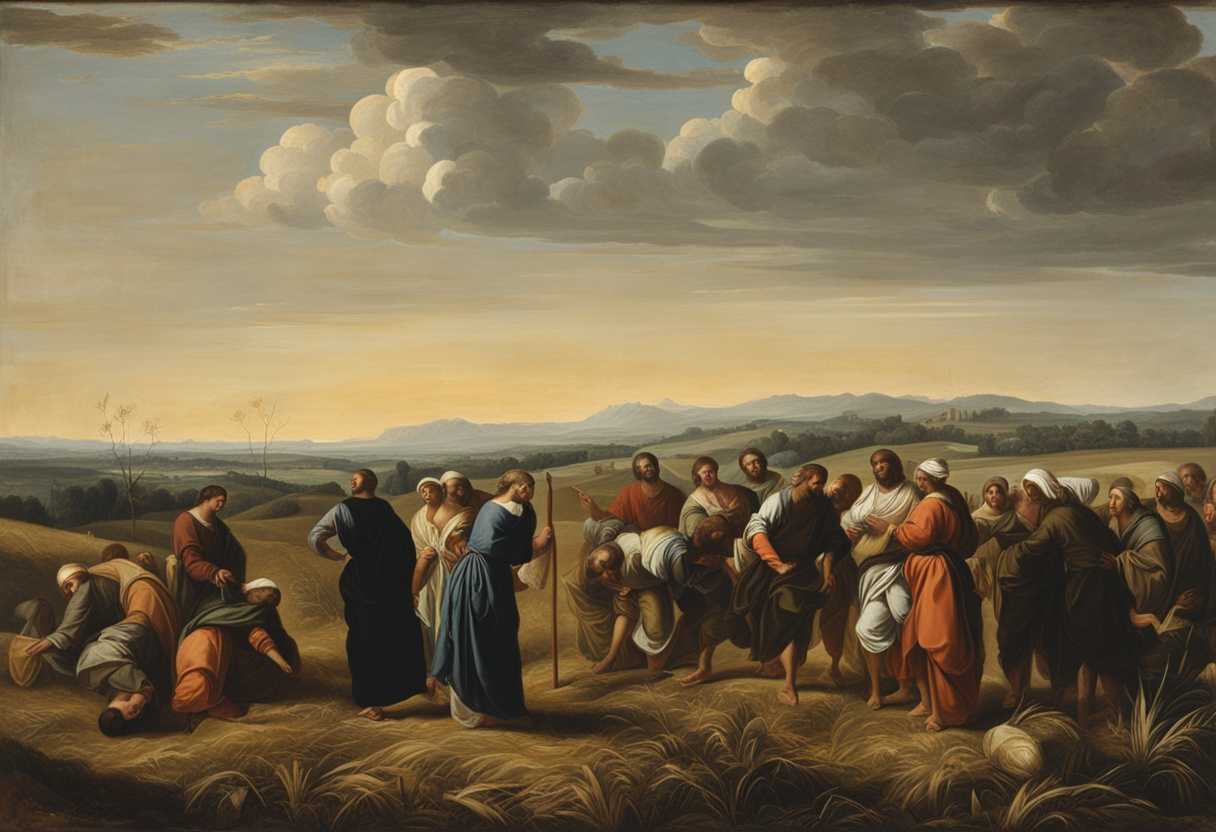
In Luke chapter 8, we find Jesus teaching a large crowd by the sea. The scene is set on the shores of the Sea of Galilee, with the water gently lapping against the shore and a gentle breeze blowing through the air. The crowd has gathered from various nearby towns and villages to hear Jesus speak.
Among the crowd are Jesus’ disciples, including Peter, James, and John, who have been traveling with him and witnessing his miracles. Also present are some women who have been healed by Jesus, such as Mary Magdalene and Joanna, who now follow him and support his ministry. The crowd is a mix of people from different walks of life, all eager to hear the teachings of this remarkable teacher.
As Jesus begins to speak to the crowd, he uses the parable of the sower to convey spiritual truths about the kingdom of God. The people listen intently, some sitting on the ground, others standing in groups, all hanging on his every word. The setting is peaceful and serene, a perfect backdrop for the profound teachings that Jesus imparts to the eager listeners gathered around him.
What is Luke 8:7-9 about?
The Parable of the Sower is a powerful teaching from Jesus that illustrates how people respond differently to God’s word based on the condition of their hearts. Jesus describes four types of soil in this parable: the hardened path, rocky ground, thorny soil, and good soil. Each type of soil represents a different condition of the heart, reflecting varying levels of receptiveness to God’s message. We reflect on this parable, prompting us to consider the state of our own hearts. Are we like the hardened path, where the word of God cannot take root and is easily snatched away by the enemy? Are we like the rocky ground, where we may receive God’s word with joy but quickly fall away when faced with challenges? Are we like the thorny soil, where the worries of this world and the deceitfulness of wealth choke out the word of God in our lives? Or are we like the good soil, where the word of God takes root, grows, and bears fruit in abundance?
This parable challenges us to cultivate a heart that is receptive, open, and fertile towards God’s word. It calls us to examine our attitudes, beliefs, and priorities to ensure that we are nurturing a heart that is ready to receive and respond to the message of God’s love and grace. How can we prepare our hearts to be like the good soil, producing a harvest of righteousness and transformation in our lives and in the world around us?
Understanding what Luke 8:7-9 really means
In the Parable of the Sower, Jesus uses the metaphor of different types of soil to illustrate how people respond to the Word of God. The phrase “Some fell among thorns” signifies individuals who receive the Word but are entangled in worldly concerns and distractions. These distractions, symbolized by the thorns that grow alongside the Word, can suffocate spiritual growth and prevent the Word from bearing fruit in their lives. It’s a poignant reminder of how the cares, riches, and pleasures of this world can hinder our spiritual development if we allow them to take precedence.
Jesus’ call to “He who has ears to hear, let him hear” urges us to listen attentively and grasp the deeper meaning behind His teachings. It emphasizes the importance of not just hearing the Word but truly understanding and applying it in our lives. This directive challenges us to be intentional in our spiritual journey, ensuring that we are not merely passive listeners but active participants in cultivating a fruitful relationship with God.
The parallel passages in Matthew and Mark further elaborate on the thorns representing the worries of life, the deceitfulness of wealth, and the desire for other things that can choke the Word. These additional insights underscore the pervasive nature of distractions that can impede our spiritual growth. Hebrews 12:1 echoes this sentiment by encouraging believers to cast off anything that hinders them, aligning with the idea of removing obstacles that obstruct our spiritual progress.
In today’s fast-paced and materialistic society, it’s easy to succumb to the pressures of career, finances, and entertainment, allowing them to overshadow our spiritual well-being. The Parable of the Sower remains relevant as a cautionary tale, prompting us to evaluate our priorities and ensure that we are not allowing the thorns of this world to choke out the Word in our lives. It serves as a gentle nudge to reexamine our daily choices and commitments, making room for spiritual nourishment amidst the clamor of worldly distractions.
Consider Sarah, a young professional whose initial zeal for faith is gradually overshadowed by the demands of her job, social media, and pursuit of success. Her story mirrors the struggles many face in balancing spiritual growth with the pressures of modern life. Sarah’s experience highlights the subtle yet potent ways in which distractions can encroach upon our spiritual vitality if left unchecked. It prompts us to reflect on our own lives and identify areas where thorns may be hindering our spiritual progress.
As we ponder the implications of these verses, let us introspect on the thorns that may be hindering our spiritual growth. Are there worries, pursuits, or distractions that are vying for our attention and stifling our relationship with God? By recognizing these impediments and taking proactive steps to address them, such as carving out dedicated time for prayer and reflection, we can create space for the Word to flourish in our hearts. Let us heed Jesus’ call to listen attentively, discern the thorns in our lives, and cultivate a fertile soil that nurtures spiritual growth and bears abundant fruit.
Are we cultivating fertile soil for God’s word?
Understanding the parable shared in the mentioned verse is key in considering whether we are cultivating fertile soil for God’s word. Jesus describes different types of soil representing different hearts and their response to hearing God’s word in this parable. The fertile soil symbolizes a heart that is receptive, soft, and open to receiving and nurturing the word of God. It is a heart that is willing to listen, understand, and apply God’s teachings in their life.
Therefore, we can evaluate our own hearts by reflecting on whether we are creating an environment that is conducive to receiving and growing God’s word within us. Are we actively seeking to understand and apply the teachings of the Bible in our daily lives? Are we removing any obstacles or distractions that may hinder our growth in faith? We can ensure that we are cultivating fertile soil for God’s word to take root and flourish within us by nurturing our hearts with prayer, study of the scriptures, and fellowship with other believers. The measure of whether we are cultivating fertile soil for God’s word ultimately lies in the fruit that we produce in our lives. Are we bearing fruit in keeping with repentance, love, joy, peace, patience, kindness, goodness, faithfulness, gentleness, and self-control as the Bible commands? We demonstrate that our hearts are indeed fertile soil ready to receive and bear the seeds of His truth by consistently producing good fruit and allowing God’s word to transform us from within.
Application
Imagine your heart as the foundation for a thriving garden. Just like balancing work and family, you must clear away distractions and doubts, making room for God’s truth to grow strong within you. Are you ready to nurture this garden and see the fruits of your faith flourish? How prepared are you to truly let God’s Word take root in your life?

Reverend Michael Johnson is an experienced Church Minister with a profound expertise in spirituality and guidance. With a serene presence and a compassionate heart, he has faithfully served his congregation for over 20 years, leading them on a spiritual journey towards inner peace and enlightenment. Reverend Johnson’s extensive knowledge of religious philosophies and profound understanding of human nature have made him a trusted confidant and mentor to many, as he seamlessly weaves his profound wisdom into life teachings. Reverend Johnson’s calming demeanor and empathetic nature continue to uplift and heal souls, nurturing a sense of unity and tranquility within his community.