
Matthew 27:22-26 is about Pilate giving the crowd the choice to release either Jesus or Barabbas, symbolizing the contrasting values of mercy and justice, ultimately showcasing the innocence of Jesus and the unjust decision of the people.
22 Pilate said to them, “Then what shall I do with Jesus who is called Christ?” They all said, “Let him be crucified!”
23 And he said, “Why? What evil has he done?” But they shouted all the more, “Let him be crucified!”
24 So when Pilate saw that he was gaining nothing, but rather that a riot was beginning, he took water and washed his hands before the crowd, saying, “I am innocent of this man’s blood; see to it yourselves.”
25 And all the people answered, “His blood be on us and on our children!”
26 Then he released for them Barabbas, and having scourged Jesus, delivered him to be crucified.
Setting the Scene for Matthew 27:22-26
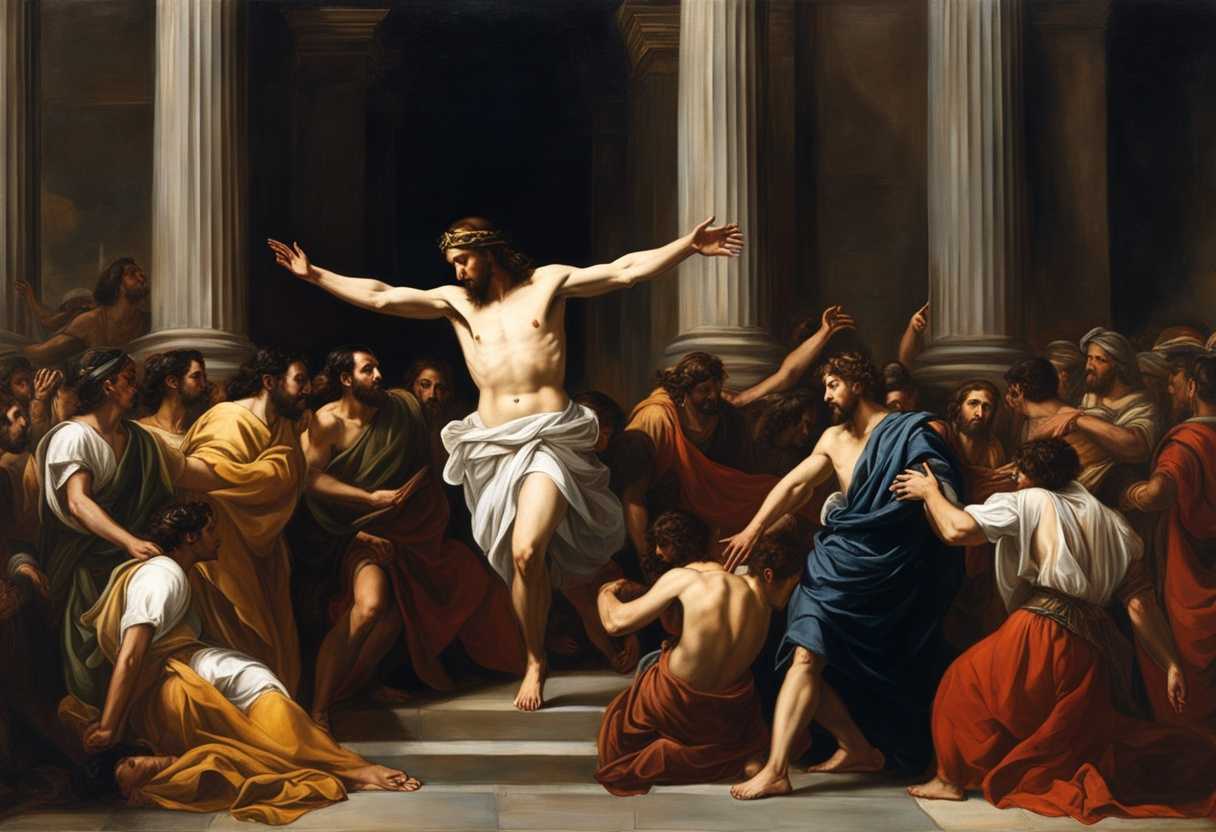
The scene described in Matthew 27:22-26 takes place in Jerusalem during the time of Jesus’ trial before Pontius Pilate. The crowd gathered outside Pilate’s residence is in a state of frenzy, with emotions running high. Pilate, the Roman governor, is seated on his judgment seat, flanked by his guards. The Jewish religious leaders, including the high priests and elders, are also present, pushing for Jesus to be condemned to death.
In the midst of the chaos stands Jesus, the central figure in this dramatic scene. He is battered and bruised from the beatings he has endured, yet there is a sense of calm and dignity about him. Pilate, torn between his desire to appease the crowd and his own doubts about Jesus’ guilt, presents the people with a choice: to release Jesus or Barabbas, a notorious criminal. The crowd, swayed by the manipulations of the religious leaders, demands the release of Barabbas and the crucifixion of Jesus.
The atmosphere is tense, with the weight of the decision hanging in the balance. The scene is a powerful depiction of the fickleness of human nature and the forces at play in the political and religious landscape of the time.
What is Matthew 27:22-26 about?
Pilate, the Roman governor, symbolically washes his hands in this verse to distance himself from taking responsibility for the fate of Jesus. This act represents Pilate’s attempt to absolve himself of guilt and accountability for the crucifixion of Jesus. Pilate demonstrates a lack of moral courage and succumbs to the pressure of the crowd by washing his hands, ultimately making a decision that goes against his own beliefs.
Have you ever been in a situation where you felt pressured to make a choice that went against your values or beliefs? How did you handle it? This verse reminds us of the importance of standing firm in our convictions, even in the face of external pressure or criticism. It prompts us to reflect on the consequences of giving in to societal expectations at the expense of our principles. This verse challenges us to consider the true cost of betraying our integrity for the sake of conformity, just as Pilate washed his hands to avoid responsibility.
Understanding what Matthew 27:22-26 really means
In Matthew 27:22-26, we witness a crucial moment in the Passion narrative where Pontius Pilate, the Roman governor, faces a dilemma regarding Jesus, who is called the Messiah. The crowd’s demand for Jesus’ crucifixion puts Pilate in a challenging position, torn between recognizing Jesus’ innocence and succumbing to the pressure of the people. This scene forces us to confront the tension between truth and societal expectations, highlighting the complexities of moral decision-making in the face of external influences.
The question Pilate poses, “What shall I do, then, with Jesus who is called the Messiah?” encapsulates the heart of the issue—a clash between acknowledging the truth of Jesus’ identity and yielding to the crowd’s unjust demands. The crowd’s resounding cry of “Crucify him!” reflects a stark rejection of Jesus as the Messiah, opting for violence and injustice over mercy and righteousness. This stark contrast challenges us to consider how we, too, navigate the tension between standing for what is right and succumbing to societal pressures in our own lives.
Pilate’s symbolic act of washing his hands, declaring his innocence of Jesus’ blood and shifting the responsibility to the crowd, serves as a poignant reminder of the dangers of moral evasion. His attempt to absolve himself of guilt underscores the theme of accountability and the consequences of failing to uphold justice in the face of adversity. This narrative prompts us to reflect on our own tendencies to distance ourselves from moral dilemmas and the importance of taking a stand for truth, even when it is uncomfortable or unpopular.
Drawing parallels to other biblical passages such as Isaiah 53:3-5, John 19:15, and Acts 2:23, we see a consistent thread of rejection, suffering, and divine sovereignty woven throughout the Scriptures. These connections deepen our understanding of Jesus’ sacrificial journey and the role of human agency in fulfilling God’s redemptive plan. As we contemplate these interconnected narratives, we are challenged to examine our responses to Jesus and the implications of our choices in light of His identity as the Messiah.
In our contemporary context, the narrative of Pilate and the crowd resonates with everyday ethical dilemmas and the struggle to uphold integrity in the face of external pressures. Just as Pilate faced a pivotal decision with far-reaching consequences, we are called to consider how we navigate moral challenges in our personal and professional lives. The anecdote of an employee witnessing unethical behavior in the workplace underscores the relevance of this passage, urging us to prioritize truth and justice over complacency and self-preservation.
Ultimately, Matthew 27:22-26 serves as a poignant reminder of the enduring relevance of Jesus’ trial and crucifixion, prompting us to reflect on our own responses to His identity and the moral choices we make daily. It challenges us to emulate courage and conviction in the face of adversity, standing firm in our commitment to truth and justice, even when the path is difficult. May we heed the lessons of Pilate’s dilemma and strive to align our actions with the values of righteousness and integrity, recognizing Jesus as the true Messiah in our lives.
What is your responsibility in the midst of injustice?
I, as a believer, must stand up for what is right and just in the midst of injustice, regardless of the pressures or crowd mentality around me. I am called to voice out against oppression and injustice, even if it means going against the popular opinion or societal norms. I am reminded of the importance of standing firm in my convictions, holding onto the truth, and ultimately trusting in God’s ultimate justice, just as Jesus stood silent in the face of false accusations, enduring unjust treatment to fulfill a higher purpose. I am called to extend love, compassion, and understanding to those who are marginalized or mistreated in times of injustice. I am reminded to actively seek out ways to advocate for the oppressed, defend the voiceless, and work towards reconciliation and restoration. I am empowered to make a difference in the world around me by following Jesus’ example of humility, grace, and self-sacrifice, shining the light of God’s love in the darkest of circumstances.
Application
Delve into Matthew 27 and feel the gravity of Pontius Pilate’s role in Jesus’ crucifixion. Take a moment to assess your own choices amidst the chaos of the modern world. Can we stay true to our beliefs and principles, even in challenging times? This reflection challenges us to embody bravery and honesty in our daily lives. Are you ready to stand firm in the face of adversity, like Pilate did?

Reverend Michael Johnson is an experienced Church Minister with a profound expertise in spirituality and guidance. With a serene presence and a compassionate heart, he has faithfully served his congregation for over 20 years, leading them on a spiritual journey towards inner peace and enlightenment. Reverend Johnson’s extensive knowledge of religious philosophies and profound understanding of human nature have made him a trusted confidant and mentor to many, as he seamlessly weaves his profound wisdom into life teachings. Reverend Johnson’s calming demeanor and empathetic nature continue to uplift and heal souls, nurturing a sense of unity and tranquility within his community.