
Mark 14:21 is about Jesus revealing that one of His disciples will betray Him, highlighting the theme of deception and betrayal within the group of his closest followers.
21 For the Son of Man goes as it is written of him, but woe to that man by whom the Son of Man is betrayed! It would have been better for that man if he had not been born.
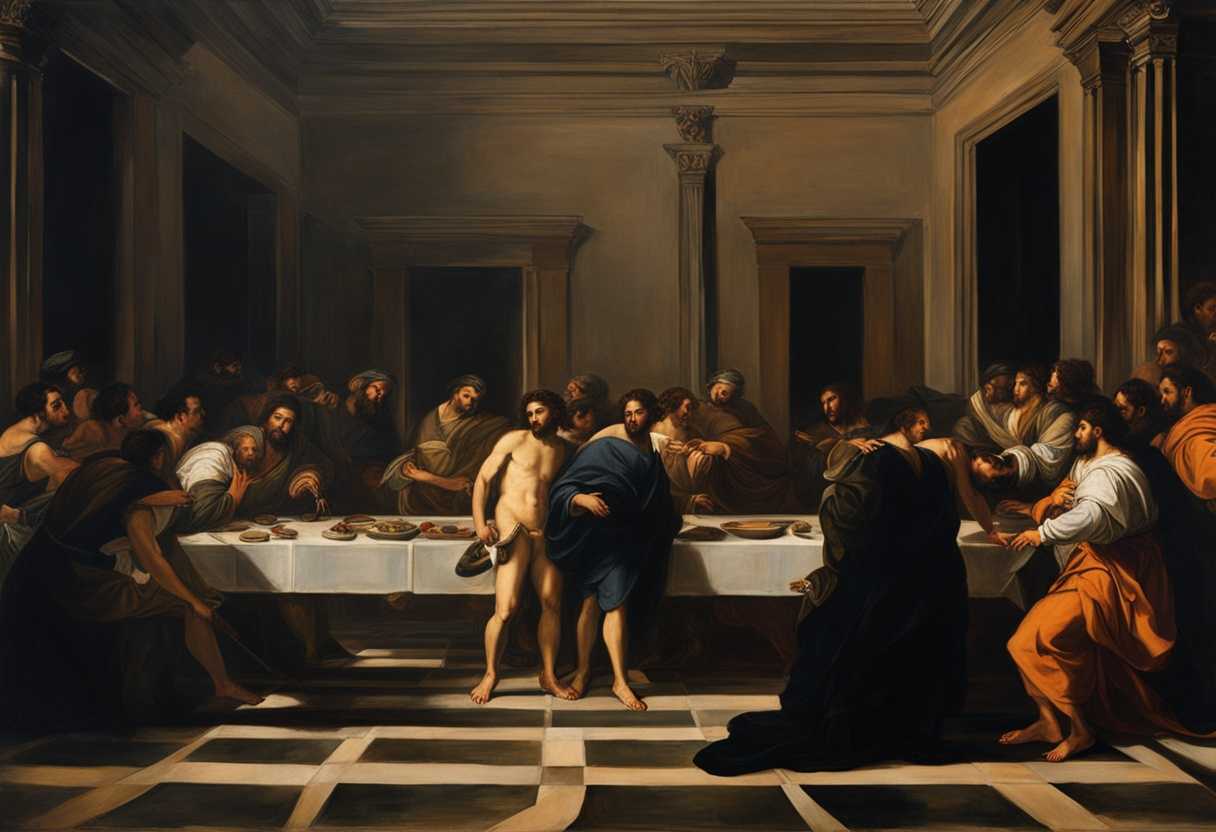
Setting the Scene for Mark 14:21
The scene in Mark chapter 14 is set in the upper room in Jerusalem during the Passover meal. Jesus is gathered with his twelve disciples for what would be their last supper together before his crucifixion. The room is dimly lit by oil lamps, casting a warm glow over the group as they recline at the table, partaking in the traditional Passover meal.
The disciples, including Peter, John, James, and Judas Iscariot, are seated around Jesus, listening intently to his words. There is a sense of tension in the air as Jesus speaks of betrayal and his impending death. Judas Iscariot, who had already made a deal with the religious leaders to betray Jesus, sits among the group, his actions already set in motion.
As the meal progresses, Jesus shares bread and wine with his disciples, symbolizing his body and blood that will be sacrificed for the forgiveness of sins. The atmosphere is heavy with emotion as Jesus reveals that one of his own will betray him, leading to a somber moment of reflection and introspection among the disciples.
What is Mark 14:21 about?
Jesus predicts in this verse that one of his disciples, Judas, will betray him. This betrayal was foretold in the scriptures, fulfilling a prophecy that was set to come to pass. Jesus, with his divine knowledge and understanding, had the foresight to see what was to come, and he shared this information with his disciples.
Can you imagine the weight of knowing that someone you trust and consider a close companion will betray you? Jesus faced this reality with grace and understanding, showing his acceptance of the path set before him. This prophecy and fulfillment also highlight the interconnectedness of scripture and the events unfolding in Jesus’ life, emphasizing the divine plan at work. We can see the intricate web of prophecy, faith, and trust woven throughout Jesus’ journey as we reflect on this verse. It challenges us to consider the role of prophecy in our own lives and how we navigate moments of betrayal or hardship. How do we respond with the same grace and wisdom that Jesus demonstrated in the face of betrayal? Let this verse serve as a reminder to trust in the divine plan, even when faced with challenges and uncertainties.
Understanding what Mark 14:21 really means
In the poignant narrative of the Last Supper, a solemn moment unfolds as Jesus, aware of His impending suffering and death, shares a final meal with His disciples. Amidst the intimacy of this gathering, a shadow looms over the table – the betrayal by one of His own, Judas Iscariot. The weight of this betrayal is captured in Mark 14:21, where Jesus solemnly declares, “The Son of Man goes as it is written of him, but woe to that man by whom the Son of Man is betrayed! It would have been better for that man if he had not been born.”
These words carry profound significance, delving into the intricate interplay between divine foreknowledge and human agency. Jesus acknowledges that His path to the cross is ordained by God, fulfilling ancient prophecies that spoke of a suffering servant. Yet, within this divine plan, there is a stark warning against betrayal – a warning that echoes through the ages, reminding us of the grave consequences of treachery.
The phrase “woe to that man” reverberates with a sense of divine judgment, underscoring the severity of Judas’ actions. It serves as a stark reminder of the moral accountability we bear for our choices, highlighting the eternal ramifications of betrayal. The hyperbolic statement, “It would have been better for that man if he had not been born,” underscores the magnitude of Judas’ betrayal, painting a vivid picture of the irreversible consequences of his actions.
Drawing parallels from related biblical passages such as Psalm 41:9 and John 13:18, we see the intricate tapestry of prophecy and fulfillment woven into the fabric of Judas’ betrayal. These passages not only shed light on the betrayal itself but also deepen our understanding of the intricate web of divine providence and human frailty.
The relevance of this verse extends beyond its historical context, resonating with universal themes of trust, betrayal, and moral responsibility. It prompts us to reflect on the fragility of trust in relationships, the weight of our choices, and the enduring consequences of our actions. Just as Judas’ betrayal shattered the trust within the inner circle of disciples, so too can betrayal fracture the bonds of trust in our own lives, leaving lasting scars on those we hold dear.
As we contemplate the implications of Mark 14:21, we are invited to introspection and self-examination. How do we navigate the delicate balance between God’s sovereign will and our own choices? How do we uphold integrity and loyalty in our relationships, guarding against the corrosive effects of betrayal? These questions challenge us to align our actions with our values, to cultivate a spirit of faithfulness, and to heed the solemn warning against the betrayal of trust.
What is the meaning and consequences of betrayal?
The meaning of betrayal is evident in Mark 14:21 as it highlights the gravity of betraying someone close to you. Betrayal involves the breaking of trust and loyalty, often leading to deep feelings of hurt, disappointment, and abandonment. It is an act of deceit and disloyalty towards someone who has placed their trust in you.
The consequences of betrayal can be profound. It can result in the dissolution of relationships, shattered trust, and emotional pain for the betrayed party. Betrayal often leads to a sense of loss, grief, and a questioning of one’s own judgement and beliefs. It can irreversibly change the dynamics of relationships and have long-lasting effects on all parties involved.
Application
Just like you strive to meet deadlines at work and be present for your family’s big moments, take a moment to reflect on the direction of your life. Think about your choices and where they’re leading you. Imagine a deadline not just for a project but for your eternal destiny. Judas made a choice that had dire consequences—will you let his story drive you to live with integrity and faithfulness? Are you ready to commit to a path of loyalty and honor in your walk with God?

Reverend Michael Johnson is an experienced Church Minister with a profound expertise in spirituality and guidance. With a serene presence and a compassionate heart, he has faithfully served his congregation for over 20 years, leading them on a spiritual journey towards inner peace and enlightenment. Reverend Johnson’s extensive knowledge of religious philosophies and profound understanding of human nature have made him a trusted confidant and mentor to many, as he seamlessly weaves his profound wisdom into life teachings. Reverend Johnson’s calming demeanor and empathetic nature continue to uplift and heal souls, nurturing a sense of unity and tranquility within his community.