
36 Now there was in Joppa a disciple named Tabitha, which, translated, means Dorcas. She was full of good works and acts of charity.
37 In those days she became ill and died, and when they had washed her, they laid her in an upper room.
38 Now Lydda was near Joppa, so the disciples, hearing that Peter was there, sent two men to him, urging him, “Please come to us without delay.”
39 But Peter put them all outside, and knelt down and prayed; and turning to the body he said, “Tabitha, arise.” And she opened her eyes, and when she saw Peter she sat up.
40 But Peter put them all outside, and knelt down and prayed; and turning to the body he said, “Tabitha, arise.” And she opened her eyes, and when she saw Peter she sat up.
41 And he gave her his hand and raised her up. Then, calling the saints and widows, he presented her alive.
42 And it became known throughout all Joppa, and many believed in the Lord.
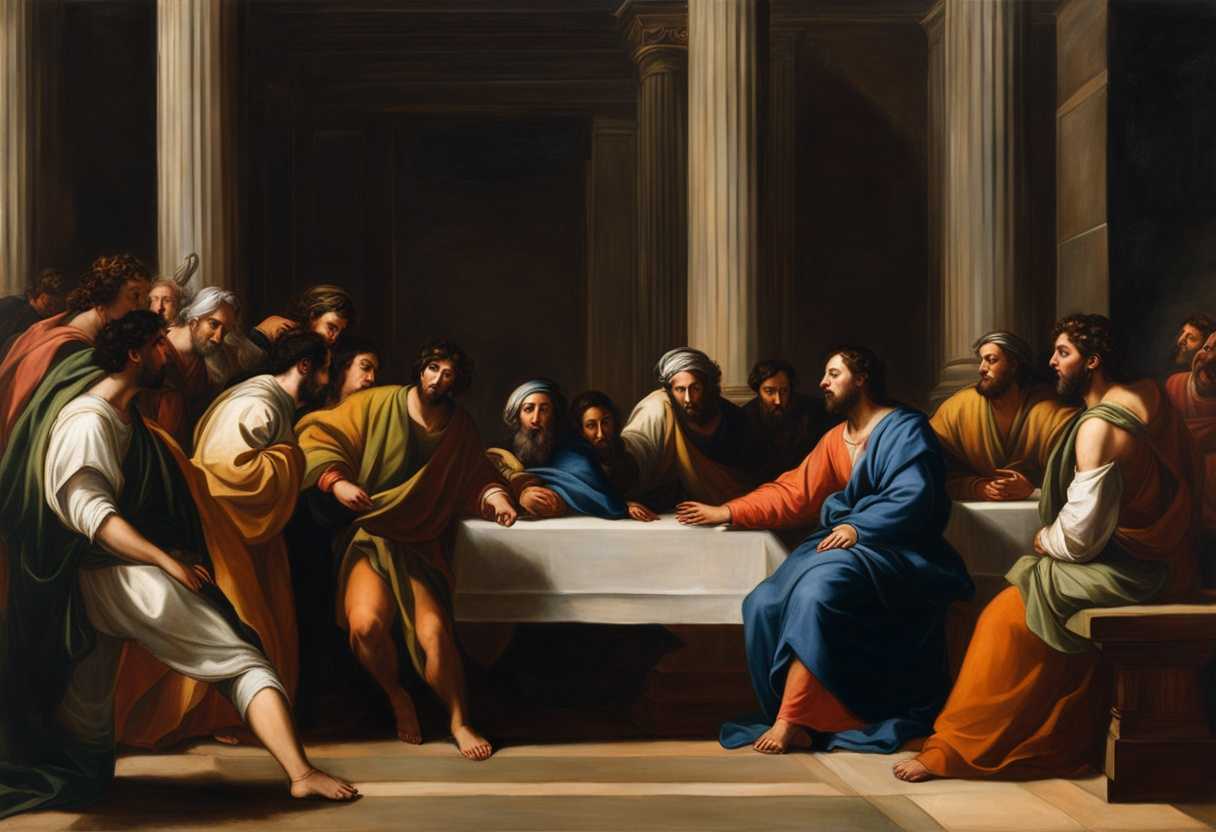
Setting the Scene for Acts 9:36-42
In Acts chapter 9, we find the scene in the town of Joppa, a coastal city in ancient Israel. The disciples in Joppa were grieving the loss of a beloved member of their community, a woman named Tabitha, also known as Dorcas. She was known for her acts of kindness and charity towards the poor and widows in the community. Her sudden death had left the disciples heartbroken and in mourning.
As news of Tabitha’s passing spread, the disciples sent for Peter, who was in a nearby town called Lydda. Peter, one of the prominent apostles of Jesus, arrived in Joppa to find the mourners gathered around Tabitha’s body. The room was filled with the sound of weeping and the scent of funeral spices. The disciples showed Peter the tunics and garments that Tabitha had made for the widows, a testament to her generous spirit and the impact she had on those around her.
Moved by the grief of the disciples and the memory of Tabitha’s good works, Peter knelt down and prayed. In a miraculous display of God’s power, Peter then commanded Tabitha to rise from the dead, and she opened her eyes, sat up, and was presented alive to the astonished disciples. This incredible event not only brought joy and wonder to the believers in Joppa but also served as a powerful testimony to the resurrection power of Jesus Christ.
What is Acts 9:36-42 about?
This verse is a powerful reminder of God’s miraculous power and his compassion for his people. Peter’s ability to raise Tabitha from the dead shows that nothing is impossible with God. It is a moment that showcases the incredible works that can be accomplished through faith and prayer.
Can you imagine witnessing such a miracle firsthand? The awe and wonder that must have filled the hearts of those present must have been overwhelming. This verse serves as a reminder that even in our darkest moments, God’s power can bring about new life and hope. It challenges us to have faith in God’s ability to work miracles in our own lives, no matter how impossible the situation may seem. It is a testament to God’s unfailing love and compassion for his people, always ready to bring about resurrection and new beginnings.
Understanding what Acts 9:36-42 really means
Themes of service, resurrection, and community impact are rich in the narrative of Acts 9:36-42. A pivotal figure, Tabitha (or Dorcas), becomes the lens through which these themes are explored.
Tabitha, known for her good works and acts of charity, is presented not merely as a benefactor, but as a vital organ within the body of the early Church. Her life exemplified the Christian call to serve. When she passes away, the community’s response underscores her impact; they are not ready to let her go. This reflects a profound truth about the Christian community: each member, no matter their role, holds irreplaceable value. Might you, too, consider how your daily actions contribute to your community’s well-being?
Peter’s involvement brings another layer of depth to the narrative. His prayer and call for Tabitha to rise speak volumes about the power of faith and divine intervention. Here, Peter does not act alone but in the midst of a community that supports each other emotionally and spiritually. This scenario parallels the story of Jesus raising Lazarus (John 11), where the act of raising from the dead illustrates the ultimate power of God over life and death, reinforcing the hope of resurrection.
What resonates today is the undeniable demonstration of the early Church’s reliance on faith and community. This passage invites us to reflect in a world increasingly characterized by individualism: Are we fostering strong community bonds? Are we, like Tabitha, using our skills and resources to make a tangible difference in the lives of others? A sudden illness impacts the entire community, caused by a community worker who tirelessly aids the homeless in a modern analogy. The void felt by her absence echoes the void felt by Dorcas’s community, illustrating the ripple effect of dedicated service. Think about the Tabithas in your own life and community as you contemplate this passage. How are you supporting them? How are you contributing to creating a legacy of service and faith that, like Dorcas’s, would be sorely missed? This passage not only memorializes a faithful servant but also calls us to actively participate in our communities with whatever gifts we have been blessed with. This reflection and action are what keep the spirit of the early Church alive in our modern world.
How can we allow God to use us to perform miracles?
We can allow God to use us to perform miracles by being willing and open vessels for His work. When we are surrendered to God’s will and equipped with faith, He can work through us to bring about extraordinary things. Just as the believers in the passage were serving faithfully and willing to be used by God, we too can position ourselves to be instruments of His power and grace.
Our readiness to step out in faith and obey God’s prompting is crucial in facilitating the miraculous. We make room for God to showcase His power through us by trusting in His abilities rather than our own. Through prayer, listening to His voice, and walking in obedience, we can partner with God in bringing about miraculous interventions and supernatural manifestations that glorify Him and point others to His greatness.
Application
Imagine yourself as a cornerstone in the bustling skyscraper of life, where every small support beam is crucial. Much like Dorcas, you have the power to strengthen the structure around you with every act of kindness and every gesture of compassion. Picture your community as a tapestry, woven from diverse threads, each needing the other to create something beautiful and whole. Take a moment today to mend the worn threads around you, whether by supporting a struggling neighbor or simply sharing a word of encouragement. Will you step up as the crucial beam, the craftsman of compassion, and weave your own mark of kindness into the fabric of your community?

Reverend Michael Johnson is an experienced Church Minister with a profound expertise in spirituality and guidance. With a serene presence and a compassionate heart, he has faithfully served his congregation for over 20 years, leading them on a spiritual journey towards inner peace and enlightenment. Reverend Johnson’s extensive knowledge of religious philosophies and profound understanding of human nature have made him a trusted confidant and mentor to many, as he seamlessly weaves his profound wisdom into life teachings. Reverend Johnson’s calming demeanor and empathetic nature continue to uplift and heal souls, nurturing a sense of unity and tranquility within his community.