
1 Kings 22:24-28 is about a deceptive spirit influencing the prophets to give false advice, demonstrating the presence of spiritual warfare and the importance of discernment in seeking God’s truth.
24 Then Zedekiah the son of Chenaanah came near and struck Micaiah on the cheek and said, “How did the Spirit of the Lord go from me to speak to you?”
25 And Micaiah said, “Behold, you shall see on that day when you go into an inner chamber to hide yourself.”
26 And the king of Israel said, “Seize Micaiah, and take him back to Amon the governor of the city and to Joash the king’s son,
27 and say, ‘Thus says the king, “Put this fellow in prison and feed him meager rations of bread and water, until I come in peace.”
28 And Micaiah said, “If you return in peace, the Lord has not spoken by me.” And he said, “Hear, all you peoples!”
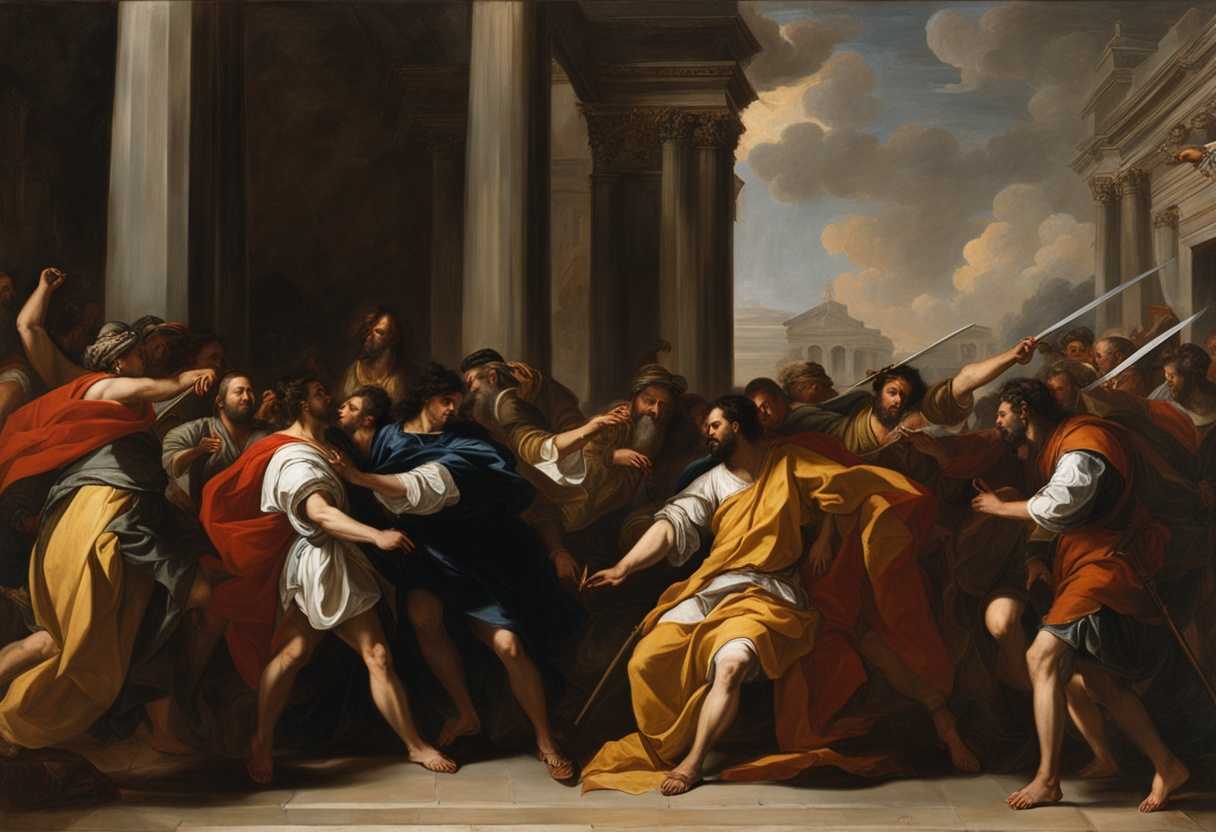
Setting the Scene for 1 Kings 22:24-28
In 1 Kings chapter 22, we find ourselves in the royal court of King Ahab of Israel. The scene is set in the city of Samaria, the capital of the northern kingdom of Israel. King Ahab is seated on his throne, surrounded by his advisors and court officials. Among them is a prophet named Micaiah, who has been summoned to give counsel to the king.
The atmosphere in the court is tense as King Ahab seeks advice on whether to go to war against the Arameans at Ramoth Gilead. The king’s prophets have all given him favorable predictions of victory, but Micaiah stands alone in speaking the truth from the Lord. Despite pressure to conform, Micaiah boldly declares a vision of defeat and death for the king if he goes to battle.
As the confrontation unfolds, the tension mounts, and the clash between truth and deception becomes starkly apparent. The scene is charged with drama as Micaiah fearlessly proclaims the word of the Lord, even in the face of opposition and danger. The court is divided between those who speak the truth and those who seek to please the king, setting the stage for a pivotal moment in the reign of King Ahab.
What is 1 Kings 22:24-28 about?
Micaiah, a true prophet of God, stands firm in his faith and delivers a message of truth in this verse, even when all the other prophets around him are delivering false assurances to King Ahab. This moment highlights the importance of discerning true from false prophets, and the need to stay grounded in our beliefs even in the face of opposition. Despite the pressure to conform and deliver a more favorable message, Micaiah remains faithful to God’s truth, even if it means delivering a difficult message.
This verse challenges us to reflect on our own faith and convictions. Are we willing to stand up for what we believe in, even when it may not be popular or comfortable? Are we able to discern between truth and falsehood, even when those around us are pushing a different narrative? Micaiah’s actions serve as a reminder that sometimes the path of righteousness may be difficult, but it is always worth it in the end. Let us navigate our own beliefs and convictions, taking inspiration from Micaiah’s courage and steadfastness in delivering the message of truth, even in the face of adversity.
Understanding what 1 Kings 22:24-28 really means
In the narrative of 1 Kings 22:24-28, we witness a clash between true and false prophets, with King Ahab seeking counsel for war against Ramoth-Gilead. The prophet Micaiah, a vessel of God’s truth, delivers a prophecy that contrasts sharply with the favorable yet deceitful words of Zedekiah and other false prophets. Zedekiah’s challenge to Micaiah, questioning the source of his prophecy, reveals the arrogance and self-assuredness of those who claim divine insight without genuine connection to God. Micaiah’s response, foretelling Zedekiah’s eventual realization of his falsehood and attempt to escape consequences, serves as a stark warning against the dangers of false prophecy and self-deception.
Ahab’s command to imprison Micaiah and feed him meager rations reflects his rejection of the truth in favor of his own desires and plans. Despite the prophet’s warning, Ahab remains resolute in his course of action, illustrating the human tendency to dismiss inconvenient truths in pursuit of personal agendas. Micaiah’s unwavering declaration that the outcome will reveal the truth of his prophecy underscores the certainty that God’s word will ultimately prevail, regardless of human defiance or disbelief.
This passage resonates with contemporary relevance, urging us to discern between genuine and counterfeit messages in a world inundated with conflicting ideologies. It challenges us to emulate Micaiah’s courage in standing for truth, even when it invites opposition or hardship. Just as Micaiah faced imprisonment for speaking God’s truth, modern-day whistleblowers who expose corruption or injustice often endure similar trials before their revelations are vindicated and justice is served.
In a society where truth can be obscured by popular opinion or distorted by deceptive voices, the story of Micaiah serves as a poignant reminder of the importance of unwavering integrity and steadfast commitment to God’s truth. It calls believers to seek divine guidance, remain resolute in their convictions, and trust in the ultimate vindication of God’s word. Like Micaiah, we are called to be discerning, courageous, and unwavering in our faith, knowing that the truth we uphold is anchored in the unchanging character of God.
How can we discern truth from deception?
One way to discern truth from deception is to pay attention to the source of the information. Zedekiah, the false prophet, deceived King Ahab by confidently proclaiming a message that was ultimately not aligned with the truth in the story of 1 Kings 22:24-28. This teaches us the importance of verifying information from sources that are known to be trustworthy and honest. We should be cautious of those who speak with authority but may have ulterior motives or lack credibility.
Another way to discern truth from deception is to evaluate the consistency of the message with other known truths. Micaiah spoke the truth in the passage by accurately predicting the outcome of the battle, even when his message was unpopular and went against the consensus of the other prophets. This reminds us to critically analyze information presented to us and compare it with established truths, rather than simply following the crowd or accepting information at face value.
Furthermore, seeking guidance and wisdom from God can help us discern truth from deception. Micaiah demonstrated his allegiance to God by sharing the words that were given to him by the Lord, despite facing opposition and risking his own safety. We can develop discernment to distinguish between truth and deception in our lives by staying connected to God through prayer, studying His Word, and seeking His guidance.
Application
In life’s complex terrain, like in a bustling office or a bustling household, discernment is the compass steering us through the noise. Just as we sift through emails for the important ones, we must filter out deceptive voices that lead us astray from our faith. Let’s be diligent in analyzing every message against the truth of God’s teachings, securing our spiritual core like safeguarding our digital assets. Will you rise to this challenge, guarding your faith against the chaos of falsehoods?

Reverend Michael Johnson is an experienced Church Minister with a profound expertise in spirituality and guidance. With a serene presence and a compassionate heart, he has faithfully served his congregation for over 20 years, leading them on a spiritual journey towards inner peace and enlightenment. Reverend Johnson’s extensive knowledge of religious philosophies and profound understanding of human nature have made him a trusted confidant and mentor to many, as he seamlessly weaves his profound wisdom into life teachings. Reverend Johnson’s calming demeanor and empathetic nature continue to uplift and heal souls, nurturing a sense of unity and tranquility within his community.