
22 And Abraham lifted up his eyes and looked, and behold, behind him was a ram, caught in a thicket by his horns. And Abraham went and took the ram and offered it up as a burnt offering instead of his son.
14 So Abraham called the name of that place, “The Lord will provide”; as it is said to this day, “On the mount of the Lord it shall be provided.”
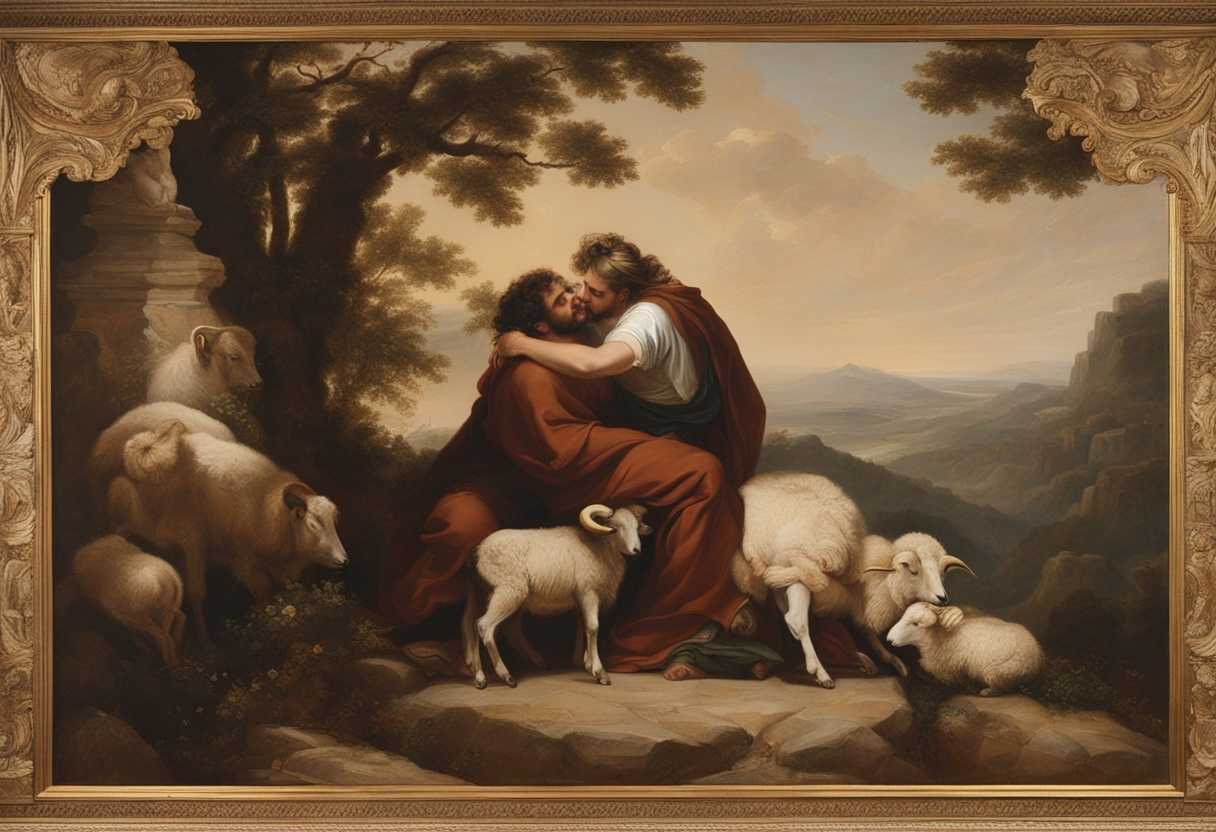
Setting the Scene for Genesis 22:13-14
In Genesis chapter 22, we find Abraham and his son Isaac in a profound and challenging situation. God had tested Abraham’s faith by asking him to sacrifice his beloved son Isaac as a burnt offering. Abraham, obedient to God’s command, took Isaac to the land of Moriah to carry out the sacrifice. As they journeyed together, Isaac, unaware of his fate, innocently asked his father about the missing lamb for the offering. Abraham, with a heavy heart, assured Isaac that God would provide the sacrifice.
Upon reaching the designated place, Abraham built an altar and bound Isaac, ready to carry out the sacrifice. As he raised the knife, an angel of the Lord intervened, staying his hand. In that moment of intense faith and obedience, God provided a ram caught in a thicket nearby as a substitute for Isaac. Overwhelmed by God’s provision and faithfulness, Abraham named the place “The Lord Will Provide,” signifying the profound lesson learned in that moment of testing and trust. The scene is one of deep emotion, faith, and sacrifice, illustrating Abraham’s unwavering trust in God’s plan and provision.
What is Genesis 22:13-14 about?
This verse from the Bible, Genesis 22:13, captures a powerful moment of divine deliverance and faithfulness. Abraham is willing to obey God’s command to sacrifice his beloved son, Isaac, as a test of his faith in this passage. However, at the last moment, God provides a ram caught in a thicket as a substitute for Isaac. This act symbolizes God’s provision and faithfulness, demonstrating that He is a loving and caring God who always provides a way out in times of trial. We reflect on this verse, reminding us of the depth of God’s love and the trust we can have in His plans for us. It prompts us to consider our own faith and willingness to follow God’s will, even when it may seem difficult or confusing. Just like Abraham, we are called to trust in God’s provision and have faith that He will always provide for us, even in the most challenging circumstances. So, let us take comfort in the message of this verse and be encouraged to trust in God’s faithfulness in our own lives.
Understanding what Genesis 22:13-14 really means
We encounter a profound moment of divine provision in the passage Genesis 22:13-14 that deeply resonates with themes of faith, obedience, and God’s timely intervention. The narrative centers around Abraham, who, in a test of faith, is commanded by God to offer his son Isaac as a sacrifice. At the critical moment, God intervenes, providing a ram as a substitute for Isaac, thereby sparing his life. This event not only encapsulates a pivotal point in Abraham’s faith journey but also sets a foundational precedent for understanding God’s provision.
The key phrase, “Abraham looked up and saw,” is pivotal. It suggests a moment of divine revelation and sharp awareness from Abraham. Moments of intense trial often precipitate heightened awareness of God’s workings in our lives. How often do we, amidst our trials, lift our eyes from our problems to perceive the help that God is positioning right before us? The imagery of a ram caught in a thicket by its horns can be seen as a metaphor for God’s provision being both perfect and timely, available just when we most need it.
Another meaningful element is the naming of the location “The Lord Will Provide.” This designation is not merely geographical but profoundly theological. It speaks to God’s character as Jehovah Jireh, which means “the Lord will provide.” This name reassures us that our God is not passive but actively engaged in the outworking of His plans in our lives, a theme echoed in Philippians 4:19, where Paul assures believers that “my God will meet all your needs according to the riches of his glory in Christ Jesus.”
Why is this relevant today? Like Abraham, we are often called into situations that test our faith to its limits. Whether it’s a financial difficulty, a health crisis, or relational strife, the principle remains the same: God is our provider. The act of God providing the ram can inspire modern readers to trust in God’s timeliness—He knows our needs and meets them exactly when necessary, not necessarily when we expect.
To illustrate, consider a congregant named Tom, who faced potential bankruptcy due to a failed business. Every conceivable solution had failed, and hope was fading. The night before his final meeting with the creditors, he prayed for a solution. The next day, unexpectedly, an investor expressed interest in his business, providing just enough financial support to keep the business afloat. Just like the ram in the thicket, the investor was a timely provision, a testament that God indeed intervenes at our point of need. Genesis 22:13-14 invites us to trust in God’s provision and timing. Each detail of this story is strategically placed to remind us of His omnipresence and omnipotence. Modern believers are encouraged to remain steadfast in faith, always ready to lift their eyes above their circumstances and expect the deliverance of the Lord, just as Abraham did on that momentous day at Moriah. What ways has God provided for you in your moments of need? Reflect on this and carry the assurance of His provision in your heart.
How can we trust God in times of testing?
We can trust God in times of testing by remembering His faithfulness in the past. Just like how He provided a ram as a sacrifice in place of Isaac in Genesis 22:13-14, He is always working behind the scenes for our good. Our faith is strengthened when we recall instances where God has come through for us before. This can give us the assurance that He will continue to be faithful in the midst of our current challenges.
Additionally, trusting God in times of testing involves surrendering our will and desires to His greater plan. Abraham was willing to obey God’s command to sacrifice his beloved son, despite not understanding the reasoning behind it. Similarly, we can demonstrate our trust in God by submitting to His will, even when it goes against our own understanding or desires. This act of surrendering allows us to rely on God’s wisdom and sovereignty, knowing that His plans are ultimately for our good.
Lastly, maintaining a posture of faith and perseverance in prayer is crucial when facing trials. Just as Abraham remained faithful and obedient throughout the testing of his faith, we too can endure by seeking God’s guidance and strength continuously through prayer. Trusting God in times of testing requires a steadfast belief that He is with us every step of the way, guiding us through the challenges we face and ultimately bringing us to victory.
Application
Imagine standing at the edge of a daunting cliff called “Tomorrow,” your dreams and worries like a heavy backpack on your shoulders. Just like Abraham, who was asked to trust in an unseen promise as he climbed Mount Moriah, we too face uncertain landscapes in our modern lives, navigating through the corporate jungles and family mazes. It’s in these moments that leaning on a robust faith can be our greatest strategy. Ask yourself, are you harnessing the full power of trust in your everyday hustle and challenges? If you’ve been holding back, what holds you back from placing your full trust in the Divine architect of your path? Are you ready to loosen your grip on the controls and hand over the reins to Him? In your heart of hearts, don’t you wonder what miracles await when you do?

Reverend Michael Johnson is an experienced Church Minister with a profound expertise in spirituality and guidance. With a serene presence and a compassionate heart, he has faithfully served his congregation for over 20 years, leading them on a spiritual journey towards inner peace and enlightenment. Reverend Johnson’s extensive knowledge of religious philosophies and profound understanding of human nature have made him a trusted confidant and mentor to many, as he seamlessly weaves his profound wisdom into life teachings. Reverend Johnson’s calming demeanor and empathetic nature continue to uplift and heal souls, nurturing a sense of unity and tranquility within his community.