
Haggai 2:3-4 is about the encouragement of the people of Israel as they face the challenges of rebuilding the temple, emphasizing that the present work may seem insignificant compared to the past glories, yet they are assured of God’s presence and support, urging them to be strong and act, as He is with them in their efforts.
3 ‘Who is left among you who saw this house in its former glory? How do you see it now? Is it not as nothing in your eyes?
4 Yet now be strong, O Zerubbabel, declares the Lord. Be strong, O Joshua, son of Jehozadak, the high priest. Be strong, all you people of the land, declares the Lord. Work, for I am with you, declares the Lord of hosts,
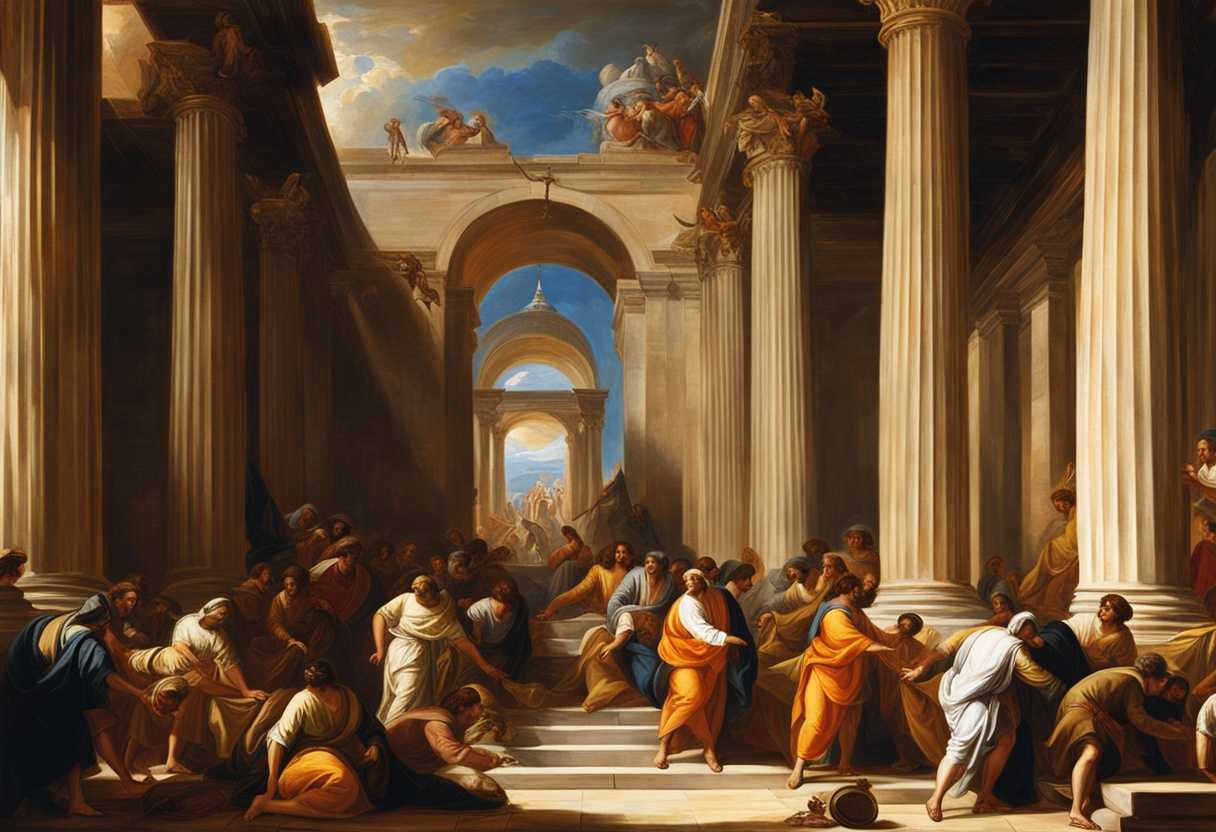
Setting the Scene for Haggai 2:3-4
In the heart of Jerusalem, amidst the ruins of what was once a magnificent temple, a small group of people gathered, their faces etched with a mixture of hope and despair. The sun hung low in the sky, casting a warm golden hue over the remnants of the sacred structure that had been the center of their worship and community. The air was thick with the scent of dust and the distant sound of hammers and chisels as the people worked to rebuild their lives after years of exile. Among them stood Zerubbabel, the governor of Judah, a descendant of King David, who had returned from Babylon with a vision to restore the temple and the spirit of the people. Beside him was Joshua, the high priest, whose heart burned with a desire to see the worship of Yahweh reinstated in the land.
As they surveyed the crumbled stones and charred beams, the memories of the former glory of the temple weighed heavily on their hearts. The elders among them, who had witnessed the splendor of Solomon’s temple, whispered among themselves, their voices tinged with sorrow as they compared the current efforts to the grandeur of the past. They recalled the golden furnishings, the towering walls adorned with intricate carvings, and the overwhelming presence of God that had filled the temple. Yet, amidst the lamentations, a flicker of determination ignited within the group. They understood that the task ahead was monumental, but they were resolute in their commitment to rebuild, to restore not just the physical structure but the very essence of their faith and community.
In this moment of reflection and resolve, the voice of the Lord echoed through Haggai, the prophet, who stood among them, urging them to be strong and to take courage. He reminded them that the glory of the new temple would surpass that of the former, not because of its physical attributes, but because of the presence of God that would dwell among them. The people, though weary and disheartened, felt a renewed sense of purpose as they listened to Haggai’s words. They were reminded that their efforts, however small they seemed, were part of a divine plan that transcended their immediate circumstances. The sun began to set, casting long shadows over the ruins, but within the hearts of the people, a light of hope began to shine, illuminating the path forward as they prepared to rebuild not just a temple, but their very lives.
What is Haggai 2:3-4 about?
Haggai 2:3-4 delivers a powerful message of strength, perseverance, and divine assurance. This passage speaks to a community that was disheartened and perhaps feeling inadequate as they were tasked with rebuilding the temple. The rhetorical questions posed in verse 3—“Who of you is left who saw this house in its former glory? How does it look to you now? Does it not seem to you like nothing?”—challenge us to reflect on our perceptions of progress and legacy. Have you ever felt overwhelmed by the daunting task of rebuilding something significant in your life? Whether that’s a relationship, a career, or even a personal journey, it’s easy to become discouraged when we compare our current state to past successes.
Yet, the encouragement to be strong and continue the work is crucial here. God reassures the Israelites that His presence is with them, which is a promise that reverberates throughout the ages. What does it mean to you to have that kind of assurance in your endeavors? This divine backing can transform our efforts and provide us with the fortitude we need to push through challenges. When we approach our tasks with the awareness that we are not alone, we can find new strength and purpose. Is there an area in your life where you can hold on to that promise of God’s presence? The future glory that God speaks of is not just a distant hope; it’s a call to remain steadfast in our work today, knowing that our perseverance contributes to something greater. So, let’s consider: how can we apply that message of hope and strength in our day-to-day challenges?
Understanding what Haggai 2:3-4 really means
Haggai is a prophetic book that speaks to the Israelites after their return from Babylonian exile. The people were disheartened, feeling that their efforts to rebuild the temple were insignificant compared to the grandeur of Solomon’s temple. This context sets the stage for a powerful message of encouragement and hope.
In Haggai 2:3-4, we encounter several key phrases that invite deep reflection. The question, “Who is left among you who saw this house in its former glory?” evokes a sense of nostalgia. It highlights the stark contrast between the past and present, reminding the people of the splendor they once knew. This question is not merely rhetorical; it serves to connect the people with their history and their feelings of inadequacy. When Haggai asks, “How do you see it now?” he challenges them to look beyond their discouragement. It’s an invitation to recognize the potential for God’s presence, regardless of the physical state of the temple.
The phrase “Is it not in your eyes as nothing?” acknowledges the despair felt by the Israelites. It speaks to a common human tendency: measuring success by visible standards rather than spiritual significance. This sentiment resonates with many of us today. We often find ourselves evaluating our worth based on external comparisons, leading to feelings of inadequacy. Yet, Haggai’s message shifts the focus back to God’s promise. “Yet now be strong, O Zerubbabel… for I am with you,” serves as a powerful reminder that our strength comes from our relationship with God, not our circumstances.
This theme of divine presence and encouragement is echoed throughout Scripture. For instance, Isaiah 41:10 reassures us, “Fear not, for I am with you; be not dismayed, for I am your God.” Similarly, Philippians 4:13 states, “I can do all things through Christ who strengthens me.” These verses reinforce the idea that reliance on God transcends both the Old and New Testaments, providing a consistent message of hope and strength.
In our modern context, many individuals grapple with feelings of inadequacy and discouragement. The pressures of society often lead us to compare ourselves unfavorably to others, much like the Israelites did with their temple. Consider the young artist who feels disheartened when comparing their work to established masters. They may perceive their art as “nothing” in comparison. However, with encouragement and a reminder of their unique voice, they can find strength in their creativity. This mirrors the message in Haggai, where God calls us to recognize our value and potential, regardless of how we measure up to others.
In conclusion, Haggai 2:3-4 serves as a profound reminder that our worth and strength are not determined by external comparisons but by our relationship with God. In times of discouragement, we are called to be strong and to remember that God is with us, empowering us to fulfill our purpose. This timeless message encourages us to embrace our unique contributions to the world, reminding us that even in our perceived insignificance, we are part of a greater plan. How might we apply this understanding in our own lives today?
How can I find strength in my fears?
To find strength in your fears, it’s important to recognize that challenges and uncertainties can serve as catalysts for growth and resilience. Embracing your fears can shift your perspective, enabling you to see them not as obstacles, but as opportunities for personal development. When you confront what scares you, you begin to understand that these feelings can lead to greater courage and a renewed sense of purpose. It highlights the importance of moving forward with confidence, despite the unease you may feel. Understanding that you are not alone in your struggles can empower you with strength. It’s helpful to remember that many have faced similar fears and uncertainties and have emerged stronger on the other side. This collective experience can provide a sense of community and support that empowers you to face your own challenges head-on. Sharing your fears with others allows you to draw from their experiences and insights, which can bolster your resolve and instill a sense of hope.
Finally, focusing on the bigger picture helps in channeling your fears into constructive actions. Recognizing your fears as part of a larger journey underscores the idea that growth often requires navigating uncomfortable situations. When you place your fears within the context of your broader goals and values, they can serve as motivators rather than deterrents. This shift allows you to cultivate inner strength, enabling you to confront your fears with resilience and determination.
Application
Life is like a bustling office, full of deadlines and demands, but your unique talents are needed to make a difference. Just like a family coming together to tackle a project, we each play a vital role in driving change. Think about how you can lend a hand in your community and make a meaningful impact. Are you prepared to embrace your mission and bring your best to the table? What will hold you back from taking that bold step forward?

Reverend Michael Johnson is an experienced Church Minister with a profound expertise in spirituality and guidance. With a serene presence and a compassionate heart, he has faithfully served his congregation for over 20 years, leading them on a spiritual journey towards inner peace and enlightenment. Reverend Johnson’s extensive knowledge of religious philosophies and profound understanding of human nature have made him a trusted confidant and mentor to many, as he seamlessly weaves his profound wisdom into life teachings. Reverend Johnson’s calming demeanor and empathetic nature continue to uplift and heal souls, nurturing a sense of unity and tranquility within his community.