
2 Chronicles 12:1-4 is about King Rehoboam’s arrogance and lack of faith in God, which led to the fall of Jerusalem to the Egyptian Pharaoh Shishak as a consequence of his disobedience.
1 When the rule of Rehoboam was established and he was strong, he abandoned the law of the Lord, and all Israel with him.
2 When Rehoboam humbled himself, the wrath of the Lord turned from him, so as not to make a complete destruction. Moreover, conditions were good in Judah.
3 With 1,200 chariots and 60,000 horsemen. And the people were without number who came with him from Egypt—the Libyans, Sukkiim, and Ethiopians.
4 And he took the fortified cities of Judah and came as far as Jerusalem.
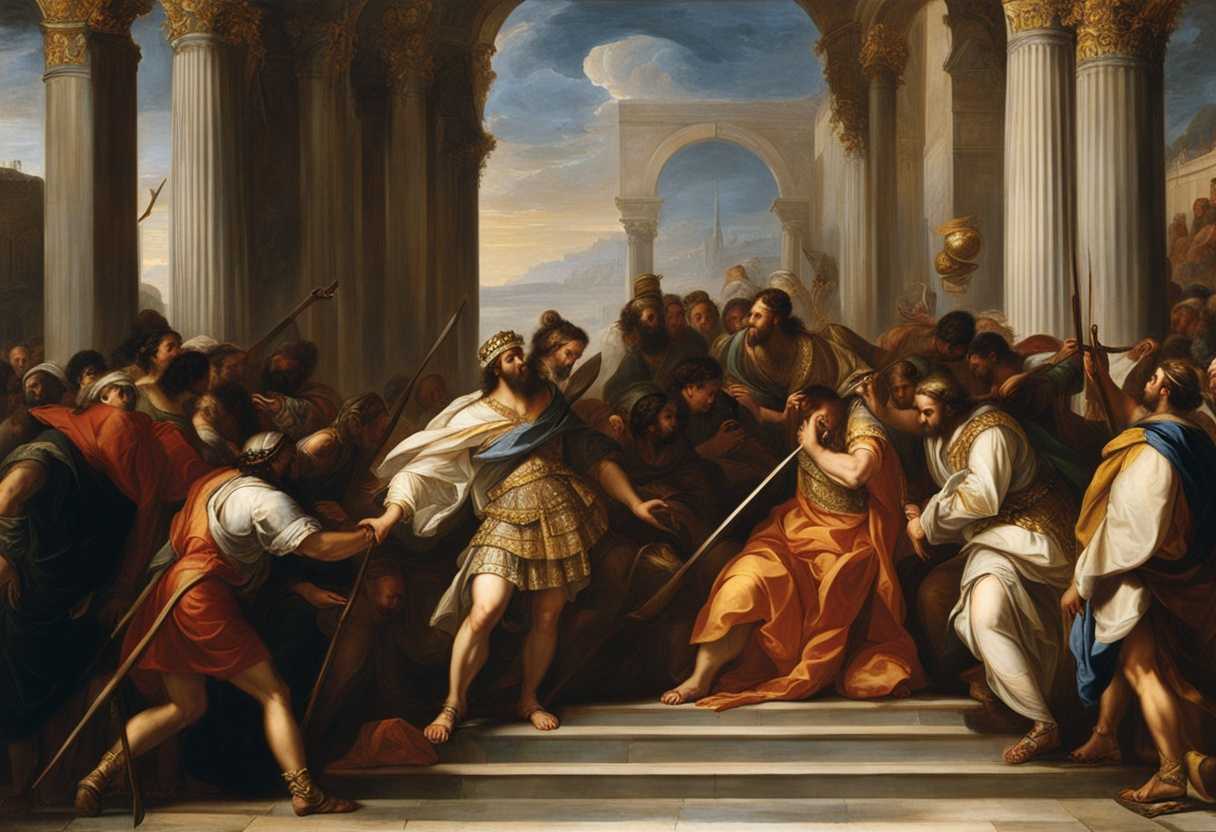
Setting the Scene for 2 Chronicles 12:1-4
The scene in 2 Chronicles 12:1-4 takes place in the kingdom of Judah during the reign of King Rehoboam, the son of King Solomon. Rehoboam had forsaken the ways of the Lord, and as a result, the kingdom of Judah was invaded by King Shishak of Egypt. The Egyptian army came with a vast number of chariots, horsemen, and soldiers, and they captured the fortified cities of Judah.
In this tense and dire situation, King Rehoboam and the people of Judah found themselves facing a powerful enemy that threatened their very existence. The king and his officials gathered together to discuss their next steps and how to respond to the Egyptian invasion. The atmosphere was one of fear and uncertainty as they realized the consequences of turning away from God’s ways.
The surroundings would have been filled with a sense of urgency and desperation as the people of Judah grappled with the consequences of their actions. The scene would have been set in the royal court, with King Rehoboam surrounded by his advisors and officials, trying to come up with a plan to deal with the invading Egyptian army. The tension in the air would have been palpable as they faced the harsh reality of their disobedience to God and the impending threat to their kingdom.
What is 2 Chronicles 12:1-4 about?
This verse encapsulates a powerful lesson about the consequences of turning away from God. King Rehoboam’s decision to abandon God led to an attack from Egypt on the kingdom of Judah. This event serves as a stark reminder that when we distance ourselves from God and His teachings, we become vulnerable to the challenges and trials of the world. It also underscores the importance of remaining faithful and obedient to God, as His guidance and protection are essential for our well-being. This verse prompts us to ponder on our own relationship with God as we reflect on it. Have we been faithful in following His commandments and seeking His guidance in our lives? Are there areas where we have strayed from His path and need to realign ourselves with His will? This verse encourages us to humble ourselves before God and acknowledge our dependence on Him for protection and guidance. God is faithful to help us navigate the challenges we face and lead us to a place of strength and victory.
Understanding what 2 Chronicles 12:1-4 really means
In the historical setting of 2 Chronicles 12:1-4, we find Rehoboam, the son of Solomon, ruling over Judah after the division of the kingdom of Israel. However, instead of upholding the law of the Lord, Rehoboam and the people of Judah turned away from God, setting the stage for their downfall. This spiritual decline led to a pivotal moment when Shishak, the king of Egypt, invaded Jerusalem as a consequence of their unfaithfulness.
The phrase “Rehoboam had established his sovereignty and royal power” signifies his secure position as king, yet it also foreshadows his eventual downfall due to pride and complacency. The abandonment of the law of the Lord by Rehoboam and all Israel reflects a collective turning away from God’s commandments, a recurring theme in the Old Testament that often leads to divine judgment. The invasion by Shishak, king of Egypt, serves as a direct result of their disobedience, illustrating the principle that forsaking God leaves one vulnerable to defeat.
Drawing parallels from related biblical passages, Deuteronomy 28:15 outlines the curses for disobedience, providing context for the consequences faced by Rehoboam and Judah. 1 Kings 14:25-26 offers a complementary account of Shishak’s invasion, adding depth to the events described in 2 Chronicles. Proverbs 16:18 encapsulates Rehoboam’s downfall, emphasizing how pride precedes destruction, a lesson still relevant today.
The story of Rehoboam serves as a cautionary tale for modern believers, highlighting the dangers of spiritual complacency and pride. Just as Rehoboam’s initial success led to his downfall, individuals today must remain vigilant in their faith and obedience to God to avoid similar pitfalls. The passage underscores the repercussions of disobedience, emphasizing the importance of adhering to God’s commandments to avert negative consequences.
In applying this lesson to contemporary scenarios, one can consider a successful business leader who, in their pride and negligence of ethical standards, faces a scandal leading to the downfall of their enterprise. This mirrors Rehoboam’s narrative, underscoring the need for humility and moral integrity amidst success. Personal anecdotes of individuals straying from their faith, encountering hardships, and experiencing restoration upon returning to God can make the biblical message more relatable and impactful.
As a conclusion, congregants are urged to introspect on areas of complacency or pride in their lives, recommitting to following God’s commandments and seeking His guidance. While disobedience carries consequences, the congregation is reminded of God’s grace and willingness to forgive and restore those who repent and turn back to Him. This call to action encourages a renewed dedication to spiritual vigilance and obedience, with the assurance of God’s mercy and restoration for those who seek Him.
Are we staying faithful to God during prosperity?
It can be easy to become complacent in our faith and stray from God in times of prosperity. This passage serves as a reminder that during times of success and abundance, we must remain steadfast in our devotion to God and not forget His commandments. We too can forget our dependence on God and prioritize worldly pleasures over our spiritual relationship, just as King Rehoboam did when Judah prospered.
When we experience prosperity, it is essential to remember that all good things come from God. We must recognize that our wealth and success are blessings from Him and not a result of our own doing. Staying faithful to God during times of abundance shows humility and trust in His provision, acknowledging that He is the source of all our blessings and that our ultimate fulfillment comes from Him alone. We, as Christians, are called to remain faithful to God in all seasons of life, including times of prosperity. We can avoid the pitfalls of pride and self-sufficiency that often accompany success by remembering His faithfulness and putting Him first in our lives. Let us not forsake our devotion to God in times of plenty but instead rely on Him as the true source of our prosperity, like King Rehoboam.
Application
Let’s learn from the troubles of Rehoboam in 2 Chronicles 12:1-4, reminding us to stay faithful and avoid straying from what is right. Let’s examine our own paths to ensure they resonate with God’s plan. Are we truly listening to God’s guidance and following His path wholeheartedly?

Reverend Michael Johnson is an experienced Church Minister with a profound expertise in spirituality and guidance. With a serene presence and a compassionate heart, he has faithfully served his congregation for over 20 years, leading them on a spiritual journey towards inner peace and enlightenment. Reverend Johnson’s extensive knowledge of religious philosophies and profound understanding of human nature have made him a trusted confidant and mentor to many, as he seamlessly weaves his profound wisdom into life teachings. Reverend Johnson’s calming demeanor and empathetic nature continue to uplift and heal souls, nurturing a sense of unity and tranquility within his community.