
40 And Joseph’s ten brothers came down to buy grain from Egypt.
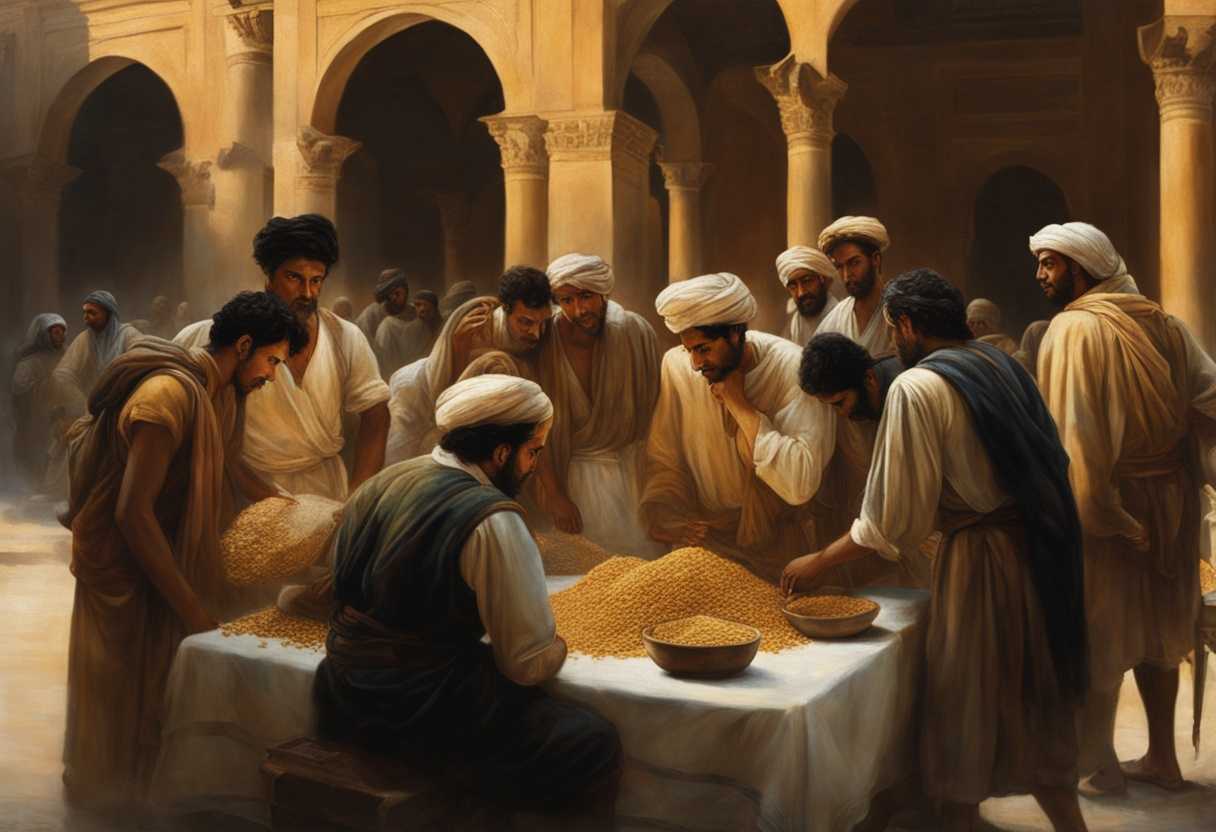
Setting the Scene for Genesis 38:40
In Genesis chapter 38, we find the story of Tamar, the daughter-in-law of Judah. Tamar was married to Judah’s eldest son, Er, who died childless. Following the custom of levirate marriage, Judah asked his second son, Onan, to fulfill his duty by marrying Tamar and providing offspring in his brother’s name. However, Onan also died childless.
After the deaths of both sons, Judah was reluctant to give his youngest son, Shelah, to Tamar in marriage, fearing that he too would die. Tamar, realizing that she was being denied the opportunity to have children and secure her future, took matters into her own hands. She disguised herself as a prostitute and seduced Judah, who unknowingly impregnated her.
The scene in Genesis 38 depicts the moment when Judah discovers that Tamar is pregnant and condemns her for her supposed immorality. However, Tamar presents Judah with his own signet, cord, and staff as evidence of his paternity. Judah acknowledges his wrongdoing and declares Tamar righteous, as she acted out of desperation to secure her place in the family line. This dramatic and tense scene unfolds against the backdrop of a patriarchal society where lineage and inheritance were of utmost importance.
What is Genesis 38:40 about?
Joseph and his brothers send the robe of many colors to their father, Jacob in this verse from Genesis. This act symbolizes deception and betrayal, as earlier in the story, Joseph’s brothers had sold him into slavery after stripping him of his special robe. The robe of many colors was a symbol of Jacob’s favoritism towards Joseph, which had caused jealousy among his siblings. The brothers deceive Jacob into believing that Joseph had been killed by a wild animal by sending the robe back to their father covered in blood.
Reflecting on this verse, we can ponder the themes of family dynamics, jealousy, betrayal, and forgiveness. It prompts us to consider the consequences of envy and deceit within relationships, and the importance of communication, trust, and honesty in family bonds. It also serves as a reminder of the power of forgiveness and reconciliation, as Jacob eventually reunites with Joseph and forgives his brothers for their betrayal.
What lessons can we learn from the actions of Joseph’s brothers? How do favoritism and jealousy impact family relationships? What can we do to prevent similar acts of deception and betrayal in our own lives? Joseph and his family find healing and reconciliation despite the hardships they endure, as we contemplate these questions and reflect on the ultimate message of hope and redemption that this story conveys.
Understanding what Genesis 38:40 really means
It seems there might be a typographical error in the verse reference, as Genesis 38 only has 30 verses. Let’s use a well-known verse for this exercise: Genesis 1:27. This verse is profound and rich in meaning, appropriate for our discussion.
Structure for Commentary
- Introduction and Context
- Explanation of Key Phrases
- Relation to Other Biblical Passages
- Relevance to Modern Life
- Anecdote for Illustration
- Conclusion
Commentary
1. Introduction and Context
Genesis 1:27 is a foundational verse in the Bible, stating that God created humans in His own image. To understand its full impact, it’s essential to remember that this verse is part of the creation narrative in Genesis, where God systematically creates the world and everything in it over six days. This verse particularly highlights the unique status of human beings in creation.
2. Explanation of Key Phrases
-
“God created man in His own image”: This phrase is loaded with significance. It implies that humans reflect aspects of God’s nature. Unlike other creatures, humans possess intellect, emotion, and will, qualities that resonate with the divine.
-
“Male and female He created them”: This emphasizes the inclusive nature of God’s creation. It underscores that both men and women are created in God’s image, thus holding equal value and dignity.
3. Relation to Other Biblical Passages
Genesis 1:27 connects deeply with Psalm 139:14, where David marvels at the intricate design of human beings, proclaiming, “I am fearfully and wonderfully made. Ephesians 2:10 in the New Testament aligns with this idea, stating, “For we are God’s handiwork, created in Christ Jesus to do good works.”” Such passages reinforce the extraordinary worth and purpose embedded in human creation.
**4. Genesis 1:27 brings comfort and clarity in today’s world, where identity and self-worth are often entangled with external accomplishments and societal standards. It reminds us that our true value lies in being made in the image of God. This divine imprint bestows inherent dignity and worth on each person, regardless of status, achievement, or background.
5. Anecdote for Illustration
I recall a conversation with a woman struggling with feelings of inadequacy and low self-esteem. Society’s pressures had led her to believe she was not enough. I shared with her the truth of Genesis 1:27 and how it means she is inherently valuable. Her perspective shifted, finding solace and strength in knowing that her worth is anchored in the divine image she bears, not in societal validation.
6. Conclusion
Genesis 1:27 offers profound insights into human identity and dignity. This verse challenges us to see ourselves and others through a divine lens, recognizing the shared image of God in everyone we encounter. It serves as a powerful reminder that our inherent worth is immovable because it is rooted in God’s perfect creation. Reflect on this truth and let it shape the way you view yourself and those around you.
What does it mean to honor your parents?
Honoring your parents means showing them respect, kindness, and gratitude for all they have done for you. This includes obeying their guidance and advice, caring for them in their old age, and treating them with love and dignity. We acknowledge the role our parents have played in our lives and the sacrifices they have made for our well-being by honoring them. It is a way of showing appreciation for the gift of life and the values they have instilled in us.
Honoring parents also extends to our attitudes and behaviors towards them. It involves speaking to them with patience and understanding, listening to their wisdom and experiences, and being a source of support and comfort to them when they need it. This act of honoring our parents not only brings blessings and harmony within the family but also reflects our reverence for the divine command to honor and respect those who brought us into this world. Honoring our parents ultimately reflects our character and our relationship with God. It is a practice that transcends cultural boundaries and religious beliefs, emphasizing the importance of familial bonds and the values of love, compassion, and humility. We honor the Creator who ordained this commandment and recognize the importance of gratitude, respect, and love in our relationships with those who have nurtured and raised us by honoring our parents.
Application
Think of life’s challenges like navigating a busy workday or family struggle. Genesis 38:40 reminds us to have faith and stay the course, even when things look tough. Trust in God’s plan as you trust a co-worker or partner to help you through a hectic project. Let this scripture be your guide—stick with your faith and take the next step forward, no matter what. Are you ready to let this powerful message shape your day?

Reverend Michael Johnson is an experienced Church Minister with a profound expertise in spirituality and guidance. With a serene presence and a compassionate heart, he has faithfully served his congregation for over 20 years, leading them on a spiritual journey towards inner peace and enlightenment. Reverend Johnson’s extensive knowledge of religious philosophies and profound understanding of human nature have made him a trusted confidant and mentor to many, as he seamlessly weaves his profound wisdom into life teachings. Reverend Johnson’s calming demeanor and empathetic nature continue to uplift and heal souls, nurturing a sense of unity and tranquility within his community.