
32 Let me pass through all your flock today, removing from it every speckled and spotted sheep and every black lamb, and the spotted and speckled among the goats, and they shall be my wages.
Setting the Scene for Genesis 30:32
In Genesis chapter 30, we find Jacob, the son of Isaac and grandson of Abraham, in a pivotal moment in his life. Jacob had worked for Laban, his uncle, for many years in exchange for the hand of his beloved Rachel in marriage. However, Laban had deceived Jacob by giving him Leah, Rachel’s older sister, as his wife first. This led to Jacob working another seven years to finally marry Rachel.
In Genesis 30:32, we see Jacob negotiating with Laban over his wages. Jacob had tended Laban’s flocks and herds, and now he was proposing a deal to separate the speckled and spotted sheep and goats from the rest of the flock as his payment. Laban agreed to this arrangement, thinking he was outsmarting Jacob. Little did he know that God would bless Jacob, and the speckled and spotted animals would increase in number, making Jacob very prosperous.
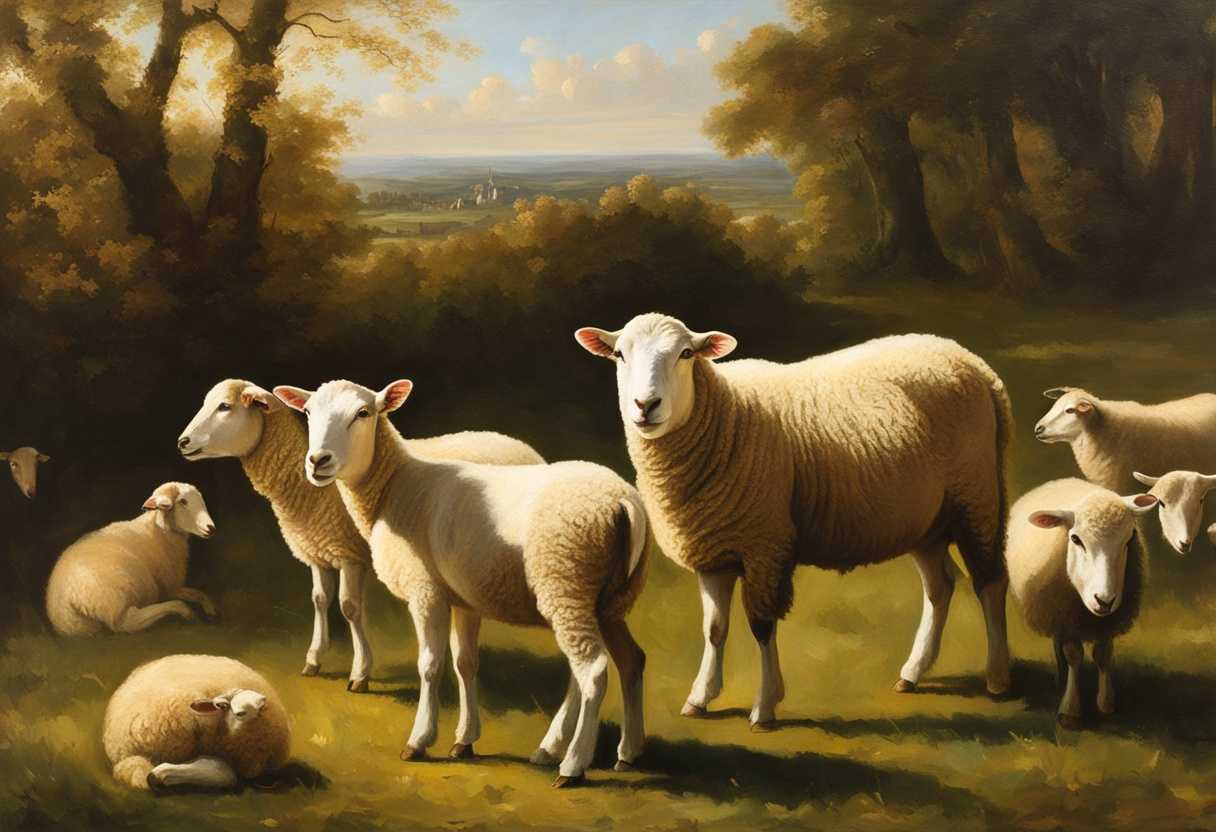
The scene is set in the vast fields of Laban’s estate, with the sun setting in the distance casting a warm glow over the grazing sheep and goats. Jacob and Laban stand facing each other, their expressions tense as they discuss the terms of their agreement. Rachel and Leah are nearby, watching the exchange with curiosity and concern for their husband. This moment marks a turning point in Jacob’s life as he begins to build his own wealth and secure his future despite the challenges and deceptions he has faced.
What is Genesis 30:32 about?
Jacob engages in a strategic negotiation with Laban, his father-in-law, in this verse to secure his fair share of wages. Jacob demonstrates his shrewdness and foresight by requesting to keep the speckled and spotted sheep as his own, ensuring he receives proper compensation for his labor. This negotiation showcases Jacob’s willingness to think creatively and assert his rights in a challenging situation.
Through this verse, we can reflect on the importance of advocating for ourselves and standing up for what we deserve. Jacob’s actions serve as a reminder that it is crucial to be proactive in seeking fair treatment and not settle for less than what is rightfully ours. We can learn valuable lessons about the power of negotiation and the importance of asserting ourselves in matters of compensation and fairness by studying this interaction between Jacob and Laban. What other strategies could Jacob have used when negotiating with Laban? How does this negotiation reflect Jacob’s character and his ability to navigate complex interpersonal dynamics? Reflecting on these questions can deepen our understanding of the significance of this verse in the broader context of Jacob’s story.
Understanding what Genesis 30:32 really means
Structure for Commentary
- Introduction and Context
- Phrase Analysis and Meaning
- Comparison with Other Biblical Passages
- Relevance to Modern Life
- Illustrative Anecdote
- Conclusion and Call to Reflection
Commentary
Introduction and Context
Genesis 30:32 occurs within the narrative of Jacob’s dealings with his father-in-law, Laban. It comes during a discussion about wages and livestock, where Jacob outlines a plan to distinguish his flocks from Laban’s. This is part of a larger story about ingenuity, providence, and divine blessing, revealing deeper themes about justice, integrity, and God’s provision.
Phrase Analysis and Meaning
One key phrase in this verse is “every speckled and spotted sheep and every dark-colored lamb.” On a surface level, Jacob is delineating his payment, but spiritually, this symbolizes identification and separation. Often in the Bible, the sheep represent God’s people (John 10:14-16), and here Jacob’s plan is a metaphor for God’s way of distinguishing His chosen ones. It’s as if Jacob is saying, “Let God decide my wages, let His divine providence show favor.”
Comparison with Other Biblical Passages
We can draw parallels to Matthew 25:32, where Jesus talks about separating the sheep from the goats. This separation reflects divine judgment and reveals God’s fairness and provision for His people. Another complementary passage is Proverbs 16:3: “Commit to the Lord whatever you do, and He will establish your plans.” Jacob’s proposal reflects his trust in God’s sovereign control over his life and future.
Relevance to Modern Life
Today, this passage reminds us to trust God’s providence in all our dealings. Jacob’s reliance on honest and transparent methods, trusting God to bless his righteous actions, sets a vital precedent in a world that often values cunning and manipulation. It speaks to the current issues of fairness in workplaces, relationships, and even in broader societal structures.
Illustrative Anecdote
I remember a young man from our congregation who started a small business. Unlike others who cut corners to get ahead, he maintained integrity in his dealings. He provided quality service and transparent prices. Despite initial struggles, his honesty earned him loyal customers, and his business flourished. Like Jacob, he trusted God to bless his hard work and ethical choices.
Conclusion and Call to Reflection
Reflect on the phrase “every speckled and spotted sheep,” and ponder where in your life God might be calling you to act with integrity and trust in His provision. How can you allow God to ‘separate’ and bless your actions through honesty and faithfulness? Let this passage challenge you to commit your ways to Him, trusting that His justice and provision will prevail, much as it did for Jacob. We echo Jacob’s story by navigating through life’s complexities with unwavering faith and principles, making it our own testament of divine faithfulness and provision.
How can we trust God’s provision in our lives?
We can trust God’s provision in our lives by recognizing that He is the ultimate provider who cares for us. Just as God promised to provide for Jacob and his family in Genesis 30:32, we can be assured that God will take care of our needs as well. We can have confidence that He will continue to provide for us in the future by believing in His faithfulness and seeing how He has provided for us in the past. God knows what we need before we even ask, so we can trust His provision. We can trust that He will provide for us according to His perfect plan by seeking Him in prayer and aligning our hearts with His will. God’s provision may not always come in the way we expect or desire, but we can have faith that He will always give us what is best for us, even if it may not seem that way at first.
Finally, we can trust God’s provision in our lives by surrendering our worries and anxieties to Him. Trusting in God’s provision requires a deep level of faith and reliance on His promises. We can rest assured that He will provide for us abundantly and according to His perfect timing as we entrust our needs to Him and seek His kingdom above all else.
Application
Think of your job and family commitments as promises, just like the ones Jacob made. Embrace each task with the dedication Jacob showed Laban. Your hard work and honesty are noticed and valued, not just by those around you, but by a higher power. How will you take this lesson from Genesis 30:32 and make it real in your everyday life? Will you step up and let your actions reflect true integrity?

Reverend Michael Johnson is an experienced Church Minister with a profound expertise in spirituality and guidance. With a serene presence and a compassionate heart, he has faithfully served his congregation for over 20 years, leading them on a spiritual journey towards inner peace and enlightenment. Reverend Johnson’s extensive knowledge of religious philosophies and profound understanding of human nature have made him a trusted confidant and mentor to many, as he seamlessly weaves his profound wisdom into life teachings. Reverend Johnson’s calming demeanor and empathetic nature continue to uplift and heal souls, nurturing a sense of unity and tranquility within his community.