
15 So all the wells that his father’s servants had dug in the days of Abraham his father, the Philistines stopped up, filling them with earth.
16 And Abimelech said to Isaac, “Go away from us, for you are much mightier than we.”
17 So Isaac departed from there and encamped in the Valley of Gerar and settled there.
18 And Isaac dug again the wells of water that had been dug in the days of Abraham his father, which the Philistines had stopped after the death of Abraham. And he gave them the names that his father had given them.
19 Isaac’s servants dug in the valley and found there a well of spring water.
20 But the herdsmen of Gerar quarreled with Isaac’s herdsmen, saying, “The water is ours.” So he called the name of the well Esek, because they contended with him.
21 Then they dug another well, and they quarreled over that also, so he called its name Sitnah.
22 He moved away from there and dug another well, and they did not quarrel over it. So he called its name Rehoboth, saying, “For now the Lord has made room for us, and we shall be fruitful in the land.”
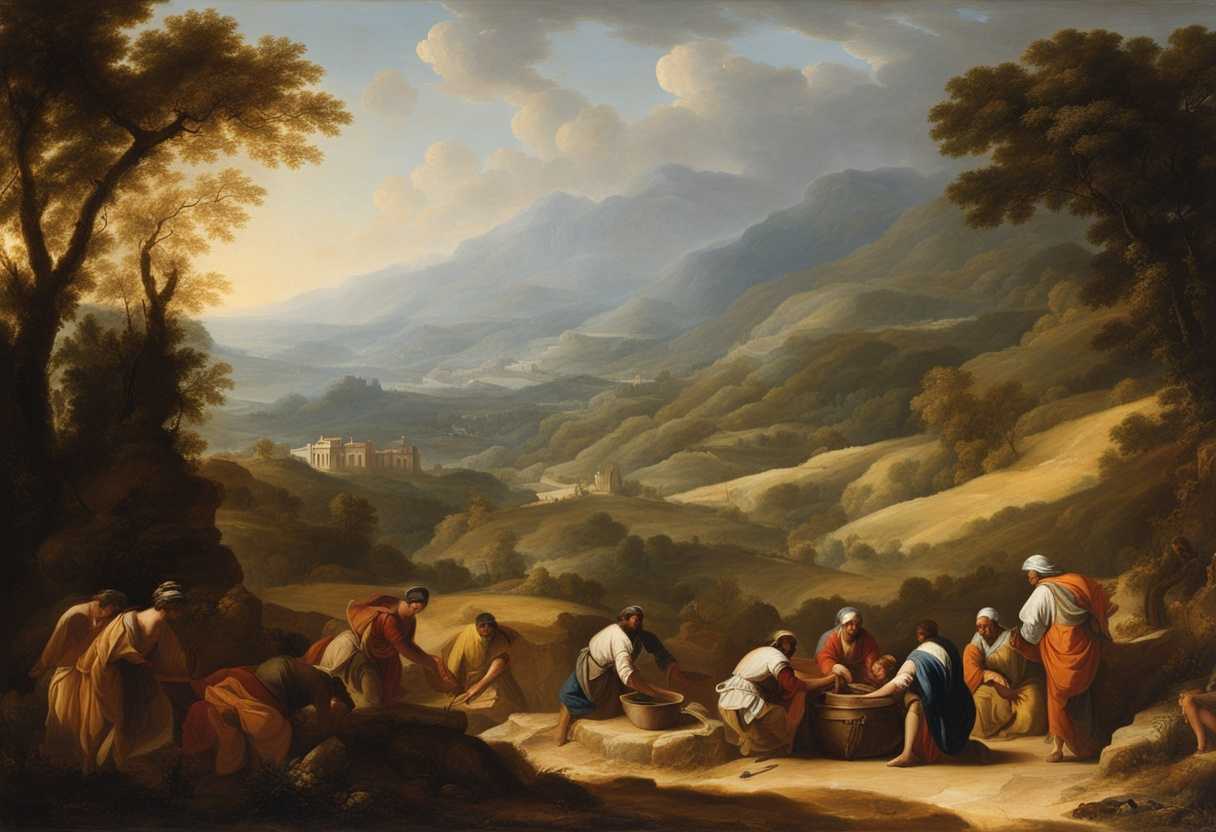
Setting the Scene for Genesis 26:15-22
In Genesis chapter 26, we find Isaac, the son of Abraham, in the land of Gerar during a time of famine. Isaac, along with his wife Rebekah, settled in Gerar at the advice of God, seeking refuge and sustenance. As they arrived in the land, Isaac began to prosper, and his flocks and herds grew abundantly.
The scene unfolds in the midst of this prosperity, with Isaac’s wealth becoming a point of contention with the Philistines in Gerar. The Philistines, envious of Isaac’s success, filled the wells that his father Abraham had dug. This act of sabotage led Isaac to dig new wells in search of water, a precious resource in the arid land. Despite facing opposition and conflict, Isaac remained steadfast and continued to dig wells, refusing to be deterred by the Philistines’ actions.
In this tense and challenging environment, Isaac’s perseverance and faith in God’s provision are highlighted. The scene captures the struggle for survival and the resilience of Isaac in the face of adversity, showcasing his unwavering trust in God’s promises.
What is Genesis 26:15-22 about?
Isaac engages in a symbolic act of digging wells in this verse, which were a significant source of sustenance and life in the ancient world. This act represents Isaac’s efforts to establish a place for himself and his family, to secure their future through hard work and perseverance. However, as he digs these wells, he faces opposition from the people of Gerar, who may represent challenges and obstacles that we encounter in our own lives when we strive for growth and success.
Despite the challenges Isaac faces, he does not give up. He continues to dig wells, showing resilience and determination in the face of adversity. Eventually, his perseverance pays off, and he finds peace and prosperity in the land of Gerar. This part of the verse serves as a powerful reminder that with patience, persistence, and faith, we can overcome obstacles and eventually find prosperity and success in our endeavors. It encourages us to trust in our abilities and keep moving forward, even when faced with difficulties. Just like Isaac, we, too, can find peace and prosperity if we stay true to our goals and remain steadfast in our efforts.
Understanding what Genesis 26:15-22 really means
Structure for Commentary:
- Introduction and Context: Briefly describe the context and summarize the passage.
- Key Phrases and Interpretations: Highlight and explain significant phrases.
- Broader Biblical Context: Refer to other parts of the Bible that connect with this passage.
- Relevance to Modern Life: Discuss how this passage is relevant today.
- Reflective Questions and Anecdote: Pose questions for reader reflection and share a personal anecdote.
- Conclusion and Call to Action: Summarize and provide a takeaway message.
Introduction and Context:
The passage from Genesis 26:15-22 recounts the story of Isaac reopening the wells that had been dug in the days of his father Abraham, which the Philistines had subsequently stopped up. Isaac encounters conflict over these wells but continues to move and dig new wells until he finds a space free from opposition, symbolizing persistence and faith in God’s provision.
Key Phrases and Interpretations:
The phrase “Isaac departed from there and camped in the valley of Gerar, and settled there” reflects his perseverance. Instead of engaging in conflict, Isaac chose to move and start anew. This decision exhibits humility, patience, and a focus on peace. Another significant phrase is “He moved from there and dug another well, and they did not quarrel over it.” This demonstrates Isaac’s unwavering faith and optimism in finding God’s blessings without conflict.
Broader Biblical Context:
This narrative echoes Matthew 5:9, where Jesus says, “Blessed are the peacemakers, for they shall be called children of God.” Isaac’s actions exemplify what it means to be a peacemaker, seeking God’s provision without resorting to strife. Galatians 6:9 also ties to “Let us not become weary in doing good, for at the proper time we will reap a harvest if we do not give up.”” Isaac’s consistency in seeking new wells reinforces the importance of perseverance in faith.
Relevance to Modern Life:
Now, the question arises: How does Isaac’s story resonate with us today? Just like Isaac faced opposition and conflict over wells, we encounter disputes and obstacles in our daily lives. This passage encourages us to handle conflicts with patience and a peaceful heart, trusting that God will provide a solution. Isaiah 40:31 states, “But they who wait for the Lord shall renew their strength; they shall mount up with wings like eagles; they shall run and not be weary; they shall walk and not faint.” It reminds us that enduring trials with faith can lead to immense blessings. What is your “well” today, consider? Is there a challenge or conflict you face that feels insurmountable? I recall a time when our church went through significant turmoil due to differing opinions on a community project. Instead of engaging in endless disputes, we prayed, sought peaceful dialogue, and moved forward with a spirit of unity. It wasn’t easy, but God’s provision became evident when we found a new project that unified everyone. Genesis 26:15-22 teaches us the virtues of perseverance, peace, and faith in God’s provision. Reflect on areas in your life where you face conflicts or challenges. Can you approach these with patience and trust in God’s plan? Strive to be a peacemaker, continually digging new “wells” with the assurance that God will eventually lead you to a place of peace and prosperity.
How can we demonstrate trust in God’s provision?
We can demonstrate trust in God’s provision by remaining faithful and obedient to Him, just as Isaac did in Genesis 26:15-22. Instead of taking matters into our own hands or resorting to deceit and manipulation to secure what we think we need, we should trust in God’s timing and plan. Isaac’s patience and reliance on God’s promise resulted in abundant blessings despite facing challenges and opposition from others.
Furthermore, we can show our trust in God’s provision by acknowledging His sovereignty and giving Him the glory for any successes or blessings we receive. We demonstrate our dependence on God rather than our own abilities or resources by recognizing that all good things come from Him. Just as Isaac built an altar and worshipped the Lord in gratitude for His provision, we can also express our faith and trust through prayer, praise, and thanksgiving, attributing all blessings to God’s grace and faithfulness.
Application
Look at Isaac’s story in Genesis 26:15-22. Isaac faced many challenges, just like we do in our jobs and families. Yet, he stayed patient, found peaceful solutions, and trusted in God’s guidance. How can you become more like Isaac, tackling your daily hurdles with faith and perseverance? Will you allow this lesson to power you through tough times and help you honor God in your life?

Reverend Michael Johnson is an experienced Church Minister with a profound expertise in spirituality and guidance. With a serene presence and a compassionate heart, he has faithfully served his congregation for over 20 years, leading them on a spiritual journey towards inner peace and enlightenment. Reverend Johnson’s extensive knowledge of religious philosophies and profound understanding of human nature have made him a trusted confidant and mentor to many, as he seamlessly weaves his profound wisdom into life teachings. Reverend Johnson’s calming demeanor and empathetic nature continue to uplift and heal souls, nurturing a sense of unity and tranquility within his community.