
1 Abraham took another wife, whose name was Keturah.
2 She bore him Zimran, Jokshan, Medan, Midian, Ishbak, and Shuah.
3 Jokshan fathered Sheba and Dedan. The sons of Dedan were Asshurim, Letushim, and Leummim.
4 The sons of Midian: Ephah, Epher, Hanoch, Abida, and Eldaah. All these were the children of Keturah.
5 Abraham gave all he had to Isaac.
6 but to the sons of his concubines Abraham gave gifts, and while he was still living he sent them away from his son Isaac, eastward to the east country.
7 These are the days of the years of Abraham’s life, 175 years.
8 Abraham breathed his last and died in a good old age, an old man and full of years, and was gathered to his people.
Setting the Scene for Genesis 25:1-8
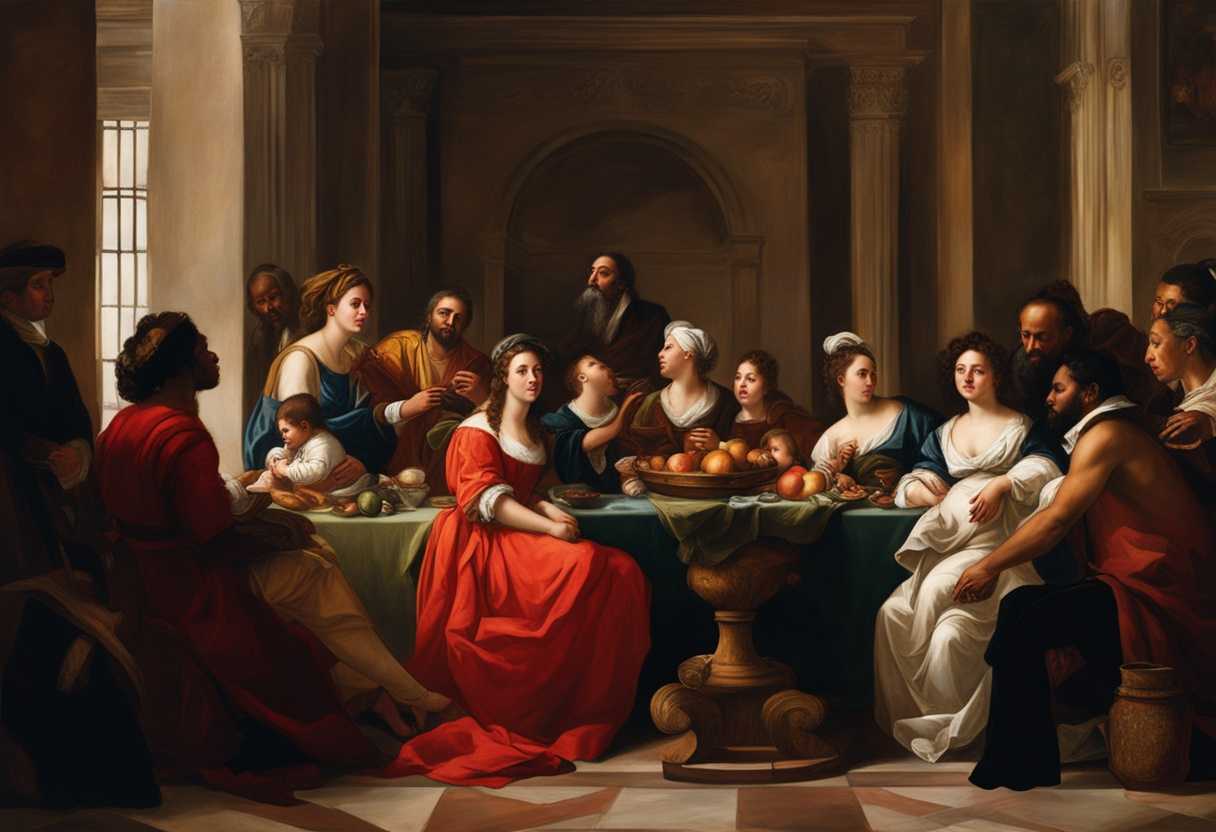
In Genesis chapter 25, we find ourselves in the midst of a poignant scene in the life of Abraham, the patriarch of the Israelites. The setting is a somber one as we witness the passing of Abraham’s beloved wife, Sarah. The atmosphere is heavy with grief as Abraham mourns the loss of his faithful companion and the mother of his son, Isaac. The tent they shared is filled with a sense of emptiness and loss as family members and servants gather to pay their respects.
Among those present are Abraham’s other sons, born to him through his concubines, Keturah. These sons, including Zimran, Jokshan, Medan, Midian, Ishbak, and Shuah, have come to mourn the loss of their stepmother and to support their father in his time of sorrow. The scene is a mix of emotions, with sorrow for Sarah’s passing mingling with a sense of unity and family bond as they come together in this moment of loss.
The surroundings are the familiar landscape of the desert where Abraham and his family have made their home. The tents are pitched against the backdrop of the vast wilderness, under the open sky that stretches endlessly in all directions. The scene is a reminder of the transient nature of life, as even the great matriarch Sarah has now passed on, leaving behind a legacy that will endure for generations to come.
What is Genesis 25:1-8 about?
A significant transition in the family lineage of Abraham is seen in Genesis 25:1-8. This passage marks a turning point as Abraham marries Keturah after the death of his first wife Sarah. Through this marriage, Abraham fathers six more sons, emphasizing the continuation of his legacy and the fulfillment of God’s promise to make him the father of many nations. The inheritance of Abraham’s possessions by Isaac highlights the importance of lineage and the passing down of blessings from one generation to the next. We can ponder the concept of inheritance beyond just material possessions as we reflect on this verse. We can consider the inheritance of faith, values, and traditions that are passed down through generations. Just as Abraham entrusted his possessions to Isaac, we are called to pass down the richness of our beliefs and principles to our descendants. This verse challenges us to think about the legacy we are leaving behind and the impact it will have on those who come after us. What are the values and teachings that we want to pass on to future generations? How can we ensure that our inheritance is one of love, faith, and righteousness?
Understanding what Genesis 25:1-8 really means
Commentary Structure:
- Introduction and Context
- Key Phrases and Their Meanings
- Relation to Other Biblical Passages
- Relevance to Modern Readers
- Anecdote for Illustration
- Conclusion with Reflective Questions
Commentary on Genesis 25:1-8
Introduction and Context
Genesis 25:1-8 presents the narrative of the latter years of Abraham, including his remarriage to Keturah, the children from this union, his final days, and his death. It’s a passage rich with history and significance, as it encapsulates the end of an era for one of the foundational patriarchs of the faith.
Key Phrases and Their Meanings
One of the key phrases is “Abraham gave all he had to Isaac.” This signifies the importance of Isaac in the Abrahamic covenant with God, foreshadowing the special role Isaac and his descendants will play in pursuing God’s plan. Another critical phrase is “Abraham breathed his last and died in a good old age, an old man and full of years.” This description emphasizes a life well-lived, filled with divine favor and the fulfillment of God’s promises.
Relation to Other Biblical Passages
The distribution of Abraham’s inheritance to Isaac resonates with God’s promise in Genesis 17:19, where God asserts that His everlasting covenant will be with Isaac, the son of Sarah. There’s also a thematic link to Romans 4:19-21, which discusses Abraham’s faith and the strength of his belief in God’s promises, underlining why he is considered the father of many nations. This passage complements Abraham’s life narrative and reinforces the idea of faithfulness to God’s word.
Relevance to Modern Readers
Today, this passage continues to offer valuable lessons about legacy, faith, and obedience to God’s will. The narrative invites us to reflect on what we will leave behind, not just materially but in spiritual and moral terms, in a world where personal achievements are often prioritized. What kind of legacy are we laying down for future generations? Are we investing in things that align with God’s promises and purposes? A contemporary missionary couple who devoted their lives to serving in a remote region illustrates this story. They invested not only in physical infrastructure but also in spreading the Gospel and training local leaders. When they eventually retired, their work continued to thrive because they had focused on building spiritual and ethical foundations, much like Abraham did. Their legacy wasn’t merely in buildings but in transformed lives, echoing the inheritance Abraham passed to Isaac. Let’s ponder a few questions as we meditate on this passage: What are we giving to the next generation? Are we focusing on what holds eternal significance? Are our lives demonstrating the kind of faith and obedience that Abraham exemplified?
This passage encourages us to live thoughtfully and leave behind a heritage that honors God. We follow in the faithful footsteps of Abraham, ensuring that our lives are full of meaning and purpose.
How can our relationships reflect God’s grace?
Our relationships can reflect God’s grace when we show love, forgiveness, and generosity towards others. Just as God extends His grace to us by forgiving our sins and showing us love and mercy, we can demonstrate His grace in our relationships by being forgiving and compassionate towards those who may have wronged us. Additionally, being generous and selfless in our actions towards others is a tangible way to reflect God’s grace in our relationships.
When we extend grace to others, we are mirroring God’s unconditional love and forgiveness. It allows us to build stronger, more authentic relationships based on kindness, understanding, and acceptance. We create an environment where love and compassion can flourish by showing grace to others, reflecting the grace that God has shown us in our own lives.
Application
Think about Abraham’s journey in Genesis 25:1-8. How did he leave a mark on his family and the world? Now, consider your own life. Are you setting an example of faith and integrity for your loved ones? Your actions today shape the legacy you leave tomorrow. Step up and take responsibility. Will your story be one that inspires future generations?

Reverend Michael Johnson is an experienced Church Minister with a profound expertise in spirituality and guidance. With a serene presence and a compassionate heart, he has faithfully served his congregation for over 20 years, leading them on a spiritual journey towards inner peace and enlightenment. Reverend Johnson’s extensive knowledge of religious philosophies and profound understanding of human nature have made him a trusted confidant and mentor to many, as he seamlessly weaves his profound wisdom into life teachings. Reverend Johnson’s calming demeanor and empathetic nature continue to uplift and heal souls, nurturing a sense of unity and tranquility within his community.