
19 And the territory of the Canaanites extended from Sidon in the direction of Gerar as far as Gaza, and in the direction of Sodom, Gomorrah, Admah, and Zeboiim, as far as Lasha.
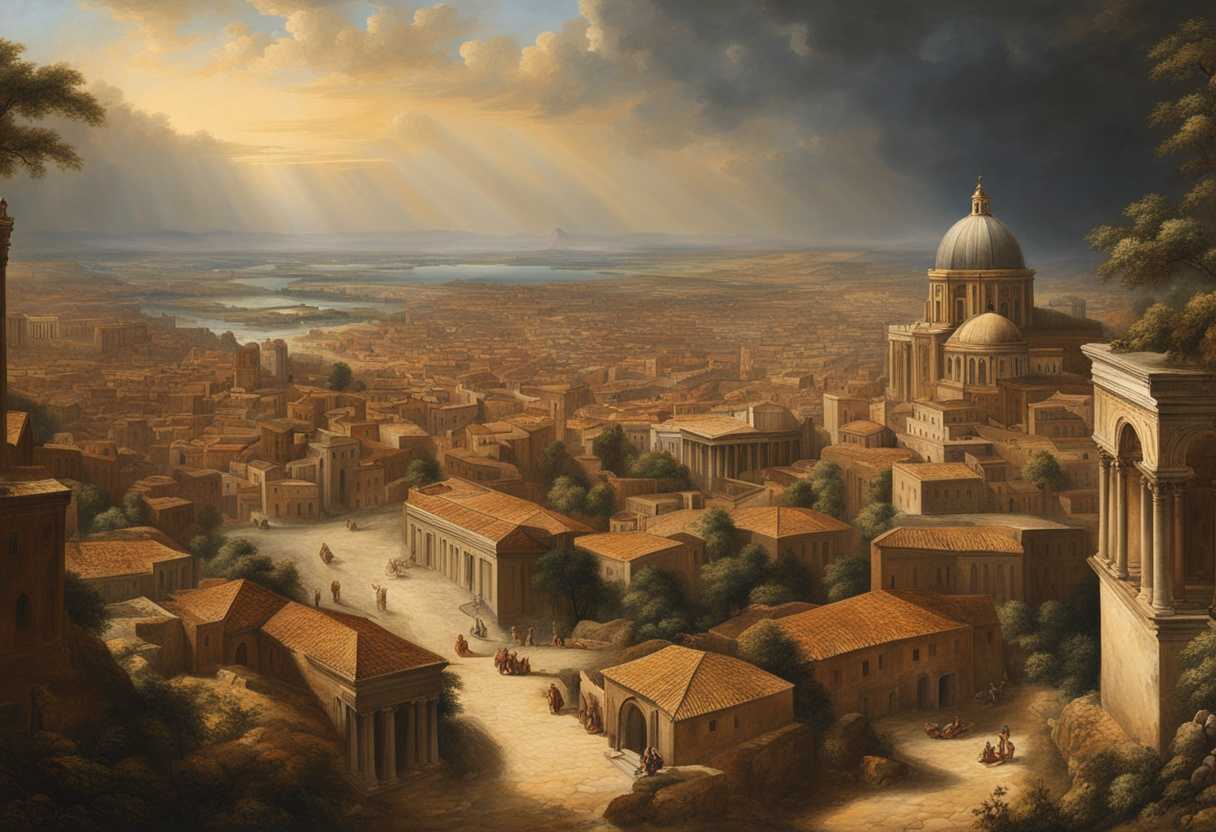
Setting the Scene for Genesis 10:19
In Genesis chapter 10, we find a detailed account of the descendants of Noah’s sons after the great flood. The verse 10:19 specifically mentions the territory of the Canaanites extending from Sidon towards Gerar as far as Gaza, and then towards Sodom, Gomorrah, Admah, and Zeboiim. This verse sets the scene for a discussion about the various nations and peoples that descended from Noah’s sons and how they came to inhabit different regions.
Imagine a gathering of scholars and students in a dimly lit room, surrounded by ancient scrolls and maps. The atmosphere is filled with curiosity and anticipation as they delve into the genealogies and histories of the different nations mentioned in Genesis 10. Among the group are renowned biblical scholars, eager students, and curious onlookers, all seeking to unravel the mysteries of the past and gain a deeper understanding of the origins of humanity.
As the discussion unfolds, names like Sidon, Gerar, Gaza, Sodom, Gomorrah, Admah, and Zeboiim are repeated, each sparking a new thread of conversation about the migrations, settlements, and interactions of these ancient peoples. The room is alive with the sound of voices sharing insights, asking questions, and connecting the dots between the past and the present. The scene is a testament to the enduring fascination with the stories and histories found in the pages of the Bible, and the timeless quest for knowledge and understanding.
What is Genesis 10:19 about?
The mention of the territory of the Canaanites from Sidon to Gaza in Genesis 10:19 serves as a geographical reference point in the Bible. This verse highlights the vast expanse of land inhabited by the Canaanite people, laying a foundation for understanding the historical context of the regions mentioned. Sidon and Gaza were significant cities in ancient times, located on the eastern coast of the Mediterranean Sea. The verse gives readers a sense of the widespread presence of the Canaanites in that region by pinpointing the territories from Sidon to Gaza.
Reflecting on this verse, consider the implications of these specific locations and the significance of the Canaanites’ presence in that area. How does understanding the geographical boundaries of ancient civilizations deepen our appreciation for the historical accounts in the Bible? We can gain insights into the movements, interactions, and settlements of various peoples in ancient times by examining the territorial descriptions in the Bible. We invite you to explore the rich tapestry of geography and culture woven throughout the biblical narrative as we delve into the details provided in verses like Genesis 10:19.
Understanding what Genesis 10:19 really means
To provide meaningful commentary on Genesis 10:19, let’s follow a structured approach to break down the verse and understand its significance.
-
Context and Background:
Genesis 10 is often referred to as the “Table of Nations,” detailing the descendants of Noah’s sons: Shem, Ham, and Japheth. Verse 19, in particular, is part of the lineage of Canaan, a son of Ham. The boundaries described in this verse highlight the territorial extent of the Canaanites, stretching from Sidon, through Gerar, to Gaza, and toward Sodom, Gomorrah, Admah, and Zeboiim, as far as Lasha. -
Examination of Key Phrases:
Let’s consider the significant phrases in this verse. Terms like “bounds of the Canaanites” and the geographical markers like “Sidon,” “Gaza,” and “Sodom” are critical here. This verse vividly maps out the region that the Canaanites inhabited, which forms a crucial part of the ancient Near Eastern history and cultural narrative. Mentioning cities like Sodom and Gomorrah, which later become sites of God’s judgment, frames a deeper moral and theological context. -
Theological Implications:
The territories occupied by the Canaanites held great significance in biblical history. Later, these regions became focal points for key biblical events. For instance, Sodom and Gomorrah are infamous for their destruction due to sin, as detailed in Genesis 19. The extent of Canaanite land foreshadows the future conflicts and eventual conquest by the Israelites, as God’s promise to Abraham included inheriting these lands (Genesis 15:18-21). This serves as a reminder of God’s sovereignty over nations and lands. -
Relevance to Today’s Reader:
Understanding the division and dwelling places of ancient nations can initially seem distant to contemporary readers. However, this demarcation of Canaan’s bounds underscores themes of heritage, belonging, and divine promises. Even today, territories can change, cultures can clash, and borders can shift, but the underlying human experiences of seeking a place, identity, and purpose remain constant. -
Application:
Reflecting on the territorial bounds of Canaanites can prompt us to think about our own boundaries and inheritance. Spiritually speaking, what are the “lands” or “territories” God has entrusted to us? Where has He placed us, and how are we stewarding what’s been given to us? Perhaps in your community, there are figurative “Canaanites’ territories” where challenges and opportunities lie. -
Supportive Scripture:
Elsewhere in Scripture, we see references to territories and inheritances. Deuteronomy 32:8 speaks about God setting boundaries of peoples according to the number of the children of Israel. This adds another layer to understanding God’s sovereign design in placing nations where they are. Paul in Acts 17:26 states God determined the times set for nations and the exact places where they should live, emphasizing divine orchestration in nations’ rise and fall. -
Anecdotal Illustration:
Let’s consider a modern anecdote. Suppose a family inherits a farm. Initially, they might see it as just land; however, over time, they learn about its soil, history, and the potential it holds. The family’s care and cultivation transform it into something fruitful and significant. Likewise, God has placed you in your current “territory” for a reason. Perhaps it’s your workplace, community, or even your family—a place where you are called to nurture and uphold God’s principles. We delve into a deeper recognition of our God-given place in the world by reflecting upon Genesis 10:19. It challenges us to realize our unique role within the extensive narrative of God’s creation and sovereign plans. The territorial boundaries of ancient Canaan carried profound implications, and the spaces we inhabit and influence today do as well.
How can we find unity amidst diversity?
The verse in Genesis 10:19 highlights the diversity found among different groups of people, as it discusses the territories and boundaries of various nations. Despite this diversity, one way to find unity amidst this diversity is to recognize our shared humanity. Regardless of our cultural or ethnic differences, we all share common experiences, emotions, and aspirations as human beings. We can bridge the gaps created by diversity and come together in unity by acknowledging and celebrating this shared humanity.
Another way to find unity amidst diversity is through fostering understanding and respect for one another’s differences. It is essential to recognize that diversity enriches our communities and brings different perspectives to the table. We can create a sense of unity that celebrates the richness of diversity rather than seeing it as a source of division by actively listening to one another, learning from each other’s unique backgrounds, and respecting differing viewpoints.
Lastly, practicing empathy and compassion towards one another can help build bridges across diverse groups. We can cultivate a sense of unity that transcends any barriers created by diversity by putting ourselves in someone else’s shoes, being kind and understanding towards others, and showing empathy for their experiences and struggles. Through empathy and compassion, we can find common ground and form connections that go beyond surface-level differences, ultimately leading to a more cohesive and harmonious society.
Application
Think of your life as a bustling city filled with countless faces and stories. Genesis 10:19 is your call to embrace this diversity. Will you build bridges of understanding and appreciation among your peers, colleagues, and neighbors? Imagine your family and team thriving through unity and respect for different cultures and backgrounds. Open your heart and extend love and acceptance to everyone. Will you take this step today?

Reverend Michael Johnson is an experienced Church Minister with a profound expertise in spirituality and guidance. With a serene presence and a compassionate heart, he has faithfully served his congregation for over 20 years, leading them on a spiritual journey towards inner peace and enlightenment. Reverend Johnson’s extensive knowledge of religious philosophies and profound understanding of human nature have made him a trusted confidant and mentor to many, as he seamlessly weaves his profound wisdom into life teachings. Reverend Johnson’s calming demeanor and empathetic nature continue to uplift and heal souls, nurturing a sense of unity and tranquility within his community.