
John 20:3-7 is about Mary Magdalene and the disciples discovering the empty tomb of Jesus after his resurrection, symbolizing the victory of life over death and foreshadowing the hope and faith that would soon follow.
3 So Peter went out with the other disciple, and they were going toward the tomb.
4 Both of them were running together, but the other disciple outran Peter and reached the tomb first.
5 And stooping to look in, he saw the linen cloths lying there, but he did not go in.
6 Then Simon Peter came, following him, and went into the tomb. He saw the linen cloths lying there,
7 and the face cloth, which had been on Jesus’ head, not lying with the linen cloths but folded up in a place by itself.
Setting the Scene for John 20:3-7
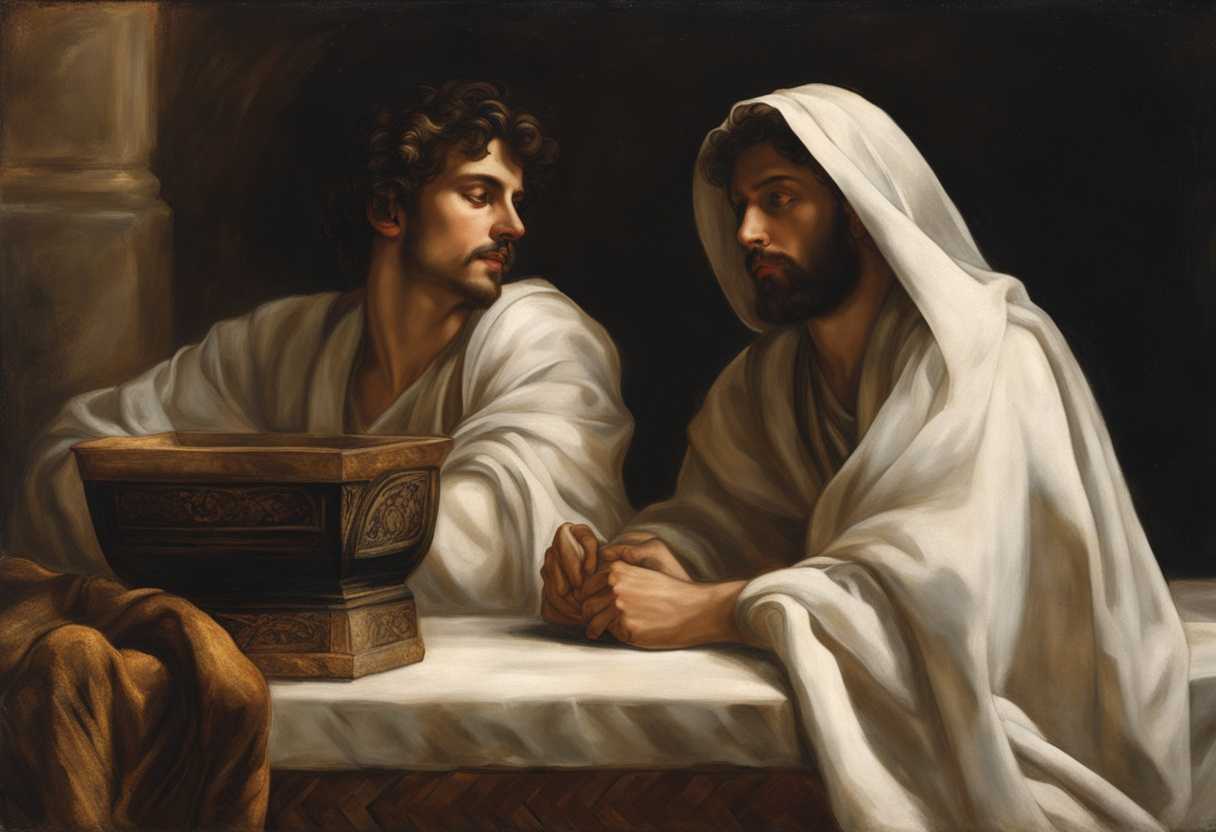
In John chapter 20, we find the scene where Mary Magdalene goes to the tomb of Jesus early in the morning and finds the stone rolled away. Distressed, she runs to tell Peter and John that someone has taken the body of Jesus. Peter and John immediately set out for the tomb, running side by side in their haste to see what has happened. The two disciples arrive at the tomb and find the linen cloths that had been wrapped around Jesus’ body lying there, but the body itself is gone.
The atmosphere is tense and filled with a sense of urgency as Peter and John try to make sense of the empty tomb before them. The surroundings are quiet and still, with the first light of dawn breaking over the horizon. The tomb is a solemn and sacred place, now filled with confusion and disbelief as the two disciples grapple with the disappearance of their Lord’s body. Peter and John exchange looks of bewilderment and concern as they try to piece together what has transpired, their faith and understanding of the situation shaken to the core.
What is John 20:3-7 about?
Peter and John rush to the tomb of Jesus, showing fervor and eagerness in this verse. John, known for his swift running, reaches the tomb ahead of Peter, a detail adding a sense of urgency to the moment. However, it is Peter who boldly steps into the tomb first, displaying his impulsive and courageous nature.
This passage encapsulates not only the disciples’ physical actions but also their contrasting personalities and traits. John’s swift arrival may indicate his emotional readiness and fervent belief, while Peter’s bold entrance reflects his impulsive and sometimes brash nature. We can ponder on the significance of these actions and how they may reflect our own responses to moments of uncertainty or faith as we delve deeper into the narrative. Why did Peter, known for acting impulsively, pause before entering the tomb? What might John’s hesitation to enter first signify about his character? We are invited to consider our own responses in moments of urgency or uncertainty by reflecting on the swift yet distinctive actions of Peter and John at the tomb. Our reactions in challenging situations can offer insights into our own beliefs, fears, and strengths, just as Peter and John’s actions revealed aspects of their character. We can contemplate the meaning behind this verse and ponder how we, like Peter and John, can navigate moments of doubt and faith with courage and conviction.
Understanding what John 20:3-7 really means
In John 20:3-7, we witness a pivotal moment in the resurrection narrative as Peter and the other disciple rush to the tomb of Jesus upon hearing the news from Mary Magdalene. The urgency and significance of their actions underscore the deep connection and concern they had for Jesus, highlighting the profound impact of His life and teachings on their faith. As they run together, the eagerness and desperation to understand what had transpired are palpable, reflecting a sense of urgency and a quest for truth that resonates with believers today.
John’s swift arrival at the tomb before Peter may symbolize his youthful zeal and perhaps a deeper spiritual insight, while his hesitation to enter the tomb showcases a mix of reverence and fear. The sight of the linen clothes lying there, undisturbed, hints at the miraculous nature of Jesus’ resurrection, dispelling any notion of theft or foul play. In contrast, Peter’s boldness in entering the tomb without hesitation demonstrates a different aspect of faith—one characterized by action and decisiveness.
The separate placement of the napkin, distinct from the linen clothes, suggests order and intentionality, pointing towards the deliberate nature of Jesus’ resurrection. This deliberate act underscores the divine plan at work, emphasizing that the resurrection was not a random event but a purposeful demonstration of God’s power over death. Peter’s subsequent entry into the tomb, witnessing the linen clothes lying there, further solidifies the reality of the miraculous event that had taken place.
The passage not only serves as a historical account of the resurrection but also holds profound relevance for believers today. It challenges us to approach our faith with a sense of urgency, seeking truth and understanding with fervor and determination. The varying reactions of Peter and John can mirror our own responses to spiritual experiences, reminding us that faith manifests in diverse ways and that both reverence and boldness have a place in our journey of belief.
Just as the disciples were transformed by the resurrection, so too can we be transformed by the hope and assurance it brings. The resurrection stands as a cornerstone of Christian faith, offering a beacon of hope and assurance of life beyond death. It calls us to reflect on our own encounters with the divine, inspiring us to embrace the transformative power of faith and the promise of renewal that the resurrection embodies. In moments of confusion and fear, the resurrection narrative reminds us that there is a greater plan at work—one that brings forth life, renewal, and eternal hope.
How can we recognize Jesus in unexpected forms?
We can recognize Jesus in unexpected forms by being open to the idea that He may reveal Himself in ways we do not initially expect. It is essential to approach situations, people, and experiences with a humble and discerning heart, recognizing that Jesus may be present in the most surprising or unconventional ways. We can start to see the presence of Jesus in the unexpected aspects of our lives by cultivating a deep spiritual awareness and keeping an open mind. We may also overlook His presence in our lives if we are not attuned to His subtle and diverse manifestations, just as the disciples did not immediately recognize Jesus after His resurrection. Jesus may reveal Himself through acts of kindness from strangers, moments of clarity during times of confusion, or unexpected blessings that come our way. We can begin to see the fingerprints of Jesus in the ordinary and extraordinary moments of our lives by being receptive and observant.
When we broaden our understanding of how Jesus can manifest Himself, we invite a deeper connection with the divine presence that is always at work in our lives. We can experience a profound and transformative relationship with Jesus that transcends our preconceived notions of who He is and how He may appear to us by remaining open to encountering Him in unexpected forms.
Application
Dig deep within to uncover the truth and power of Christ’s resurrection in your life. Like the disciples, embrace the evidence and let it ignite a fire of faith and devotion within you. Take the step to investigate, seek, and believe in the transformative power of this event. Will you let the empty tomb inspire a renewed commitment in your journey today?

Reverend Michael Johnson is an experienced Church Minister with a profound expertise in spirituality and guidance. With a serene presence and a compassionate heart, he has faithfully served his congregation for over 20 years, leading them on a spiritual journey towards inner peace and enlightenment. Reverend Johnson’s extensive knowledge of religious philosophies and profound understanding of human nature have made him a trusted confidant and mentor to many, as he seamlessly weaves his profound wisdom into life teachings. Reverend Johnson’s calming demeanor and empathetic nature continue to uplift and heal souls, nurturing a sense of unity and tranquility within his community.