
14 God said to Moses, “I am who I am.” And he said, “Say this to the people of Israel: ‘I am has sent me to you.’”
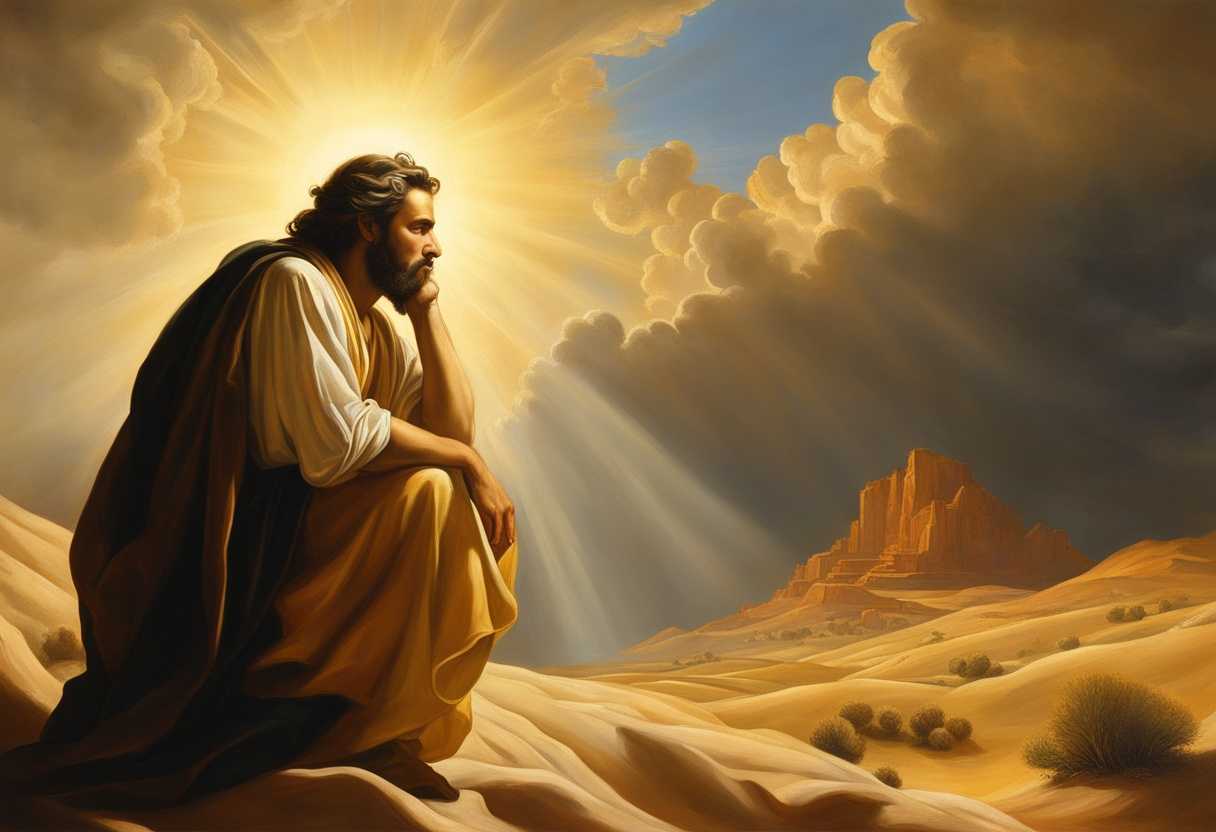
Setting the Scene for Exodus 3:14
In Exodus chapter 3, we find Moses, a former prince of Egypt turned shepherd, tending to his father-in-law Jethro’s flock in the wilderness near Mount Horeb. The scene is set in the vast and rugged terrain of the desert, with the scorching sun beating down on the sandy landscape. As Moses leads the sheep to find grazing pastures, he comes across a remarkable sight – a bush engulfed in flames, yet not consumed by the fire.
Curious and drawn to the strange phenomenon, Moses approaches the burning bush. It is at this moment that he encounters the presence of God, who speaks to him from within the flames. The voice instructs Moses to remove his sandals, for he is standing on holy ground. Trembling with awe and fear, Moses listens as God reveals His divine plan to deliver the Israelites from their bondage in Egypt and lead them to the promised land. It is during this encounter that God declares His name to Moses, saying, “I am who I am.”
In this pivotal moment, Moses is called to be the instrument through which God will work His wonders and fulfill His covenant with the people of Israel. The burning bush becomes a symbol of God’s presence and power, igniting a flame of courage and faith within Moses as he embarks on his journey to confront Pharaoh and lead the Israelites to freedom.
What is Exodus 3:14 about?
This verse is a powerful declaration of God’s self-existence, sovereignty, and eternal nature. When God proclaims, “I AM WHO I AM,” He is asserting His self-sufficiency and unchanging character. He is not defined by anyone or anything else; He simply is. This statement by God to Moses reveals His eternal nature, existing outside of time and space, and His unlimited power and authority.
Have you ever pondered the concept of God as the great “I AM”? It’s a profound revelation of His infinite being, beyond human comprehension. This declaration reminds us that God is not limited by our understanding or definitions. He is the ultimate source of all existence and the only one who can truly say, “I AM WHO I AM.” This verse invites us to reflect on the awesomeness and majesty of God, recognizing that He is unchanging and trustworthy in every aspect of our lives.
Understanding what Exodus 3:14 really means
Commentary Structure
- Introduction and Context
- Detailed Analysis
- Biblical Cross-references
- Relevance to Modern Life
- Anecdote and Personal Reflection
- God reveals His name to Moses in one of the most profound moments in the Bible in Exodus 3:14. This occurs during the episode of the burning bush, where God commissions Moses to lead the Israelites out of Egyptian bondage. This verse is pivotal as it not only reveals God’s identity but also emphasizes His eternal and self-sufficient nature.
Detailed Analysis
The phrase “I AM WHO I AM” is both intriguing and powerful. It signifies God’s eternal existence and His unchanging nature. When God says, “I AM,” He declares that He is self-sufficient, self-existent, and not dependent on anything or anyone. This revelation is foundational to understanding God’s nature and His relationship with humanity. It implies that God is the ultimate reality, the source of all that exists.
Biblical Cross-references
This concept of God’s eternal nature is echoed in other parts of the Bible. For example, in Revelation 1:8, God says, “I am the Alpha and the Omega,” indicating that He is the beginning and the end. Similarly, Isaiah 41:4 states, “I, the Lord, am the first, and with the last. I am He.” These passages reinforce the idea that God is eternal and unchanging, a theme first introduced in Exodus 3:14.
Relevance to Modern Life
Why is this relevant to us today? Knowing that God is unchanging can be a source of great comfort and stability in a world that is constantly changing and often chaotic. When we face uncertainties, we can rely on the unchanging nature of God. This assurance helps us navigate life’s challenges with faith and confidence.
Anecdote and Personal Reflection
Imagine a ship in a stormy sea. The sailors are tossed about by the waves, but they find their bearings by looking at the North Star, which remains constant despite the turbulent conditions. Similarly, in our lives, God’s unchanging nature serves as our North Star. I recall a time when I was going through a particularly difficult period. The constancy of God’s presence and the assurance that He is “I AM” provided me the anchor I needed to stay grounded. Exodus 3:14 makes a profound declaration of God’s eternal and self-sufficient nature. It invites us to reflect on the nature of God and how His unchanging presence can offer us stability and comfort. Consider how the understanding of God as “I AM” influences your faith as you go about your week. You can rely on God’s unchanging nature during challenging times in what ways? Reflect on these questions and allow God’s eternal presence to guide you. We can appreciate the immutable nature of God and find solace in His eternal presence by understanding the depth of this verse.
What is the significance of God’s self-identification?
God self-identifies as “I am who I am” in this verse, signifying his eternal, unchanging nature. God asserts His self-sufficiency and independence from any external influences by using this self-identification. This declaration emphasizes God’s existence as the ultimate being, beyond human comprehension or limitation.
Furthermore, God’s self-identification as “I am who I am” shows the depth of His character – He is not defined by a particular role or title but encompasses all aspects of existence. This self-disclosure also highlights the relational aspect of God, as He invites individuals into a personal and intimate connection with Him, emphasizing His presence and consistency in every circumstance. God’s self-identification ultimately carries a profound message of reassurance and certainty to His people. God establishes His authority and power by declaring Himself as the eternal “I am,” providing a foundation of stability and trust for those who rely on Him. His self-revelation encourages believers to place their faith in His unchanging nature and rely on His promises for guidance and sustenance.
Application
Imagine your life as a hectic workday or a bustling family dinner. Now picture the cornerstone holding it all together — that’s God’s presence. Reflecting on Exodus 3:14, understand that the great I AM is your constant anchor. Isn’t it time to pause, recognize, and embrace this unchanging foundation in your life? How will you let this revelation transform your daily grind and deepen your faith journey?

Reverend Michael Johnson is an experienced Church Minister with a profound expertise in spirituality and guidance. With a serene presence and a compassionate heart, he has faithfully served his congregation for over 20 years, leading them on a spiritual journey towards inner peace and enlightenment. Reverend Johnson’s extensive knowledge of religious philosophies and profound understanding of human nature have made him a trusted confidant and mentor to many, as he seamlessly weaves his profound wisdom into life teachings. Reverend Johnson’s calming demeanor and empathetic nature continue to uplift and heal souls, nurturing a sense of unity and tranquility within his community.