
4 He who observes the wind will not sow, and he who regards the clouds will not reap.
Setting the Scene for Ecclesiastes 11:4
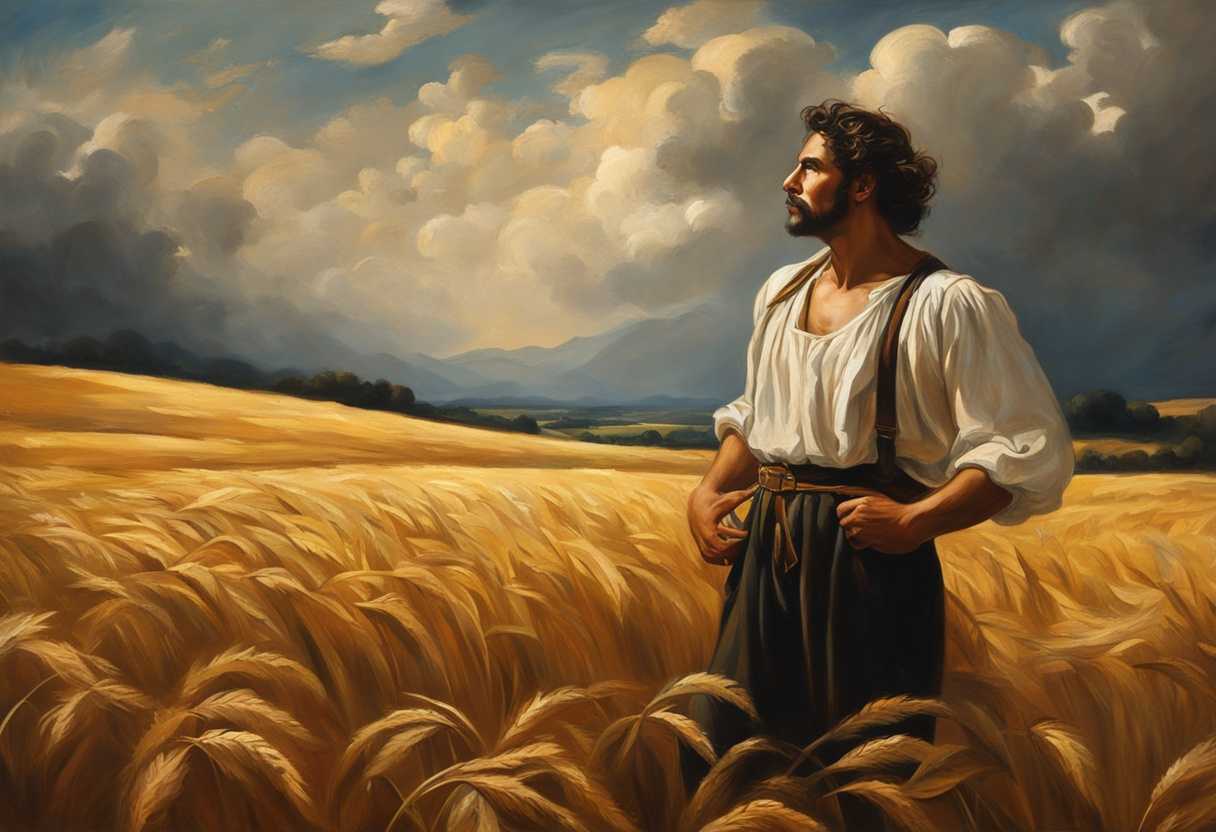
In Ecclesiastes 11:4, the scene is set in a lush, fertile field on a sunny day. The protagonist, Solomon, known for his wisdom and wealth, is standing amidst a group of farmers and laborers. These individuals have gathered to listen to his teachings on the importance of taking risks and seizing opportunities in life. The field is filled with various crops, swaying gently in the breeze, symbolizing the potential for growth and abundance.
Solomon, with his regal presence and authoritative voice, imparts his wisdom to the attentive crowd. He speaks of the unpredictability of life and the necessity of sowing seeds of hard work and perseverance, even in the face of uncertainty. The farmers nod in agreement, understanding the significance of his words in their daily lives of toil and cultivation. As they listen, a sense of hope and determination fills the air, inspiring them to step out in faith and embrace the unknown future.
The sun casts a warm glow over the scene, illuminating the faces of the listeners as they absorb Solomon’s profound insights. The field, teeming with life and potential, serves as a powerful backdrop for the lesson being taught. In this moment, amidst the beauty of nature and the wisdom of a king, the timeless message of Ecclesiastes 11:4 resonates deeply, urging all to take bold steps and trust in the divine plan for their lives.
What is Ecclesiastes 11:4 about?
The idea of planting seeds of faith and generosity in this verse calls us to action to cultivate and nurture virtues that are pleasing to God. Just as seeds need to be sown, watered, and cared for in order to grow, our faith and acts of generosity also need consistent attention and effort to flourish. We practice trust in God and selflessness towards others by sowing these seeds in our lives. The metaphor of planting seeds reminds us that the effects of our actions may not be immediately apparent, but they will bear fruit in the future if tended to with patience and persistence.
The second part of the verse, “for God’s ways are beyond our understanding,” serves as a comforting reminder that we may not always comprehend why certain events unfold the way they do or why we face particular challenges. It encourages us to trust in God’s wisdom and sovereignty, even when we cannot see the bigger picture. This part of the verse invites us to lean on our faith and rely on God’s guidance, especially during times of uncertainty or difficulty. This verse ultimately teaches us to have faith, practice generosity, and trust in the divine plan that surpasses our human comprehension.
Understanding what Ecclesiastes 11:4 really means
Commentary Structure:
- Introduction and Context
- Close Reading of Key Phrases
- Biblical Cross-References
- Relevance to Modern Life
- Anecdote for Illustration
- Conclusion and Call to Reflection
Commentary:
1. Introduction and Context:
Ecclesiastes 11:4 is a verse that speaks to the human tendency to procrastinate and hesitate in the face of uncertain conditions. Written by the Preacher, traditionally understood to be Solomon, Ecclesiastes is a book of wisdom literature that explores the meaning of life and the best ways to live it. This particular verse is a poignant reminder about the importance of taking action despite uncertainties.
2. Close Reading of Key Phrases:
The verse includes phrases like “He who observes the wind will not sow” and “he who regards the clouds will not reap.” These phrases use agricultural metaphors to illustrate a broader point about decision-making and action. Observing the wind and regarding the clouds both imply an over-cautious attitude, waiting for perfect conditions that may never come. The underlying message is clear: waiting for the perfect moment can lead to missed opportunities.
3. Biblical Cross-References:
This theme is echoed in various parts of the Bible. For example, in Proverbs 20:4, it says, “The sluggard does not plow in the autumn; he will seek at harvest and have nothing.” Similarly, James 4:13-15 advises against boasting about tomorrow, reminding us that our lives are fleeting and unpredictable. These cross-references reinforce the idea that action should not be delayed due to the fear of imperfect circumstances.
**4. The lesson of this verse is incredibly relevant in today’s fast-paced world. We often delay taking action, waiting for the “right” moment to start a new project, change careers, or even mend a broken relationship. Yet, perfect conditions rarely exist. The verse challenges us to act with faith and trust in God’s timing rather than our own calculations.
**5. The young entrepreneur with a groundbreaking idea kept waiting for the “perfect” market conditions to launch his product. Years went by, and competitors eventually filled the market gap he was eyeing. Reflecting on his experience, he realized that his hesitation cost him not just financially but also in terms of personal growth. This anecdote illustrates the dangers of waiting for ideal conditions that may never materialize.
**6. Ecclesiastes 11:4 calls us to act despite uncertainties, to sow and reap irrespective of the winds and clouds in our lives. It urges us to trust in God’s provision and timing. Reflect on this verse and ask yourself: What have I been delaying due to imperfect conditions? How can I take a step of faith today? Act now with faith and trust in God’s guidance, remembering it is the best time.
How can we trust God’s timing in uncertainty?
Trusting in God’s timing can be difficult in times of uncertainty. However, reflecting on the meaning of Ecclesiastes 11:4 can help us understand that just as we cannot predict the wind or the way a baby grows in the womb, we cannot predict the timing of God’s plans unfolding in our lives. This verse reminds us that God’s timing operates beyond our understanding and control, and that we are called to trust in His perfect timing.
When faced with uncertainty or impatience, we can find peace in knowing that God’s timing is always perfect. Even when we cannot see how things will work out, we can trust that God is at work behind the scenes, orchestrating events according to His divine plan. We can experience a sense of calm and assurance that God is guiding us in the right direction by surrendering our desire for control and placing our trust in His timing. Trusting in God’s timing in uncertainty ultimately requires faith and patience. We may not always understand why things are happening the way they are, but we can have confidence that God’s timing is purposeful and designed for our ultimate good. We can find hope and strength by leaning on Him in times of uncertainty, knowing that He is faithful and will bring about His plans for us in His perfect timing.
Application
Think of your life like a project at work or a day with your family. Ecclesiastes 11:4 reminds us to act now and not let fear or doubt freeze us. Just as you can’t guarantee which work idea or family moment will succeed, you must take that leap and invest in kindness, love, and generosity. Embrace the uncertainty—trust that it’s part of your journey. Will you take that bold step today?

Reverend Michael Johnson is an experienced Church Minister with a profound expertise in spirituality and guidance. With a serene presence and a compassionate heart, he has faithfully served his congregation for over 20 years, leading them on a spiritual journey towards inner peace and enlightenment. Reverend Johnson’s extensive knowledge of religious philosophies and profound understanding of human nature have made him a trusted confidant and mentor to many, as he seamlessly weaves his profound wisdom into life teachings. Reverend Johnson’s calming demeanor and empathetic nature continue to uplift and heal souls, nurturing a sense of unity and tranquility within his community.