
1 Again the anger of the Lord was kindled against Israel, and he incited David against them, saying, “Go, number Israel and Judah.”
2 So the king said to Joab, the commander of the army, who was with him, “Go through all the tribes of Israel, from Dan to Beersheba, and number the people, that I may know the number of the people.”
3 But Joab said to the king, “May the Lord your God add to the people a hundred times as many as they are, while the eyes of my lord the king still see it, but why does my lord the king delight in this thing?”
4 But the king’s word prevailed against Joab and the commanders of the army. So Joab and the commanders of the army went out from the presence of the king to number the people of Israel.
5 They crossed the Jordan and began from Aroer and from the city that is in the middle of the valley, toward Gad and on to Jazer.
6 Then they came to Gilead, and to Kadesh in the land of the Hittites, and they came to Dan.
7 And came to the fortress of Tyre and all the cities of the Hivites and Canaanites; and they went out to the Negeb of Judah at Beersheba.
8 So when they had gone through all the land, they came to Jerusalem at the end of nine months and twenty days.
9 And Joab gave the sum of the numbering of the people to the king: in Israel there were 800,000 valiant men who drew the sword, and the men of Judah were 500,000.
10 But David’s heart struck him after he had numbered the people. And David said to the Lord, “I have sinned greatly in what I have done. But now, O Lord, please take away the iniquity of your servant, for I have done very foolishly.”
11 For when David arose in the morning, the word of the Lord had come to the prophet Gad, David’s seer, saying,
12 “Go and say to David, ‘Thus says the Lord, Three things I offer you. Choose one of them, that I may do it to you.’”
13 So Gad came to David and told him, and said to him, “Shall three years of famine come to you in your land? Or will you flee three months before your foes while they pursue you? Or shall there be three days’ pestilence in your land? Now consider, and decide what answer I shall return to him who sent me.”
14 Then David said to Gad, “I am in great distress. Let us fall into the hand of the Lord, for his mercy is great; but let me not fall into the hand of man.”
15 So the Lord sent a pestilence on Israel from the morning until the appointed time. And there died of the people from Dan to Beersheba 70,000 men.
16 And when the angel stretched out his hand toward Jerusalem to destroy it, the Lord relented from the calamity and said to the angel who was working destruction among the people, “It is enough; now stay your hand.” And the angel of the Lord was by the threshing floor of Araunah the Jebusite.
17 Then David spoke to the Lord when he saw the angel who was striking the people, and said, “Behold, I have sinned, and I have done wickedly. But these sheep, what have they done? Please let your hand be against me and against my father’s house.”
18 And Gad came that day to David and said to him, “Go up, raise an altar to the Lord on the threshing floor of Araunah the Jebusite.”
19 So David went up at Gad’s word, as the Lord commanded.
20 Again the anger of the Lord was kindled against Israel, and he incited David against them, saying, “Go, number Israel and Judah.”
21 Then Araunah said, “Why has my lord the king come to his servant?” David said, “To buy the threshing floor from you, in order to build an altar to the Lord, that the plague may be averted from the people.”
24 But Araunah said to David, “Let my lord the king take and offer up what seems good to him. Here are the oxen for the burnt offering and the threshing sledges and the yokes of the oxen for the wood.
23 All this, O king, Araunah gives to the king.” And Araunah said to the king, “May the Lord your God accept you.”
24 But the king said to Araunah, “No, but I will buy it from you for a price. I will not offer burnt offerings to the Lord my God that cost me nothing.” So David bought the threshing floor and the oxen for fifty shekels of silver.
25 And David built there an altar to the Lord and offered burnt offerings and peace offerings. So the Lord responded to the plea for the land, and the plague was averted from Israel.
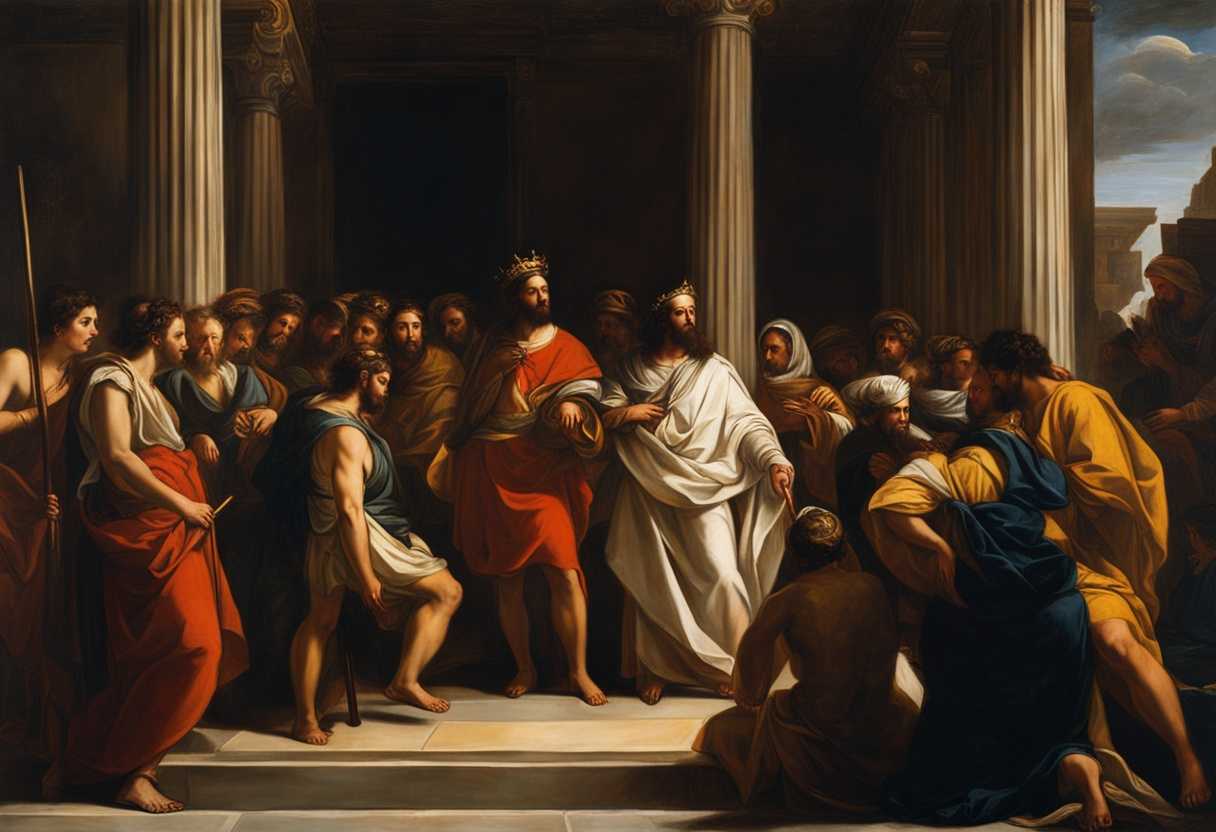
The True Meaning of 2 Samuel 24
The book of 2 Samuel was written by the prophet Nathan and the scribe Gad, who were close companions of King David. They provide a detailed account of David’s reign, chronicling both his triumphs and his struggles. David faces the consequences of a decision that will have far-reaching implications in this chapter. The events that unfold here will test David’s faith and leadership, and ultimately shape the future of his kingdom. As we delve into this passage, David’s actions echo the lessons found in other biblical texts, such as the importance of obedience and the consequences of pride.
The chapter begins with David’s decision to take a census of the Israelites, a move that raises concerns among his advisors. This decision, driven by a desire for power and control, sets in motion a chain of events that will challenge David’s relationship with God and his people. David’s actions lead to a divine judgment as the chapter progresses, and he must navigate the difficult path of repentance and restoration.
2 Samuel 24:1-4
King David makes a fateful decision in 2 Samuel 24:1-4 that ultimately leads to disastrous consequences for the people of Israel. The verse begins by stating that God’s anger burned against Israel and moved David to take a census of the people. It is important to note that taking a census was not inherently sinful in itself, as it was sometimes done in the Old Testament for various reasons including military preparedness. However, in this context, David’s motives for conducting the census are suspect.
David’s commander, Joab, questions the king’s decision to count the people, warning him that this action could result in God’s judgment. Despite Joab’s counsel, David persists and Joab carries out the census. This act of counting the people was seen as David placing his trust in the size of his army rather than in God’s protection and provision. It revealed a sense of pride and self-reliance on David’s part, which was displeasing to God.
This episode highlights the theme of pride and its consequences. Throughout the Bible, we see the dangers of pride, as it often leads to downfall and separation from God. Proverbs 16:18 states, “Pride goes before destruction, a haughty spirit before a fall.” David’s decision to count the people out of pride and misplaced confidence serves as a cautionary tale for believers today. It reminds us to remain humble before God, acknowledging that all we have is from Him and not to place our trust in our own strength or resources.
The repercussions of David’s actions are severe. After the census is completed, David is convicted of his sin and confesses to God. The prophet Gad delivers a message from God, offering David a choice of three punishments for his transgression: three years of famine, three months of fleeing from his enemies, or three days of plague. David chooses the latter, saying he would rather fall into the hands of God than those of men. This decision demonstrates David’s understanding of the mercy of God and his willingness to submit to His will. We witness the overarching theme of repentance and God’s mercy in these verses. Despite David’s prideful actions and the resulting calamity that befalls the people of Israel, God still provides a way for David to seek forgiveness and make amends. This narrative serves as a testimony to God’s willingness to forgive those who humble themselves, confess their sins, and turn back to Him. Psalm 51, which is traditionally believed to be David’s prayer of repentance after this incident, further showcases David’s contrite heart and God’s mercy in response to sincere repentance. 2 Samuel 24:1-4 serves as a cautionary tale about the dangers of pride, the importance of trusting in God’s providence, and the necessity of repentance and humility in maintaining a close relationship with Him. It emphasizes the timeless message that God’s ways are higher than our ways, and that true wisdom lies in surrendering to His will and seeking His forgiveness when we fall short.
2 Samuel 24:5-9
King David made the decision to count the fighting men of Israel and Judah in 2 Samuel 24:5-9, against the advice of his commander Joab. This act of taking a census was not merely a counting of numbers but a reflection of David’s trust in his military strength and resources rather than solely relying on God for protection and guidance. Joab’s caution to the king against this action stems from the understanding that true victory comes from the Lord, not from the size of one’s army. David’s desire to count his troops revealed a shift from a posture of obedience and dependence on God to one of self-reliance and pride.
The act of numbering the people was not inherently sinful, as in Exodus 30:12 God instructed Moses to conduct a census, but the intention behind David’s census was the issue. Instead of counting the people out of necessity, David’s motivation seemed to be rooted in a lack of trust in God’s provision and a desire for personal glory. This event highlights the importance of examining our motives behind our actions and the danger of falling into the trap of relying on our own abilities rather than seeking God’s will in all things. God became angry with David and gave him three options for punishment through the prophet Gad – seven years of famine, three months of fleeing from enemies, or three days of a plague in the land. David chose the last option, acknowledging God’s mercy over the harshness of his enemies. This event serves as a reminder of the consequences of sin and the importance of repentance and seeking forgiveness when we err, even if it comes at a great cost. This passage ultimately showcases the complex nature of King David’s character. Despite being a man after God’s own heart, he was not immune to moments of weakness and sin. It is a sobering reminder that even the most faithful individuals can stumble and fall when they let pride and self-reliance take precedence over obedience and trust in God. The consequences of David’s actions serve as a cautionary tale for believers to remain humble, obedient, and reliant on the Lord in all circumstances.
2 Samuel 24:10-14
King David confesses his sin to God in a crucial moment in his life, as seen in 2 Samuel 24:10-14. The passage reads, “David was conscience-stricken after he had counted the fighting men, and he said to the Lord, ‘I have sinned greatly in what I have done. Now, Lord, I beg you, take away the guilt of your servant. I have done a very foolish thing.’ Before David got up the next morning, the word of the Lord had come to Gad the prophet, David’s seer: ‘Go and tell David, ‘This is what the Lord says: I am giving you three options. Choose one of them for me to carry out against you.’ So Gad went to David and said to him, ‘Shall there come on you three years of famine in your land? Or three months of fleeing from your enemies while they pursue you? Or three days of plague in your land? Now then, think it over and decide how I should answer the one who sent me.’ David said to Gad, ‘I am in deep distress. His mercy is great; let us fall into the hands of the Lord, but do not let me fall into human hands.’”
David’s decision to conduct a census of the people was seen as a grave sin. This act demonstrated David’s pride and lack of trust in God, as he was relying on the size of his army rather than God’s protection. David realized the error of his ways and humbled himself before God, acknowledging his sin and seeking forgiveness. This moment showcases the importance of humility, repentance, and seeking forgiveness in the face of our wrongdoings.
God, in His justice, gave David three options for punishment, highlighting the repercussions of his sin. David, knowing the mercy of God, chose to fall into the hands of the Lord rather than into the hands of men. This choice reflects David’s understanding of God’s character and his trust in God’s mercy, even in the midst of consequences for his actions.
This passage serves as a reminder of the consequences of sin, the importance of genuine repentance, and the mercy of God when we turn back to Him. It also illustrates the power of human choice in accepting the consequences of our actions. David’s sincere repentance resulted in God’s forgiveness and restoration, showing that no sin is too great for God’s grace to cover when we come to Him with a contrite heart.
2 Samuel 24:15-17
Gad and King David have a powerful and sobering interaction in 2 Samuel 24:15-17. The verse reads, “So the Lord sent a plague upon Israel from the morning until the appointed time. And there died of the people from Dan to Beersheba seventy thousand men. And when the angel stretched out his hand toward Jerusalem to destroy it, the Lord relented from the calamity and said to the angel who was working destruction among the people, ‘It is enough; now stay your hand.’ And the angel of the Lord was by the threshing floor of Araunah the Jebusite.”
This section sheds light on the consequences of David’s sinful act of taking a census of the people. The act of numbering the people demonstrated a lack of trust in God’s power and provision, seeking to rely on military might instead. This led to God’s punishment in the form of a devastating plague that caused the death of seventy thousand men across the land of Israel. This event serves as a reminder of the severe repercussions of disobedience and pride before God.
The mention of the angel of the Lord about to destroy Jerusalem but then being restrained by God’s command showcases the mercy and sovereignty of God. Despite the people’s sin and deserving judgment, God’s compassion and willingness to relent from total destruction are evident. This narrative underscores God’s readiness to show mercy to those who repent and seek His forgiveness, despite the gravity of their transgressions.
The location of the angel of the Lord by the threshing floor of Araunah the Jebusite is significant in the broader biblical narrative. This location becomes central in the following events when David, following God’s instruction to build an altar there, purchases the threshing floor from Araunah. This site eventually becomes the location of the temple built by Solomon, highlighting the continuity of God’s presence and purpose throughout history despite human failings. This passage offers a poignant reminder of the consequences of pride and disobedience, the mercy and sovereignty of God, and the potential for redemption and restoration even in the midst of judgment and tragedy. It underscores the importance of humility, repentance, and reliance on God’s grace in the face of our shortcomings.
2 Samuel 24:18-21
King David and Araunah, a Jebusite, have a significant interaction in 2 Samuel 24:18-21. This passage reveals a pivotal moment in David’s life as he deals with the consequences of his sin in conducting a census, which resulted in a great plague afflicting the land. The “Angel of the Lord” standing with his sword drawn over Jerusalem symbolizes the impending judgment and the need for atonement for the people’s transgression.
Araunah, as the owner of the threshing floor where this scene takes place, offers to give David the land and the necessary animals for the sacrifice to avert the plague. However, David insists on paying for it, emphasizing that he will not offer burnt offerings to the Lord that cost him nothing. This principle reflects David’s understanding that genuine worship and repentance require personal sacrifice and genuine sincerity.
This event underscores the importance of repentance, humility, and the recognition of one’s own wrongdoing. Despite being a powerful king, David humbles himself before God and seeks to make amends for his sin. It also highlights the concept of sacrificial offerings as a means of seeking forgiveness and reconciliation with God, a theme that runs throughout the Bible.
Additionally, David’s refusal to offer sacrifices that cost him nothing is reminiscent of the concept of giving sacrificially found in the New Testament. Jesus commends the poor widow who gives all she has as an offering in Mark 12:41-44, contrasting her sacrificial giving with the ostentatious displays of the wealthy. This principle of sacrificial giving is a timeless message that emphasizes the importance of giving from the heart and with true devotion. David and Araunah illustrate the theme of God’s provision and faithfulness in their interaction. Despite the dire circumstances resulting from David’s sin, God provides a way for redemption and spares Jerusalem from further devastation. This narrative echoes the broader theme of God’s mercy and grace throughout the Bible, showcasing how even in times of judgment, God extends a way for repentance and restoration to those who seek Him earnestly. 2 Samuel 24:18-21 encapsulates complex themes of repentance, sacrifice, humility, and God’s provision. It serves as a poignant reminder of the consequences of sin, the necessity of genuine worship, and the redemptive power of God’s mercy. Through the narrative of David and Araunah, we are called to reflect on our own actions, seek forgiveness with contrite hearts, and offer ourselves as living sacrifices to the Lord.
2 Samuel 24:22-25
Araunah responds to King David’s request to purchase his threshing floor in order to build an altar to the Lord as we examine 2 Samuel 24:22-25. Araunah offers the threshing floor, the oxen, and the wood for the offering as a gift to the king. However, David refuses to offer burnt offerings to the Lord that cost him nothing, insisting on paying full price for the materials. This display of integrity and reverence for the Lord highlights David’s commitment to worship and sacrifice that is genuine and costly. To understand the significance of this passage, consider the broader context of King David’s life and reign. Throughout his story in the Bible, David is portrayed as a man of both great faith and deep flaws. His actions, such as the infamous affair with Bathsheba and the murder of her husband Uriah, serve as a stark reminder of the consequences of succumbing to temptation and sin. However, David’s willingness to acknowledge his wrongdoing and seek forgiveness from the Lord sets him apart as a figure of repentance and redemption.
This particular scene at Araunah’s threshing floor serves as a poignant moment of spiritual reckoning for David. David emphasizes the principle of genuine sacrifice and devotion to God by refusing to offer sacrifices that come at no cost to him. This act reflects a heart that desires to honor the Lord with true humility and sincerity, rather than out of mere convenience or obligation. It underscores the importance of giving sacrificially in our worship, not just in terms of material offerings but also in terms of our attitudes, motives, and actions. Themes of atonement and redemption that resonate throughout the Bible are echoed in this passage. The act of building an altar and offering sacrifices was central to the Israelites’ relationship with God, symbolizing their dependence on His grace and their desire for reconciliation. Jesus Christ’s ultimate sacrifice on the cross in the New Testament fulfills and surpasses the need for animal sacrifices, providing believers with eternal forgiveness and salvation. The story of David’s purchase of Araunah’s threshing floor thus points towards the redemptive work of Christ, who paid the price for our sins in full. The account of King David’s interaction with Araunah in 2 Samuel 24:22-25 offers profound insights into the nature of worship, sacrifice, and redemption. It reminds us of the importance of genuine devotion to God, the need for sincere repentance and humility in approaching Him, and the ultimate sacrifice made by Jesus for our salvation. We should strive to offer our lives as living sacrifices, holy and pleasing to God, as we reflect on David’s example and express our gratitude for His boundless love and mercy.
After 2 Samuel 24
The Lord’s anger burned against Israel once more, and He incited David to take a census of the people. Joab and the army commanders protested, but David insisted. After the census was completed, David’s conscience troubled him, and he confessed his sin to the Lord. The Lord then gave David a choice of punishments – three years of famine, three months of fleeing from his enemies, or three days of plague in the land. David chose the plague, and the Lord sent a devastating pestilence that claimed the lives of 70,000 Israelites. The Lord relented and commanded the angel of the Lord to stop destroying Jerusalem. David then built an altar to the Lord on the threshing floor of Araunah the Jebusite, offering sacrifices to atone for his sin. The Lord accepted David’s offering, and the plague was halted. This event would prove to be a pivotal moment, setting the stage for the construction of the temple that would become the centerpiece of Israel’s worship. The Lord’s mercy and grace were on full display, even in the midst of judgment, foreshadowing the ultimate sacrifice that would one day be made on this very ground.

Reverend Michael Johnson is an experienced Church Minister with a profound expertise in spirituality and guidance. With a serene presence and a compassionate heart, he has faithfully served his congregation for over 20 years, leading them on a spiritual journey towards inner peace and enlightenment. Reverend Johnson’s extensive knowledge of religious philosophies and profound understanding of human nature have made him a trusted confidant and mentor to many, as he seamlessly weaves his profound wisdom into life teachings. Reverend Johnson’s calming demeanor and empathetic nature continue to uplift and heal souls, nurturing a sense of unity and tranquility within his community.