
14 Is anyone among you sick? Let him call for the elders of the church, and let them pray over him, anointing him with oil in the name of the Lord.
15 And the prayer of faith will save the one who is sick, and the Lord will raise him up. And if he has committed sins, he will be forgiven.
Setting the Scene for James 5:14-15
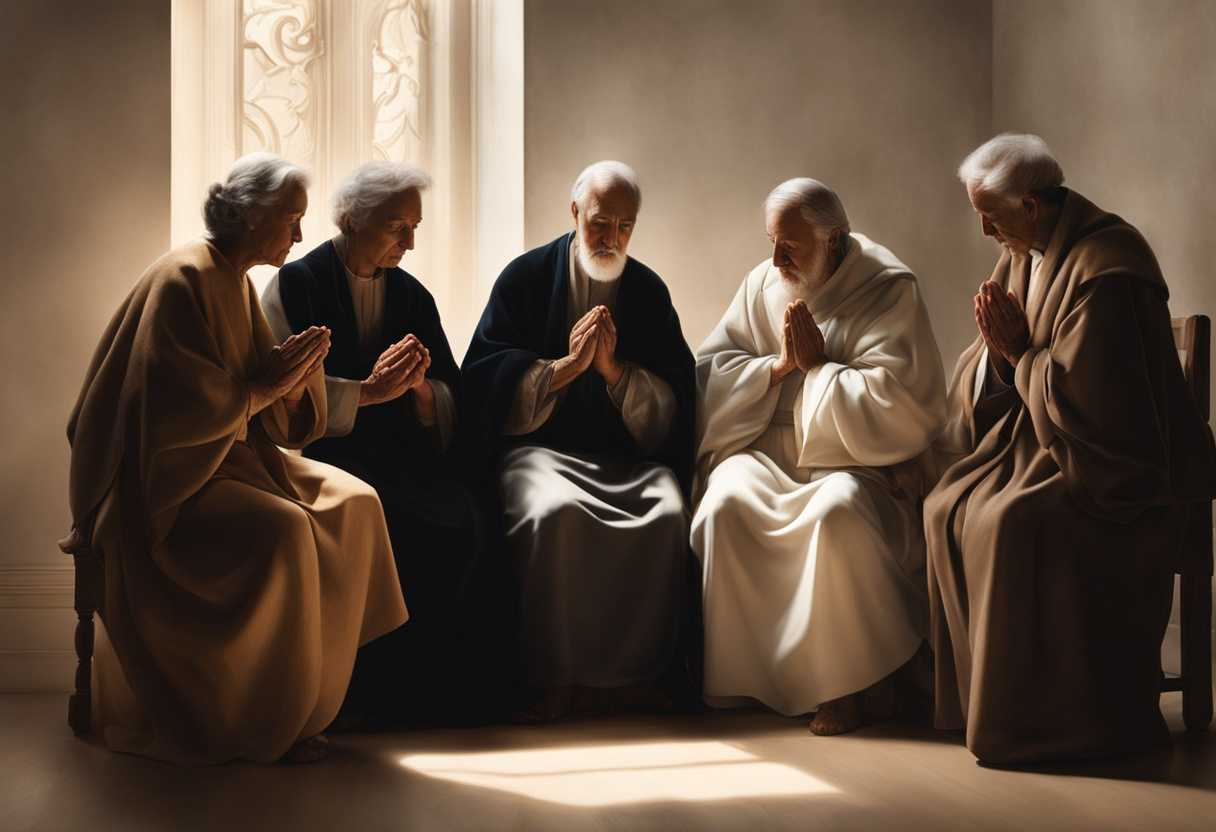
In James chapter 5, we find a scene set in a small, close-knit Christian community. The members of the congregation have gathered together in a humble, candlelit room for a special prayer meeting. The room is adorned with simple wooden benches and a large, worn-out Bible sits open on a makeshift altar at the front. The atmosphere is one of reverence and anticipation as the group prepares to engage in a time of prayer and healing.
Among the attendees are the elders of the church, known for their wisdom and faithfulness, as well as the younger members who look up to them for guidance. The group has come together to fulfill the instructions given in James 5:14-15, which encourages them to call upon the elders of the church to anoint and pray over those who are sick. As the elders move among the congregation, laying hands on the sick and offering up prayers of faith, there is a tangible sense of God’s presence in the room, bringing comfort and hope to those in need.
The scene is one of unity and support, as the members of the community come together in faith, believing in the power of prayer and the healing touch of God. As the prayers are lifted up and the oil is applied, there is a sense of peace and assurance that God is at work in their midst, bringing restoration and wholeness to those who are in need.
What is James 5:14-15 about?
James 5:14-15 reminds us of the power of prayer and the importance of having faith in God’s ability to heal the sick. This verse encourages us to come together as a community and pray for those who are in need of healing. We demonstrate our faith and reliance on Him to provide comfort and restoration to those who are suffering by lifting up our prayers and placing our trust in God’s healing power.
Have you ever witnessed the power of prayer in bringing comfort and healing to someone in need? Reflect on a time when prayer played a significant role in providing strength and hope during a difficult situation. We demonstrate our faith and contribute to creating a supportive and compassionate community that uplifts and cares for one another in times of need by praying for the sick and believing in God’s healing power. Let us remember to be vessels of God’s love and healing grace to those around us as we meditate on James 5:14-15. Let us proactively lift up prayers for the sick and trust in God’s miraculous power to bring about healing and restoration. We can create a powerful and transformative impact on the lives of those in need of healing by standing in faith and unity.
Understanding what James 5:14-15 really means
Structure for Commentary
- Introduction to the Passage
- Explanation of Key Phrases
- Cross-References to Other Biblical Texts
- Relevance to Contemporary Life
- Anecdote for Practical Understanding
- Call to Reflection and Action
Commentary
-
James addresses the power of faith and prayer, particularly in the context of illness in these verses. He encourages the sick to call upon the elders of the church for prayer and anointing with oil in the name of the Lord. The promise that follows is one of healing and forgiveness, illustrating the profound spiritual and physical impact of faithful prayer.
-
Explanation of Key Phrases
The phrase “call for the elders of the church” signifies the importance of community and spiritual leadership in times of personal crisis. It underscores a collective approach to healing, where the burden is shared among the faithful. The “prayer of faith” is not just a ritualistic act but a profound expression of trust in God’s power and mercy. Lastly, “the Lord will raise him up; and if he has committed sins, he will be forgiven” emphasizes both physical and spiritual restoration, highlighting the holistic nature of divine intervention. -
Cross-References to Other Biblical Texts
This passage resonates with other scriptures that emphasize prayer and healing. The apostles anoint the sick with oil and heal them in Mark 6:13. Similarly, in 1 Peter 2:24, Peter talks about the healing power of Christ’s wounds. These texts collectively affirm that healing—both physical and spiritual—is a recurring theme in the Bible, underscoring God’s compassion and the power of faith. -
The encouragement to seek communal support and prayer can be a powerful antidote to the isolation many feel in today’s fast-paced world. Modern medicine is a gift, yet these verses remind us that spiritual practices also play a crucial role in holistic well-being. The act of calling upon church elders can be likened to seeking counsel and prayer support, which can bring comfort and hope in times of distress.
-
Jane, a member of our congregation, faced a severe illness. Despite excellent medical care, her condition weighed heavily on her spirit. She reached out to the church elders for prayer. The elders prayed over her, anointing her with oil. Jane shared later that while her physical healing was gradual, the immediate peace and spiritual upliftment she experienced were profound. She felt God’s presence and support through her community, which was pivotal in her journey towards recovery.
-
Call to Reflection and Action
Reflect on how you engage with your faith community in times of need. Are you open to seeking prayer and support from your church family? The passage challenges us to trust in God’s power and to embrace the collective strength found in community prayer. Healing can be multifaceted, involving both our physical and spiritual lives. Take a moment to think about someone who might benefit from your prayers and support today. Reach out, offer your presence, and trust in the transformative power of faith.
These verses in James offer a timeless message about the power of faith, community, and prayer. They invite us to seek holistic healing and to support one another through the trials of life, reminding us that God’s grace is ever-present and ever-powerful.
How can we practice the power of prayer today?
We can practice the power of prayer today by coming together with our community or loved ones to pray for healing and restoration. This can be done through a physical gathering where we lay hands on the person in need of healing and pray over them, believing in the power of God to bring about healing and restoration. Through the act of communal prayer, we can demonstrate our faith and reliance on God’s healing grace.
Furthermore, we can also practice the power of prayer by spending time in personal prayer, lifting up our concerns and those of others to God. We can experience the transformative power of prayer by acknowledging our dependence on God and seeking His guidance and intervention in all aspects of our lives. Turning to prayer in times of uncertainty or distress can provide comfort and strength as we know that God hears our petitions and works through us and in our circumstances.
Application
Life can feel like a constant balancing act, juggling work deadlines and family commitments. But imagine the power we hold when we come together, just like a well-coordinated team, to pray for each other’s hardships and illnesses. Your focused and sincere prayer has immense strength and can lead to miraculous changes. Will you take a moment to join your faith family in lifting up those who need our collective support?

Reverend Michael Johnson is an experienced Church Minister with a profound expertise in spirituality and guidance. With a serene presence and a compassionate heart, he has faithfully served his congregation for over 20 years, leading them on a spiritual journey towards inner peace and enlightenment. Reverend Johnson’s extensive knowledge of religious philosophies and profound understanding of human nature have made him a trusted confidant and mentor to many, as he seamlessly weaves his profound wisdom into life teachings. Reverend Johnson’s calming demeanor and empathetic nature continue to uplift and heal souls, nurturing a sense of unity and tranquility within his community.