
2 Peter 1:20 is about the importance of recognizing that all interpretations of scripture should come from God’s inspiration rather than from personal opinions or human interpretation.
20 knowing this first of all, that no prophecy of Scripture comes from someone’s own interpretation.
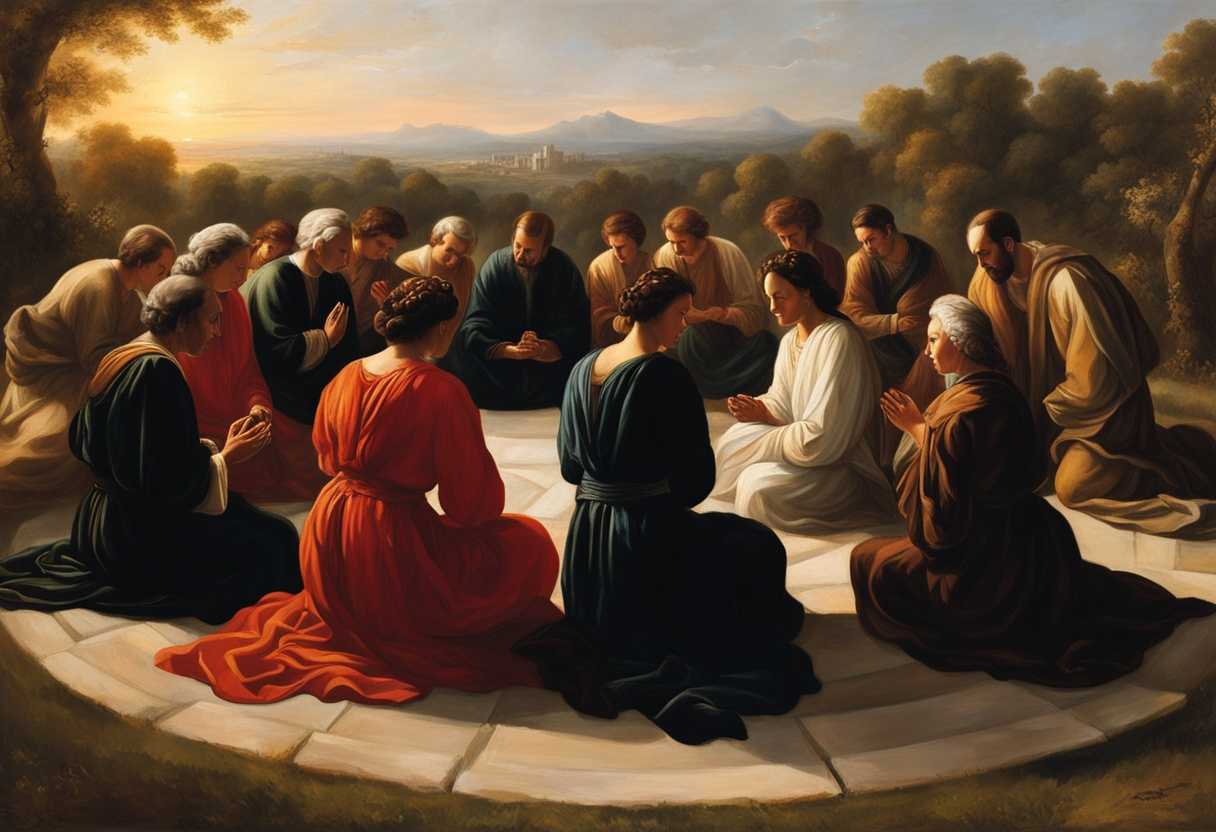
Setting the Scene for 2 Peter 1:20
In 2 Peter chapter 1, the scene is set in a dimly lit room in a small house in the ancient city of Jerusalem. The room is filled with a diverse group of individuals, including Peter, a fisherman turned disciple of Jesus, and a few other early Christian believers. They have gathered together to discuss the importance of scripture and the interpretation of prophecies.
As they sit around a wooden table, Peter begins to address the group, emphasizing the need for discernment when interpreting the scriptures. He speaks passionately about the inspiration of the Holy Spirit and how it guides believers in understanding the Word of God. The flickering light from an oil lamp casts shadows on the walls, creating an atmosphere of reverence and contemplation.
The group listens intently as Peter shares his insights, urging them to be diligent in studying the scriptures and seeking God’s wisdom. The weight of his words hangs in the air, reminding everyone of the responsibility they have in handling the sacred text with care and reverence. In this moment, the room is filled with a sense of unity and purpose as they strive to grow in their faith and knowledge of God’s truth.
What is 2 Peter 1:20 about?
Indeed, the interpretation of scripture is not a task to be taken lightly but one that requires the guidance of the Holy Spirit. When we approach the Word of God, it is essential to seek the wisdom and insight that only the Spirit can provide. Through prayer, reflection, and study, we can open our hearts and minds to the truths contained within the Scriptures.
Have you ever wondered why certain passages of the Bible may seem difficult to understand or interpret? This is where the Holy Spirit plays a crucial role in illuminating the meaning and message behind the words. We can gain a deeper understanding of God’s teachings and how they apply to our lives by allowing the Spirit to work within us. So, next time you find yourself grappling with the meaning of a verse or passage, remember to invite the Holy Spirit into your study and let His guidance lead you to greater insights and revelations.
Understanding what 2 Peter 1:20 really means
We will delve into this verse with a structured commentary to help us understand its significance and relevance in today’s context. The Apostle Peter emphasizes the importance of understanding that no prophecy in Scripture comes from someone’s own interpretation. This idea is crucial for grasping the divine origin and authority of the Bible.
Context and Background
To fully appreciate this verse, we must consider the surrounding context. Peter is addressing the reliability of prophetic messages and the authenticity of Scripture. Peter sought to affirm the divine inspiration of the biblical texts in a time when false teachings were rampant. He underscores that the prophecies did not originate from human will but from God, as men spoke from God as they were carried along by the Holy Spirit (2 Peter 1:21).
Key Phrases and Their Meanings
- “No prophecy of Scripture”: This phrase highlights the scope of Peter’s claim. Peter includes all the sacred writings recognized by the early church as divinely inspired by referring to “Scripture.”
- “Comes from someone’s own interpretation”: This is a crucial point. Peter insists that the messages delivered by the prophets were not their own ideas or interpretations. Instead, they conveyed what was revealed to them by God.
Biblical Cross-References
This idea is echoed in other parts of the Bible. For instance, 2 Timothy 3:16 states that “All Scripture is God-breathed and is useful for teaching, rebuking, correcting and training in righteousness.” Similarly, 1 Thessalonians 2:13 acknowledges that the Word of God is not merely human words, but truly God’s word at work within believers.
Relevance to Contemporary Life
Why is this relevant today? Knowing that Scripture is divinely inspired offers a reliable foundation for faith and practice in our world, where information is abundant and often conflicting. It calls us to approach the Bible with reverence and a willingness to submit to its authority. Sarah was a young woman whose story was being considered. She struggled with anxiety and sought answers in various self-help books and philosophies, but found no lasting peace. One day, she decided to turn to the Bible, reading it with the understanding that it is divinely inspired. This shift in perspective changed everything. She found comfort in passages like Psalm 23 and wisdom in Proverbs, guiding her to make better life decisions and find peace that transcends understanding.
Encouraging Reflection
This verse challenges us to reflect on our approach to the Bible. Do we read it as merely historical or literary work, or do we recognize it as the living Word of God? How might our lives change if we truly believed that God speaks to us through Scripture?
Conclusion
Understanding that no prophecy in Scripture comes from someone’s own interpretation deepens our respect for the Bible and encourages us to seek its wisdom earnestly. I invite you to read the Bible with fresh eyes as you go about your week, expecting to hear God’s voice guiding you through its pages.
How can we interpret Scripture accurately and truthfully?
Interpreting Scripture accurately and truthfully requires us to consider the context, the author’s intended audience, and the literary genre of the passage in question. We should seek to understand the historical and cultural background in which the text was written. This includes taking into account the language, customs, and traditions of the time to grasp the intended meaning.
Additionally, studying the entire Bible as a whole can provide further insight into the meaning of a specific verse. We can gain a more complete understanding of the overall message of Scripture by comparing different passages and considering how they relate to each other. It is also important to approach the text with humility, seeking guidance from the Holy Spirit to help us discern the truth and meaning behind the words.
Furthermore, consulting reputable commentaries, studying original languages, and seeking guidance from fellow believers can also aid in interpreting Scripture accurately. We can strive to uncover the depth of meaning within the text and apply it to our lives in a way that aligns with God’s truth by engaging in prayerful reflection and diligent study.
Application
Think of Scripture as a map for navigating life’s complexities. Just like you seek expert advice at work or cherish family guidance, turn to the Holy Spirit for understanding God’s Word. Approach the Bible with humility, ready for divine insights. Will you commit to diving deep into Scripture, seeking true wisdom?

Reverend Michael Johnson is an experienced Church Minister with a profound expertise in spirituality and guidance. With a serene presence and a compassionate heart, he has faithfully served his congregation for over 20 years, leading them on a spiritual journey towards inner peace and enlightenment. Reverend Johnson’s extensive knowledge of religious philosophies and profound understanding of human nature have made him a trusted confidant and mentor to many, as he seamlessly weaves his profound wisdom into life teachings. Reverend Johnson’s calming demeanor and empathetic nature continue to uplift and heal souls, nurturing a sense of unity and tranquility within his community.