
1 Peter 2:24-25 is about how Jesus, through his sacrificial death, bore our sins so that we may die to sin and live for righteousness, like sheep being led back to the shepherd of our souls.
24 He himself bore our sins in his body on the tree, that we might die to sin and live to righteousness. By his wounds you have been healed.
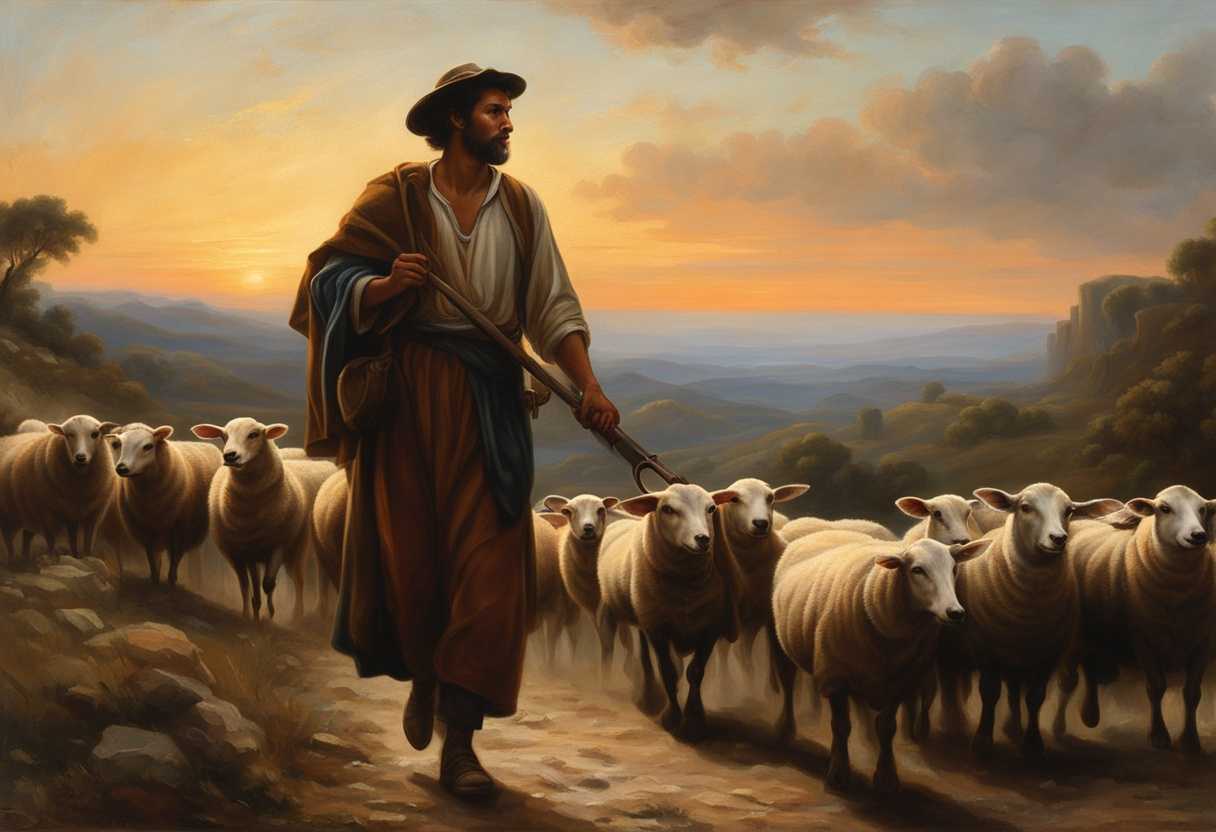
25 For you were straying like sheep, but have now returned to the Shepherd and Overseer of your souls.
Setting the Scene for 1 Peter 2:24-25
In 1 Peter chapter 2, we find a scene where a group of believers has gathered in a humble meeting place, perhaps a simple home or a secluded outdoor area. The room is dimly lit by oil lamps, casting a warm glow on the faces of those present. The air is filled with a sense of reverence and anticipation as they prepare to study and reflect on the teachings of Jesus Christ.
Among the group are individuals from various walks of life – fishermen, tax collectors, and tradesmen – all united in their faith and devotion to Christ. They have come together to seek guidance and strength from the scriptures, eager to deepen their understanding of God’s word and its application in their lives.
As they read the words of 1 Peter 2:24-25, the group is reminded of the sacrificial love of Jesus Christ and the redemption that is available to all who believe in Him. The flickering light of the lamps serves as a poignant symbol of the spiritual illumination they seek, as they meditate on the profound message of hope and salvation contained in these verses.
What is 1 Peter 2:24-25 about?
This verse truly encapsulates the essence of Christian belief and the core message of Jesus’ sacrifice on the cross. When Jesus bore our sins, he took upon himself the weight of our wrongdoings and shortcomings, offering us a path to redemption and forgiveness. Through his selfless act of love, he provided a way for us to be healed from our sins and restored to a right relationship with God.
Imagine the immense burden of sin that we all carry – the guilt, shame, and distance from God that it creates. Jesus, out of his infinite love, willingly took on this burden so that we could be set free and experience the fullness of God’s grace. This verse reminds us of the depth of Jesus’ sacrifice and the incredible gift of salvation that we have received through his suffering on the cross. Let it serve as a powerful reminder of the unconditional love and mercy that God extends to us through Jesus Christ.
Understanding what 1 Peter 2:24-25 really means
Commentary Structure
- Introduction and Context
- Phrase Dissection and Detailed Meaning
- Biblical Cross-references
- Relevance to Modern Life
- Anecdote for Illustration
- The apostle Peter addresses believers who are scattered and facing persecution in the epistle of 1 Peter. He encourages them to stand firm in their faith despite trials. The verses in question are a poignant reminder of the sacrifice of Jesus and the healing it brings to believers.
Phrase Dissection and Detailed Meaning
“Who himself bore our sins in his own body on the tree.” This phrase emphasizes the personal and sacrificial nature of Jesus’ atonement. “Bore our sins” signifies that Jesus took upon himself the weight and consequences of our sins, liberating us from the burden of guilt and separation from God.
“That we, having died to sins, might live for righteousness.” This implies a transformation; through Jesus’ sacrifice, believers are called to abandon sinful ways and embrace a life of righteousness. It’s not merely about being saved but about living a life that reflects that salvation. You were healed by whose stripes.” The term “stripes” refers to the physical wounds inflicted on Jesus during His crucifixion. This healing is not just physical but profoundly spiritual, offering restoration and reconciliation with God.
“For you were like sheep going astray, but have now returned to the Shepherd and Overseer of your souls.” Here, Peter uses the imagery of sheep, which are often seen as helpless and prone to wandering. The “Shepherd” is Jesus, who guides, protects, and cares for the believers, ensuring they do not drift away.
Biblical Cross-references
Isaiah 53:5 resonates deeply with these verses: “He was wounded for our transgressions, He was bruised for our iniquities; The chastisement for our peace was upon Him, And by His stripes we are healed.” This prophecy underscores the sacrificial aspect of Jesus’ mission.
John 10:11 further illustrates this: “I am the good shepherd. The good shepherd gives His life for the sheep.” This emphasizes Jesus’ role as the protective and sacrificial Shepherd, reinforcing Peter’s message.
Relevance to Modern Life
Today, these verses remind us that despite the chaos and suffering we might face, Jesus’ sacrifice offers us hope and healing. The message of redemption and new life in Christ is profoundly relevant in a world where many feel lost or burdened by their past. John, a man who struggled with addiction for many years, is the subject of the story. Feeling hopeless, he stumbled into a church one day. He realized that his past mistakes didn’t define him as he learned about Jesus’ sacrifice. Like the wandering sheep, he found his Shepherd. Through faith and support from the church community, John turned his life around, embodying the transformation described in these verses.
Conclusion and Reflection
These verses call us to reflect on our own lives. Are we living in the freedom and righteousness that Jesus’ sacrifice affords us? Do we recognize Him as our Shepherd in times of wandering? The invitation to return to the Shepherd is always open, offering healing and guidance. Let’s strive to embody the righteousness that Jesus’ sacrifice enables as we meditate on these words, living as healed and guided souls under His tender care.
How can we follow Jesus’ example in suffering?
We can follow Jesus’ example in suffering by entrusting ourselves to God, who judges justly. We can bring our own suffering and struggles to the Lord, knowing that He understands our pain and cares for us deeply, just as Jesus bore our sins on the cross. We can experience God’s comfort and strength that enables us to endure suffering with grace and faith by turning to Him in times of hardship. Moreover, persevering in righteousness and obedience also involves following Jesus’ example in suffering. Even in the face of unjust treatment or persecution, we can choose to respond with love, forgiveness, and humility, just as Jesus did. We honor God and demonstrate the transformative power of His love in our lives by maintaining our integrity and faithfulness to His ways during times of suffering. Having a humble and trusting attitude towards God, as well as continuing to live out His teachings and values even in the midst of hardships, means imitating Jesus’ example in suffering. We can find hope, strength, and purpose in our own suffering experiences by fixing our eyes on Jesus, who endured the cross for our sake.
Application
Think about how you manage your work and family, juggling countless tasks to keep everything running smoothly. Now, consider how Christ took on the burden of our sins, providing healing and restoration through His sacrifice. Acknowledge His immense sacrifice for you. Let it drive you to live with integrity and a grateful heart. Reflect on His love and let it motivate you to follow Him with unfaltering commitment. Are you ready to honor His sacrifice by living fully in His grace every single day?

Reverend Michael Johnson is an experienced Church Minister with a profound expertise in spirituality and guidance. With a serene presence and a compassionate heart, he has faithfully served his congregation for over 20 years, leading them on a spiritual journey towards inner peace and enlightenment. Reverend Johnson’s extensive knowledge of religious philosophies and profound understanding of human nature have made him a trusted confidant and mentor to many, as he seamlessly weaves his profound wisdom into life teachings. Reverend Johnson’s calming demeanor and empathetic nature continue to uplift and heal souls, nurturing a sense of unity and tranquility within his community.