
2 Chronicles 5:1-14 is about the completion of the construction of the temple by King Solomon and the glorious manifestation of God’s presence as the Ark of the Covenant was brought into the Most Holy Place.
2 When Solomon had finished building the house of the Lord, the king’s house, and all that Solomon desired to build,
2 Then Solomon assembled the elders of Israel and all the heads of the tribes, the leaders of the fathers’ houses of the people of Israel, in Jerusalem, to bring up the ark of the covenant of the Lord out of the city of David, which is Zion.
3 And all the men of Israel assembled before the king at the feast that is in the seventh month.
4 And all the elders of Israel came, and the Levites took up the ark.
5 And they brought up the ark, the tent of meeting, and all the holy vessels that were in the tent; the Levitical priests brought them up.
6 And King Solomon and all the congregation of Israel, who had assembled before him, were before the ark, sacrificing so many sheep and oxen that they could not be counted or numbered.
7 Then the priests brought the ark of the covenant of the Lord to its place, in the inner sanctuary of the house, in the Most Holy Place, underneath the wings of the cherubim.
8 And the cherubim spread out their wings over the place of the ark, so that the cherubim made a covering above the ark and its poles.
9 And the poles were so long that the ends of the poles were seen from the Holy Place before the inner sanctuary; but they could not be seen from outside. And they are there to this day.
10 There was nothing in the ark except the two tablets that Moses put there at Horeb, where the Lord made a covenant with the people of Israel, when they came out of Egypt.
11 And when the priests came out of the Holy Place (for all the priests who were present had consecrated themselves, without regard to their divisions,
12 and all the Levitical singers, Asaph, Heman, and Jeduthun, their sons and kinsmen, arrayed in fine linen, with cymbals, harps, and lyres, stood east of the altar with 120 priests who were trumpeters;
13 and it was the duty of the trumpeters and singers to make themselves heard in unison in praise and thanksgiving to the Lord, and when the song was raised, with trumpets and cymbals and other musical instruments, in praise to the Lord, “For he is good, for his steadfast love endures forever,” the house, the house of the Lord, was filled with a cloud,
14 so that the priests could not stand to minister because of the cloud, for the glory of the Lord filled the house of God.
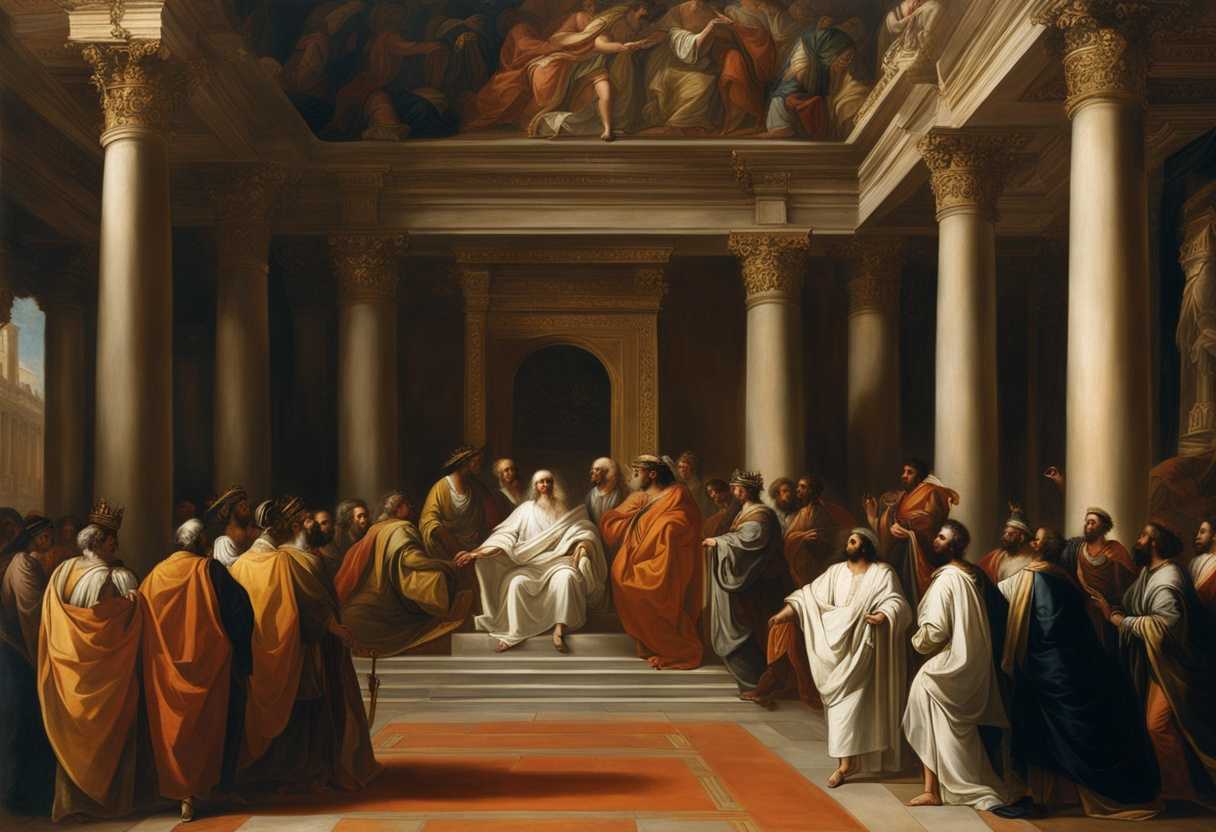
Setting the Scene for 2 Chronicles 5:1-14
The scene in 2 Chronicles 5:1-14 takes place in Jerusalem, specifically at the temple that King Solomon had built to house the Ark of the Covenant. The temple was a magnificent structure, adorned with gold and precious stones, a symbol of the Israelites’ devotion to God. The temple was completed, and it was time to bring the Ark of the Covenant into its rightful place within the Holy of Holies.
In attendance were King Solomon, the priests, the Levites, and all the elders of Israel. The priests and Levites had consecrated themselves for this special occasion, and they were dressed in their finest garments, ready to perform the sacred duties associated with the Ark. The atmosphere was filled with anticipation and reverence as everyone gathered to witness this momentous event.
As the priests carried the Ark into the temple, a cloud filled the house of the Lord, signifying the presence of God among His people. The glory of the Lord was so overwhelming that the priests could not continue their service. It was a powerful and awe-inspiring moment, as the people of Israel experienced the tangible presence of God in their midst. The scene was a testament to the faithfulness of God and the dedication of His people to worship Him in spirit and in truth.
What is 2 Chronicles 5:1-14 about?
What a poignant moment in the biblical story this verse captures! The Ark of the Covenant, a symbol of God’s presence and covenant with His people, being brought into the temple amidst great rejoicing and reverence. Can you imagine the sights and sounds of such an event? The people’s hearts filled with awe and gratitude as they welcomed this sacred artifact into its rightful place.
This verse not only speaks to the physical act of moving the Ark, but also to the spiritual significance behind it. The Ark symbolizes God’s faithfulness, protection, and guidance throughout the history of Israel. It serves as a reminder of God’s ongoing presence among His people and their commitment to worship and serve Him with all their hearts as they bring it into the temple. It is a moment of deep connection and renewal of the covenant relationship between God and His chosen ones. Let us reflect on the significance of the Ark in our own lives as we consider this verse. How do we welcome God’s presence into our own “temples,” our hearts and minds? Are we filled with celebration and worship when we acknowledge His faithfulness and guidance in our lives? May we always approach God with the same reverence and gratitude as the people in this passage, recognizing His ongoing presence and love for us.
Understanding what 2 Chronicles 5:1-14 really means
In 2 Chronicles 5:1-14, we witness a significant moment in Israel’s history as Solomon completes the construction of the Temple, and the Ark of the Covenant is brought into its rightful place. This event is not merely a physical completion of a building but a spiritual milestone, symbolizing God’s presence among His people. The phrase “All the work that Solomon had done for the house of the Lord was finished” encapsulates the culmination of years of faith, dedication, and obedience, highlighting the importance of perseverance in fulfilling God’s purposes.
As the priests bring in the Ark of the Covenant, we see the centrality of God’s presence and His covenant with Israel. The act of placing the Ark in the Temple signifies a deep spiritual connection between God and His people, emphasizing the significance of honoring and upholding the divine relationship. When “the glory of the Lord filled the house of God,” it signifies not only God’s approval but also a profound moment of divine encounter, where His presence tangibly manifests among His people.
This event in Solomon’s Temple echoes the glory of the Lord filling the Tabernacle in Exodus 40:34-35, emphasizing the continuity of God’s presence throughout Israel’s history. Similarly, 1 Kings 8:10-11 provides another account of this awe-inspiring moment, underscoring the overwhelming nature of God’s presence. Looking forward, Revelation 21:3 points to the ultimate fulfillment of God dwelling with humanity in the New Jerusalem, highlighting the eternal significance of God’s presence among His people.
The relevance of this passage extends to believers today, reminding us of God’s desire to dwell within us (1 Corinthians 3:16). Just as the completion of Solomon’s Temple was a culmination of God’s work, we are encouraged to remain faithful in our tasks, trusting that God will bring His work in us to completion (Philippians 1:6). The dedication of the Temple underscores the importance of worship and dedication in creating spaces where God’s presence is welcomed and honored.
Imagine a modern-day scenario where a community builds a place of worship, dedicating it to God. As they gather for worship, a profound sense of peace and presence fills the room, reminiscent of the dedication of Solomon’s Temple. This anecdote serves as a reminder that God honors our dedication and meets us in our worship, just as He did with the Israelites in the Temple.
In conclusion, 2 Chronicles 5:1-14 serves as a powerful reminder of God’s faithfulness, the importance of His presence, and the joy of completing His work. It calls us to dedicate our lives and spaces to Him, ensuring that He remains at the center of all we do, just as He was at the center of the Temple in ancient times.
How can we cultivate the presence of God?
The presence of God can be cultivated through worship, praise, and unity among believers. When the priests and musicians came together with one purpose and in one accord to glorify God, His presence filled the temple. This unity and collective focus on God’s greatness and holiness created an atmosphere where God’s presence could manifest itself among His people.
Furthermore, honoring God with offerings and sacrifices, along with sincere hearts and pure motives, can also help cultivate His presence. The sacrifices symbolize our surrender and devotion to God, while our sincerity and purity of heart demonstrate our willingness to seek and follow Him wholeheartedly. We can invite His presence to dwell in our lives and communities by continuously seeking God in prayer, reading His word, and obeying His commands. Cultivating the presence of God ultimately requires humility, reverence, and a deep desire to seek Him above all else. When we approach God with a pure heart, a spirit of worship, and a commitment to live according to His will, we create an environment where His presence can dwell richly and transform our lives and surroundings.
Application
Think of your life as a busy office or a bustling home. Amid all the chaos, there was a moment in history when the glory of the Lord filled the temple, just like a beam of sunlight breaking through clouds. Now, imagine bringing that same light into your day. Are you ready to pause, gather your loved ones, and create a space for gratitude and worship? Will you invite His presence into the heart of your daily grind?

Reverend Michael Johnson is an experienced Church Minister with a profound expertise in spirituality and guidance. With a serene presence and a compassionate heart, he has faithfully served his congregation for over 20 years, leading them on a spiritual journey towards inner peace and enlightenment. Reverend Johnson’s extensive knowledge of religious philosophies and profound understanding of human nature have made him a trusted confidant and mentor to many, as he seamlessly weaves his profound wisdom into life teachings. Reverend Johnson’s calming demeanor and empathetic nature continue to uplift and heal souls, nurturing a sense of unity and tranquility within his community.