
Matthew 10:1-9 is about Jesus empowering and instructing his twelve disciples to go out and share the message of the kingdom of God, emphasizing the importance of spreading the good news freely, relying on God’s provision, and showing hospitality to those they encounter.
1 And he called to him his twelve disciples and gave them authority over unclean spirits, to cast them out, and to heal every disease and every affliction.
2 The names of the twelve apostles are these: first, Simon, who is called Peter, and Andrew his brother; James the son of Zebedee, and John his brother;
3 Philip and Bartholomew; Thomas and Matthew the tax collector; James the son of Alphaeus, and Thaddaeus;
4 Simon the Zealot, and Judas Iscariot, who betrayed him.
5 These twelve Jesus sent out, instructing them, “Go nowhere among the Gentiles and enter no town of the Samaritans,
6 but go rather to the lost sheep of the house of Israel.
7 And proclaim as you go, saying, ‘The kingdom of heaven is at hand.’
8 Heal the sick, raise the dead, cleanse lepers, cast out demons. You received without paying; give without pay.
9 Acquire no gold nor silver nor copper for your belts,
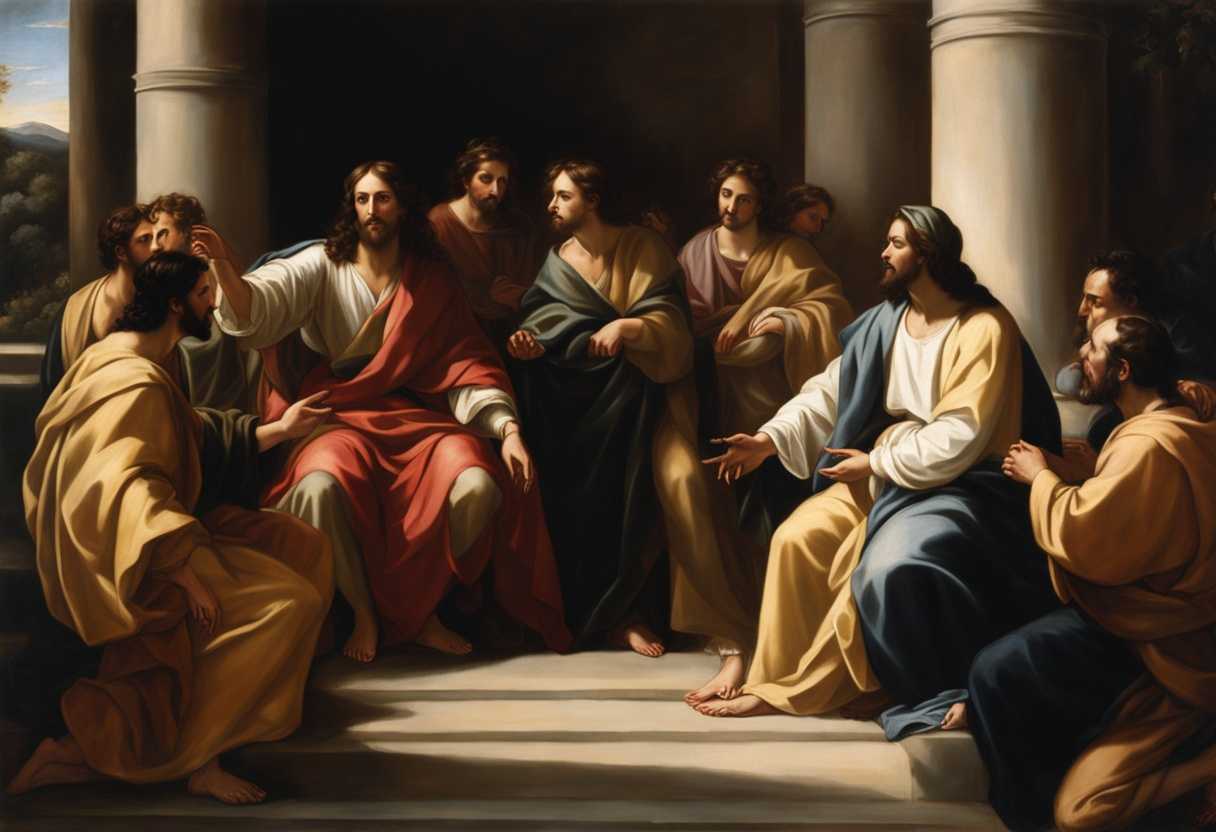
Setting the Scene for Matthew 10:1-9
In Matthew chapter 10, we find Jesus calling his twelve disciples to him and giving them authority to drive out impure spirits and to heal every disease and sickness. The scene is set in a serene countryside, with the disciples gathered around Jesus as he imparts his teachings and instructions to them. The disciples, including Peter, Andrew, James, John, Philip, Bartholomew, Thomas, Matthew, James son of Alphaeus, Thaddaeus, Simon the Zealot, and Judas Iscariot, are a diverse group of individuals who have been following Jesus and learning from him.
The disciples have been chosen by Jesus to accompany him on his ministry, and they have witnessed his miracles and teachings firsthand. As they gather around Jesus, they are filled with a mixture of awe, excitement, and perhaps a bit of trepidation at the tasks that lie ahead. The atmosphere is charged with anticipation as Jesus equips them with the power and authority to continue his work and spread the message of the kingdom of God.
The disciples listen intently as Jesus lays out their mission, instructing them to go to the lost sheep of Israel, proclaiming that the kingdom of heaven has come near. They are to heal the sick, raise the dead, cleanse those who have leprosy, and drive out demons, all in the name of Jesus. This pivotal moment marks the beginning of the disciples’ own ministry, as they step into their roles as messengers and ambassadors of Christ.
What is Matthew 10:1-9 about?
Jesus empowers his disciples in this verse by granting them authority to heal the sick and to proclaim the message of God’s kingdom. Jesus is showing that he entrusts them with the responsibility to continue his work on earth by giving them this authority. This act demonstrates Jesus’ belief in the disciples’ abilities and their role in spreading the message of love, healing, and salvation to all. Jesus is teaching the disciples the importance of faith and trust in God’s care and guidance by instructing them to rely on God’s provision and to travel light. He is showing them that by depending on God, they will have everything they need to carry out their mission effectively. This verse challenges us too, to reflect on our own reliance on God and to consider how we can trust in God’s provision in our own lives. How can we embody the same faith and trust that Jesus calls his disciples to have? How can we align our own actions with the message of love and healing that Jesus exemplifies in this verse? Let’s reflect on these questions and strive to walk in faith and obedience just as the disciples did.
Understanding what Matthew 10:1-9 really means
In Matthew 10:1-9, we witness a pivotal moment where Jesus commissions His twelve disciples for a specific mission. This passage holds profound significance as it underscores the divine selection and purpose behind each disciple’s calling. Just as Jesus initiated the call to His disciples, we are reminded of the intentional and purposeful nature of God’s calling in our lives. John 15:16 reinforces this truth by highlighting that it is God who chooses and appoints individuals for His work, emphasizing the sovereignty of His divine plan.
Moreover, Jesus not only called His disciples but also bestowed upon them authority to drive out impure spirits and heal every disease and sickness. This act of empowerment signifies that believers are equipped with spiritual authority to combat both spiritual and physical afflictions. Luke 10:19 further elucidates this concept by affirming that believers have been given authority to overcome the power of the enemy, emphasizing the divine power at work within us.
The naming of the twelve apostles in the passage serves to highlight their unique roles and the personal nature of their calling. This act of listing the apostles underscores the individuality and significance of each believer in God’s grand plan. Revelation 21:14 draws a parallel by showcasing the names of the twelve apostles inscribed on the foundations of the city, symbolizing the eternal importance of their roles in God’s kingdom.
Jesus instructs His disciples not to go among the Gentiles or Samaritans initially but to focus on the lost sheep of Israel. This directive reveals God’s strategic plan unfolding in stages, with an initial emphasis on Israel before the gospel spreads to all nations. The central message of the disciples’ mission is to proclaim, “The kingdom of heaven has come near,” echoing the urgency of repentance and response to the imminent arrival of God’s kingdom.
Miraculous signs such as healing the sick, raising the dead, and driving out demons accompany the disciples’ proclamation of the kingdom, demonstrating the power of God through acts of healing and deliverance. This aligns with Mark 16:17-18, which outlines the miraculous signs that will accompany believers, showcasing the tangible manifestation of God’s power through His followers.
The passage concludes with the directive to “freely give” what has been received, emphasizing the grace and generosity of God’s gifts. Acts 20:35 reinforces this principle by highlighting the blessedness of giving without expecting anything in return, reflecting the heart of Christian generosity and service. This call to share God’s blessings resonates with believers today, urging them to embody a spirit of generosity and selfless service in their daily lives.
In contemporary times, the relevance of Jesus’ commission to His disciples remains palpable. Believers today are also empowered by the Holy Spirit to perform acts of service and healing, echoing the mission and authority bestowed upon the twelve disciples. The anecdote of a modern-day missionary serving in a remote area exemplifies the ongoing relevance of Jesus’ commission, showcasing how individuals continue to heed the call to serve and spread the message of the kingdom.
As we reflect on Matthew 10:1-9, we are encouraged to embrace the call to serve and share the gospel, mindful of the authority and power given to us as believers. Let us heed the call to live out the principles of generosity and service, embodying the spirit of Christ in our interactions with others and in our mission to advance God’s kingdom on earth.
How can we share God’s love with others effectively?
One way to effectively share God’s love with others is by being a vessel of His blessings and grace. Through our actions, words, and deeds, we can manifest His love to those around us. We too can use the gifts and talents God has given us to make a positive impact on the people we encounter, just as Jesus empowered His disciples to go forth and spread His message. We can show others the depth of God’s love for all of His creation by demonstrating compassion, kindness, and generosity.
Another way to share God’s love effectively is through the power of prayer. When we lift up others in prayer, we are not only interceding on their behalf but also inviting God’s love and peace into their lives. Prayer has the ability to comfort, heal, and transform hearts, and by consistently praying for those in need, we can be a source of spiritual support and encouragement. Through prayer, we can connect with God’s divine love and share that love with others in a meaningful and impactful way.
Furthermore, embodying the teachings of Jesus and living out the values of the Gospel is a powerful way to share God’s love with others. When we strive to live a life of integrity, humility, forgiveness, and love, we are reflecting the light of Christ to those around us. Our actions and attitudes speak volumes about our faith, and by living authentically and wholeheartedly for God, we can be a living testimony of His love and grace. We can draw others closer to God and plant seeds of faith in their hearts.
Application
Imagine you’ve been given a crucial work assignment that could change lives. Your family relies on you, just as the world relies on bearers of light. Jesus sent his disciples with a mission, and today, you have the same charge. The kingdom of heaven needs YOUR voice in our busy, chaotic world. Will you step up and share hope and salvation where it’s needed most?

Reverend Michael Johnson is an experienced Church Minister with a profound expertise in spirituality and guidance. With a serene presence and a compassionate heart, he has faithfully served his congregation for over 20 years, leading them on a spiritual journey towards inner peace and enlightenment. Reverend Johnson’s extensive knowledge of religious philosophies and profound understanding of human nature have made him a trusted confidant and mentor to many, as he seamlessly weaves his profound wisdom into life teachings. Reverend Johnson’s calming demeanor and empathetic nature continue to uplift and heal souls, nurturing a sense of unity and tranquility within his community.