
1 How the Lord in his anger has set the daughter of Zion under a cloud! He has cast down from heaven to earth the splendor of Israel; he has not remembered his footstool in the day of his anger.
2 The Lord has swallowed up without mercy
all the habitations of Jacob;
in his wrath he has broken down
the strongholds of the daughter of Judah;
he has brought down to the ground in dishonor
the kingdom and its rulers.
3 He has cut down in fierce anger all the might of Israel; he has withdrawn from them his right hand in the face of the enemy; he has burned like a flaming fire in Jacob, consuming all around.
4 He has bent his bow like an enemy,
with his right hand set like a foe;
and he has killed all who were delightful in our eyes
in the tent of the daughter of Zion;
he has poured out his fury like fire.
5 The Lord has become like an enemy; he has swallowed up Israel; he has swallowed up all its palaces; he has laid in ruins its strongholds, and he has multiplied in the daughter of Judah mourning and lamentation.
6 He has laid waste his booth like a garden,
laid in ruins his meeting place;
the Lord has made Zion forget festival and Sabbath,
and in his fierce indignation has spurned king and priest.
7 The Lord has scorned his altar, disowned his sanctuary; he has delivered into the hand of the enemy the walls of her palaces; they raised a clamor in the house of the Lord as on the day of festival.
8 The Lord determined to lay in ruins the wall of the daughter of Zion; he stretched out the measuring line; he did not restrain his hand from destroying; he caused rampart and wall to lament; they languished together.
9 Her gates have sunk into the ground;
he has ruined and broken her bars;
her king and princes are among the nations;
the law is no more,
and her prophets find
no vision from the Lord.
10 The elders of the daughter of Zion sit on the ground in silence; they have thrown dust on their heads and put on sackcloth; the young women of Jerusalem have bowed their heads to the ground.
11 My eyes are spent with weeping; my stomach churns; my bile is poured out to the ground because of the destruction of the daughter of my people, because infants and babies faint in the streets of the city.
12 They cry to their mothers,
“Where is bread and wine?”
as they faint like a wounded man
in the streets of the city,
as their life is poured out
on their mothers’ bosom.
13 What can I say for you, to what compare you, O daughter of Jerusalem? What can I liken to you, that I may comfort you, O virgin daughter of Zion? For your ruin is vast as the sea; who can heal you?
14 Your prophets have seen for you false and deceptive visions; they have not exposed your iniquity to restore your fortunes, but have seen for you oracles that are false and misleading.
15 All who pass along the way clap their hands at you; they hiss and wag their heads at the daughter of Jerusalem: “Is this the city that was called the perfection of beauty, the joy of all the earth?”
16 All your enemies open their mouths against you; they hiss, they gnash their teeth, they cry: “We have swallowed her! Ah, this is the day we longed for; now we have it; we see it!”
17 The Lord has done what he purposed;
he has carried out his word,
which he commanded long ago;
he has thrown down without pity;
he has made the enemy rejoice over you
and exalted the might of your foes.
18 Their heart cried to the Lord. O wall of the daughter of Zion, let tears stream down like a torrent day and night! Give yourself no rest, your eyes no respite!
19 “Arise, cry out in the night, at the beginning of the night watches! Pour out your heart like water before the presence of the Lord! Lift your hands to him for the lives of your children, who faint for hunger at the head of every street.”
20 Look, O Lord, and see!
With whom have you dealt thus?
Should women eat the fruit of their womb,
the children of their tender care?
Should priest and prophet be killed
in the sanctuary of the Lord?
21 In the dust of the streets lie the young and the old; my young women and my young men have fallen by the sword; you have killed them in the day of your anger, slaughtering without pity.
22 You summoned as if to a festival day my terrors on every side, and on the day of the anger of the Lord no one escaped or survived; those whom I held and raised my enemy destroyed.
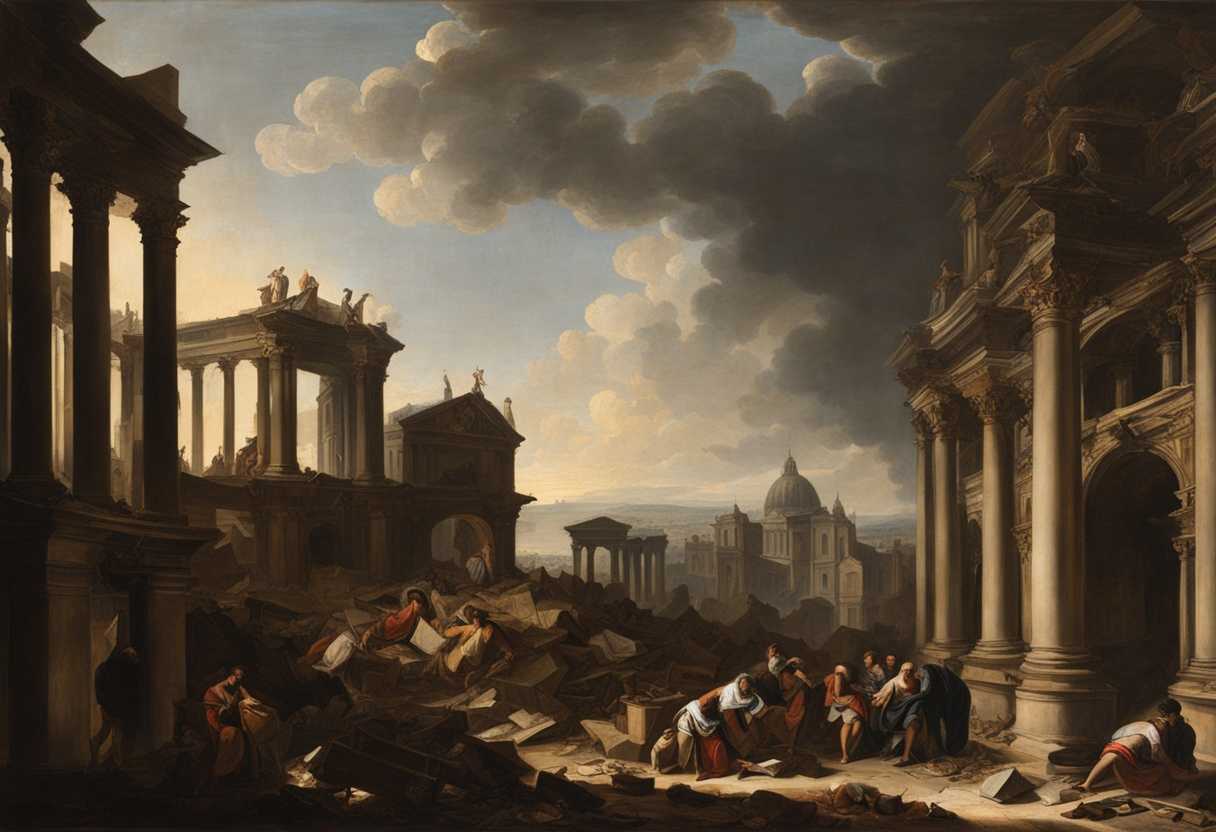
The True Meaning of Lamentations 2
The Book of Lamentations was written by the prophet Jeremiah, a man who witnessed the destruction of Jerusalem by the Babylonians in 586 BC. Jeremiah had warned the people of Judah for years to turn back to God, but they refused. Now, in this chapter, he laments the devastation that has befallen the once-great city. Jeremiah vividly describes the horrors of the siege and conquest of Jerusalem in this passage. He sees the hand of God in the judgment that has fallen on the city, but he also pleads for God’s mercy. The chapter foreshadows the eventual restoration that will come, as Jeremiah looks forward to the day when God will again show compassion to his people.
Throughout the chapter, Jeremiah makes references to other parts of the Bible, such as the book of Deuteronomy, where God had warned the people of the consequences of disobedience. The imagery of the chapter also echoes the prophetic warnings of Isaiah and Ezekiel. Jeremiah’s words remind us that sin has consequences, but that God’s love and forgiveness are always available to those who repent and turn to him.
Lamentations 2:1-5
The verses in Lamentations 2:1-5 outline the devastation that has befallen Jerusalem. Let’s break down these verses and delve into their significance within the context of Lamentations.
Firstly, in verse 1, it is depicted how the Lord in His anger has obscured the splendor of Israel. This highlights the severity of the situation that Jerusalem finds itself in. The once glorious city has now been reduced to ruins due to the judgment of God. This serves as a powerful reminder of how disobedience and turning away from God’s laws can lead to destruction and loss of divine protection. It reflects the consequences of Israel’s actions throughout the history of their relationship with God as portrayed in various parts of the Old Testament.
Moving on to verse 2, it describes how the Lord has not shown mercy to the inhabitants of Jacob and has destroyed all the strongholds of the daughter of Judah. This further emphasizes the extent of the destruction and the loss of security and protection that the people of Jerusalem once enjoyed. The strongholds being destroyed signifies the removal of any semblance of defense that the city had against its enemies. This highlights the importance of relying on God for our ultimate protection and security, rather than relying on our own strength or resources. This theme of God being the ultimate stronghold and refuge is echoed in Psalms 18:2, “The LORD is my rock, my fortress and my deliverer; my God is my rock, in whom I take refuge, my shield and the horn of my salvation, my stronghold. God has cut off every horn of Israel in His fierce anger as we proceed to verse 3. The “horn” here symbolizes power and strength, and its cutting off signifies the complete devastation and loss of authority that Israel once had. This furthers conveys the idea that without God, the people of Israel are left defenseless and powerless. It serves as a potent illustration of the consequences of forsaking God and trying to rely on our own abilities. This image of God stripping away power and strength due to disobedience can be traced back to the early days of Israel’s monarchy when King Saul lost his kingdom due to disobedience (1 Samuel 15). God pours out his wrath like fire on Jacob in verse 4, shifting the imagery to portray Him in a harsh light. The image of fire is often used in the Bible to symbolize purification, judgment, or destruction. The fierce anger and judgment of God upon the people of Israel in this context represent their rebellion and sin. This verse emphasizes the importance of obedience and living in accordance with God’s will to avoid facing His righteous anger. This sentiment is echoed in Hebrews 10:31, “It is a dreadful thing to fall into the hands of the living God.”
Finally, in verse 5, we see how the Lord has become an enemy, devouring Israel and its strongholds. This depiction of God as an enemy is a stark reminder of the consequences of turning away from Him and breaking the covenant. It accentuates the severity of the situation and the depth of the judgment that has befallen the people of Jerusalem. This verse serves as a poignant reminder of the importance of repentance, seeking forgiveness, and returning to God in times of trials and suffering. It echoes the message found in 2 Chronicles 7:14, “If my people, who are called by my name, will humble themselves and pray and seek my face and turn from their wicked ways, then I will hear from heaven, and I will forgive their sin and will heal their land. Lamentations 2:1-5 paints a vivid picture of the consequences of disobedience, the severity of God’s judgment, and the importance of turning back to Him in times of distress. It serves as a timeless reminder of the need for obedience, repentance, and reliance on God for protection and salvation.
Lamentations 2:6-10
The prophet Jeremiah laments the devastation of Jerusalem in Lamentations 2:6-10, emphasizing the severity of God’s judgment upon His people. Let’s break down this passage to grasp its essence.
Firstly, in verse 6, Jeremiah paints a stark picture of the destruction of the city’s palaces. The grandeur and glory of Jerusalem have been tarnished and brought to ruin by the Lord Himself. This illustrates a powerful example of God’s justice – even the most magnificent structures crafted by human hands are nothing compared to His might and authority. This serves as a warning to the Israelites and to us today that no matter how strong or secure we feel in our earthly possessions or achievements, we are ultimately subject to the will of God.
Moving on to verse 7, we witness the desecration of the sanctuary. The temple, once a sacred and holy place, has been defiled by the enemies of Israel. This act not only represents the physical destruction of a significant religious site but also symbolizes the spiritual decay of the people. The temple held immense religious and cultural significance for the Israelites, and its desecration reflects the depth of their departure from God’s ways. It brings to mind the importance of honoring and revering sacred spaces and practices as a means of staying connected to our faith and principles.
Verse 8 speaks of God’s decision to destroy the city walls and not withdraw His hand until it was accomplished. This emphasizes the severity and completeness of God’s judgment. It shows that when God determines to discipline His people, He does so thoroughly and without reservation. This can serve as a reminder to us that disobedience and sin have consequences, and that God’s judgment is righteous and just. It also aligns with other verses in the Bible that underscore the importance of obedience and faithfulness to God’s commandments, as seen in passages such as Deuteronomy 28:15-68. Jeremiah describes in verse 9 how Jerusalem’s gates have sunk into the ground, signifying the city’s vulnerability and defeat. The gates of a city were not only physical barriers but also symbols of strength and authority. Their destruction reflects the loss of security and protection that the people once enjoyed. This image can remind us of the need to rely on God as our ultimate stronghold and refuge. David proclaims this sentiment in Psalm 18:2 by saying, “The Lord is my rock, my fortress, and my deliverer, my God, my rock in whom I take refuge.””
Finally, in verse 10, Jeremiah speaks of the sorrow and mourning that has overtaken the elders of Jerusalem. These respected leaders who once guided and instructed the people are now in despair, unable to find solace for the devastation they witness. This highlights the profound impact of sin and disobedience not only on individuals but on the community as a whole. It serves as a poignant reminder of the consequences of straying from God’s path and the importance of seeking repentance and forgiveness. Passages like Psalm 34:17-18 assure us that “The righteous cry out, and the Lord hears them; he delivers them from all their troubles,” providing comfort in times of distress. The Lord is close to the brokenhearted and saves those who are crushed in spirit. Themes of judgment, destruction, and the consequences of turning away from God are conveyed in Lamentations 2:6-10. It serves as a sobering reminder of the importance of remaining faithful and obedient to God’s commands and seeking His mercy and forgiveness in times of trial and tribulation.
Lamentations 2:11-14
The verses in Lamentations 2:11-14 continue the mourning and lamentation expressed by the Prophet Jeremiah over the desolation and destruction of Jerusalem. Let’s break it down section by section for a more comprehensive understanding.
Starting with verse 11, “My eyes fail from weeping, I am in torment within; my heart is poured out on the ground because my people are destroyed, because children and infants faint in the streets of the city.” Here, Jeremiah is expressing his deep anguish and sorrow over the devastating fate that has befallen his people. His tears have exhausted him, and he is in deep sorrow witnessing the vulnerable, even children and infants, suffering in the streets due to the destruction brought upon by the Babylonians. This conveys the profound empathy Jeremiah has for his people and the heartbreaking scenes of suffering he witnesses.
Moving on to verse 12, “They say to their mothers, ‘Where is bread and wine?’ as they faint like the wounded in the streets of the city, as their lives ebb away in their mothers’ arms.” This verse paints a grim picture of the dire circumstances during the siege of Jerusalem. The people, including children, are so hungry and weak that they cry out to their mothers for sustenance, but there is none to be found. The imagery of the dying in their mothers’ arms highlights the extreme desperation and helplessness of the situation. This serves as a stark reminder of the consequences of turning away from God and the resulting devastation. I can equate you to what, I can liken you, O Daughter of Jerusalem. To what can I compare you, that I may comfort you, O Virgin Daughter of Zion? Your wound is as deep as the sea. Who can heal you?” Here, Jeremiah struggles to find words or comparisons to express the depth of the suffering of Jerusalem, often symbolically referred to as the daughter of Zion. The analogy of a deep sea emphasizes the severity and extent of the affliction that has befallen the city. It conveys the magnitude of the destruction and the challenge of finding healing or solace in such a dire situation.
Lastly, in verse 14, “The visions of your prophets were false and worthless; they did not expose your sin to ward off your captivity. The prophecies they gave you were false and misleading.” This verse highlights the failure of the prophets who had misled the people with false visions and promises of safety, instead of warning them to repent and turn back to God to avert the impending judgment. The prophets’ lack of integrity and truthfulness contributed to the people’s spiritual downfall and their eventual captivity. It underscores the importance of heeding true prophetic warnings and aligning with God’s will to avoid calamity. Jeremiah’s sorrow, distress, and spiritual reflection amidst the devastation of Jerusalem are captured in these verses from Lamentations 2. They serve as a poignant reminder of the consequences of disobedience, the need for genuine repentance, the significance of genuine prophetic voices, and the enduring message of God’s faithfulness and justice throughout the Bible.
Lamentations 2:15-17
The verse in Lamentations 2:15-17 can be broken down into two main sections. “All who pass along the way clap their hands at you; they hiss and wag their heads at the daughter of Jerusalem, ‘Is this the city of which they said, The perfection of beauty, a joy to all the earth?’” (Lamentations 2:15)
This verse describes the mocking and jeering that the daughter of Jerusalem, representing the city itself, is enduring. The imagery of people clapping their hands, hissing, and wagging their heads in derision at Jerusalem highlights the humiliation and downfall of the once glorious city. Jerusalem, once known for its beauty and splendor, has now become a ruin, a shadow of its former self in the eyes of the onlookers. This section reflects the consequences of Jerusalem’s sins and the judgment it faces.
The impact of this section is profound as it serves as a stark reminder of the consequences of turning away from God. Throughout the Bible, there are numerous instances where God’s people faced the repercussions of their disobedience. The fall of Jerusalem serves as a cautionary tale, underlining the importance of remaining faithful and obedient to God’s commands. It also underscores the temporal nature of worldly glory and the need for humility before God.
- “All your enemies open their mouths against you; they hiss, they gnash their teeth, they cry: We have swallowed her up. This is the day we longed for; now we have it; we see it!” (Lamentations 2:16)
This verse depicts the triumph and gloating of Jerusalem’s enemies over its destruction. The enemies of Jerusalem are not only rejoicing in the city’s downfall but also proudly declaring their victory over it. The imagery of them opening their mouths, hissing, gnashing their teeth, and declaring, “We have swallowed her up,” paints a vivid picture of their malicious satisfaction at Jerusalem’s demise. This section further emphasizes the humiliation and defeat that Jerusalem is experiencing.
The impact of this section lies in its portrayal of the spiritual battle between good and evil. Throughout the Bible, there is a recurring theme of the conflict between God’s people and their adversaries. Jerusalem’s enemies represent the forces of darkness and opposition to God’s plans. This verse serves as a reminder that while the enemies of God may temporarily rejoice in the suffering of His people, ultimately, God’s justice will prevail. It underscores the faithfulness of God in fulfilling His promises and avenging His people. Lamentations 2:15-17 captures the profound sorrow and despair that Jerusalem faces as a result of its sins. The mocking and gloating of its enemies showcase the harsh realities of judgment and the consequences of turning away from God. Despite the bleakness of the situation, these verses also point towards the hope of redemption and restoration, emphasizing the enduring faithfulness of God towards His people. The fall of Jerusalem serves as a poignant reminder of the importance of repentance, obedience, and trust in God’s sovereignty, echoing timeless messages found throughout the Bible.
Lamentations 2:18-22
The verse in Lamentations 2:18-22 can be broken down into a few important sections that carry significant meanings. The verse begins with “Cry aloud before the Lord, O walls of daughter of Zion!” This is a call for the people of Zion to cry out loud before the Lord due to the devastation and destruction that has befallen them. The walls of a city are often symbolic of security and protection, but here they are called to lament and cry out because the city has been left vulnerable and in ruins. This call to lament and cry out before the Lord not only reflects the physical destruction of Jerusalem but also the spiritual desolation that the people are experiencing.
The verse continues with “Let your tears flow like a river day and night; give yourselves no relief, your eyes no rest.” This imagery emphasizes the depth of sorrow and grief that the people of Zion are enduring. The tears flowing like a river symbolize the continuous and unceasing pain that they are experiencing. It is a plea for the people not to find comfort or relief from their grief but to fully immerse themselves in lamentation. This intense mourning reflects the magnitude of their suffering and loss.
The next part of the verse reads, “Arise, cry out in the night, as the watches of the night begin; pour out your heart like water in the presence of the Lord.” This call to cry out in the night echoes the idea of relentless mourning and supplication before the Lord. The night is often associated with darkness and despair, and the people are urged to pour out their hearts before the Lord, to express their deepest emotions and grievances. This demonstrates the importance of bringing all their pain and suffering before God, trusting in His presence even in the darkest of times.
Lastly, the verse concludes with “Lift up your hands to him for the lives of your children, who faint from hunger at every street corner.” Here, the focus shifts to the plight of the children who are suffering from hunger and hardship. The act of lifting up hands is a gesture of surrender, supplication, and worship. This plea for help for the children emphasizes the dire circumstances faced by the innocent and vulnerable members of society. It highlights the responsibility to care for the most marginalized and weak, urging the people to intercede for their children before the Lord. The verse from Lamentations captures the profound pain and devastation experienced by the people of Zion. It underscores the importance of turning to God in times of despair, allowing oneself to fully express grief and anguish, and seeking divine intervention for the most vulnerable. It serves as a reminder of the enduring faith and reliance on God’s mercy and compassion, even in the midst of suffering and loss. The themes of lamentation, prayer, and faith in the face of adversity resonate throughout the Bible, demonstrating the enduring relevance of these messages in times of hardship and sorrow.
After Lamentations 2
The people of Jerusalem had fallen into great despair. Their beloved city lay in ruins, their temple desecrated, and their leaders scattered. Yet, even in the depths of their sorrow, a glimmer of hope remained. For the Lord, in His infinite wisdom, had not abandoned His people. Though they had strayed from His path, He still offered the promise of restoration and redemption. The Lord’s love and mercy are ever-present, waiting to guide us back to the light as we turn the page to the next chapter, even in our darkest moments.

Reverend Michael Johnson is an experienced Church Minister with a profound expertise in spirituality and guidance. With a serene presence and a compassionate heart, he has faithfully served his congregation for over 20 years, leading them on a spiritual journey towards inner peace and enlightenment. Reverend Johnson’s extensive knowledge of religious philosophies and profound understanding of human nature have made him a trusted confidant and mentor to many, as he seamlessly weaves his profound wisdom into life teachings. Reverend Johnson’s calming demeanor and empathetic nature continue to uplift and heal souls, nurturing a sense of unity and tranquility within his community.