
Mark 15:44 is about Joseph of Arimathea, a prominent member of the council who went boldly to Pilate to request the body of Jesus after His crucifixion, symbolizing the courageous and compassionate acts of those who stand up for their beliefs and show kindness in times of adversity.
44 Pilate was surprised to hear that he should have already died. And summoning the centurion, he asked him whether he was already dead.
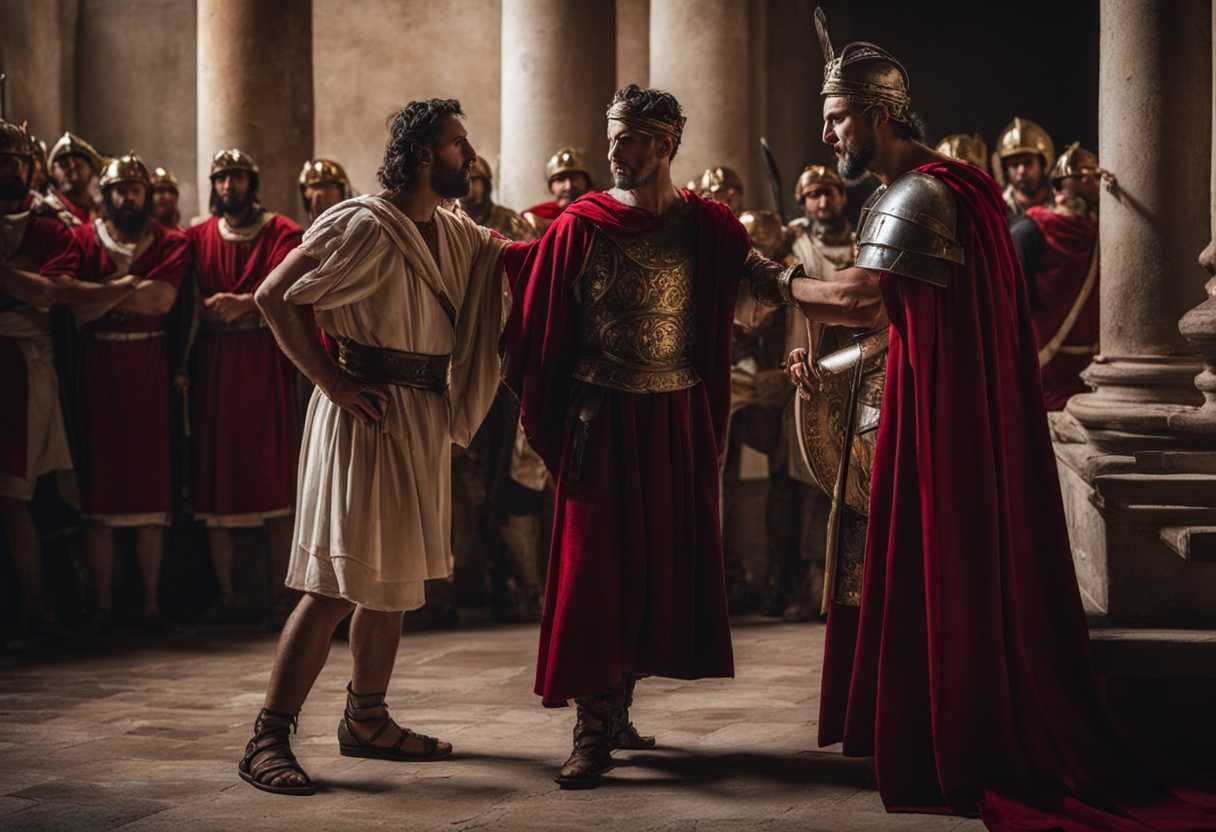
Setting the Scene for Mark 15:44
The scene in Mark chapter 15 takes place in Jerusalem, specifically in the Praetorium, the residence of the Roman governor Pontius Pilate. The room is dimly lit, with torches flickering against the stone walls, casting eerie shadows. The air is heavy with tension as a group of religious leaders, including the high priest Caiaphas and the scribes, stand before Pilate, demanding the crucifixion of Jesus.
Pilate, a weary and conflicted man, sits on his judgment seat, trying to navigate the volatile situation. He questions Jesus, who stands bound and bruised, his eyes filled with compassion and strength. The crowd outside the Praetorium grows restless, their voices rising in a cacophony of demands and accusations.
As the drama unfolds, the fate of Jesus hangs in the balance, with Pilate torn between his desire for peace and the pressure from the religious leaders. The scene is charged with emotion, betrayal, and the clash of political power and spiritual truth. It is a pivotal moment in the story of Jesus’ crucifixion, where the forces of good and evil collide in a battle for the soul of humanity.
What is Mark 15:44 about?
Pontius Pilate confirms Jesus’ death before granting Jesus’ body to Joseph of Arimathea in Mark 15:44. This moment is significant as it emphasizes the finality of Jesus’ crucifixion and serves as a moment of closure in the narrative of Christ’s earthly life. Pilate’s confirmation of Jesus’ death underscores the reality of the event and the physicality of Jesus’ sacrifice for humanity. It also highlights the importance of verifying the truth before taking action, even in moments of great significance.
This verse prompts us to reflect on the profound sacrifice made by Jesus on the cross and the events leading up to His resurrection. It serves as a reminder of the historical and spiritual significance of Jesus’ death and how it paved the way for the redemption and salvation of humanity. Furthermore, the act of granting Jesus’ body to Joseph of Arimathea symbolizes the respect and care shown towards Jesus even in His death, emphasizing His dignity and humanity even in the face of such profound suffering. Contemplating this verse invites us to deepen our understanding of Jesus’ sacrifice and the depth of God’s love for us, ultimately leading us to a place of reverence, gratitude, and awe for the gift of salvation through Jesus Christ.
Understanding what Mark 15:44 really means
In the narrative of Jesus’ crucifixion and death, Mark 15:44 stands out as a crucial moment where Pilate, the Roman governor, is taken aback to hear that Jesus has already passed away. This occurs after Joseph of Arimathea, a follower of Jesus, requests permission to bury His body. Pilate, surprised by the swift death of Jesus, seeks confirmation from the centurion, highlighting the gravity of the situation.
The confirmation of Jesus’ death holds immense significance for Christian faith. It serves as a foundational element, validating the subsequent resurrection. Without the certainty of Jesus’ demise, the resurrection loses its profound meaning and impact. This verification underscores the reality of Jesus’ sacrifice and the ultimate victory over death, offering believers assurance and hope.
The fulfillment of Old Testament prophecies is also evident in this verse. References to Isaiah 53:9 and Psalm 22:14-15 align with the events surrounding Jesus’ death, emphasizing the divine orchestration of His life and mission. These prophecies not only validate Jesus as the promised Messiah but also affirm the continuity and reliability of Scripture.
Moreover, Mark 15:44 highlights the humanity of Jesus. His physical suffering and death underscore His genuine human experience, emphasizing the depth of His sacrifice for humanity’s redemption. This aspect of Jesus’ humanity serves as a poignant reminder of His love and compassion towards mankind, compelling believers to reflect on the magnitude of His sacrifice.
To grasp the significance of this verse, one can envision a courtroom scenario where the confirmation of a crucial fact is essential for the case’s validity. Pilate’s consultation with the centurion mirrors a legal verification process, ensuring the certainty of Jesus’ death. This official confirmation parallels the importance of establishing truth and authenticity, strengthening the foundation of faith in Jesus’ resurrection.
The astonishment expressed by Pilate upon hearing of Jesus’ swift death underscores the extraordinary nature of the crucifixion. The centurion’s role as a reliable witness adds credibility to the confirmation, solidifying the historical account of Jesus’ death. The final confirmation from the centurion removes any doubt, establishing Jesus’ death as a documented and verified event, setting the stage for His burial and subsequent resurrection.
By delving into the historical and theological implications of Mark 15:44, readers today can appreciate the pivotal role it plays in bridging the crucifixion and resurrection narratives. This verse serves as a cornerstone of Christian faith, affirming the reality of Jesus’ sacrifice, the fulfillment of prophecy, and the assurance of His victory over death.
Am I seeking the kingdom of God first?
Yes, seeking the kingdom of God first means making God’s rule and reign the top priority in our lives. It involves seeking to align our thoughts, actions, and desires with God’s will and purposes. This way of living is characterized by placing God first in all areas of our lives, including our relationships, work, decisions, and priorities.
When we seek the kingdom of God first, we prioritize growing in our relationship with God, following His commandments, and living out the values of the kingdom. It means trusting in God’s provision and seeking His guidance in all circumstances. We acknowledge that God is the ultimate authority in our lives by seeking the kingdom of God first. Recognizing God’s sovereignty and choosing to live in a way that reflects His lordship in our lives is ultimately about seeking the kingdom of God first. It is a posture of humility, surrender, and obedience, as we trust in God’s goodness and faithfulness to lead and guide us in all things.
Application
Imagine yourself as Joseph of Arimathea in the modern world – brave, compassionate, and unwavering in your kindness. Take this moment to embody his spirit at work, in your family, and in the community around you. How will you step up today, in your own unique way, to show love and care to those who need it most? Will you be the guiding light in someone’s darkness?

Reverend Michael Johnson is an experienced Church Minister with a profound expertise in spirituality and guidance. With a serene presence and a compassionate heart, he has faithfully served his congregation for over 20 years, leading them on a spiritual journey towards inner peace and enlightenment. Reverend Johnson’s extensive knowledge of religious philosophies and profound understanding of human nature have made him a trusted confidant and mentor to many, as he seamlessly weaves his profound wisdom into life teachings. Reverend Johnson’s calming demeanor and empathetic nature continue to uplift and heal souls, nurturing a sense of unity and tranquility within his community.