
Hebrews 5:5-14 is about the necessity of spiritual maturity and growth in understanding God’s word, emphasizing the importance of moving beyond basic teachings to grasp deeper truths and to cultivate discernment in discerning good from evil.
5 So also Christ did not exalt himself to be made a high priest, but was appointed by him who said to him, “You are my Son, today I have begotten you”;
6 as he says also in another place, “You are a priest forever, after the order of Melchizedek.”
7 In the days of his flesh, Jesus offered up prayers and supplications, with loud cries and tears, to him who was able to save him from death, and he was heard because of his reverence.
8 Although he was a son, he learned obedience through what he suffered.
9 And being made perfect, he became the source of eternal salvation to all who obey him,
10 being designated by God a high priest after the order of Melchizedek.
11 About this we have much to say, and it is hard to explain, since you have become dull of hearing.
12 For though by this time you ought to be teachers, you need someone to teach you again the basic principles of the oracles of God. You need milk, not solid food.
13 for everyone who lives on milk is unskilled in the word of righteousness, since he is a child.
14 But solid food is for the mature, for those who have their powers of discernment trained by constant practice to distinguish good from evil.
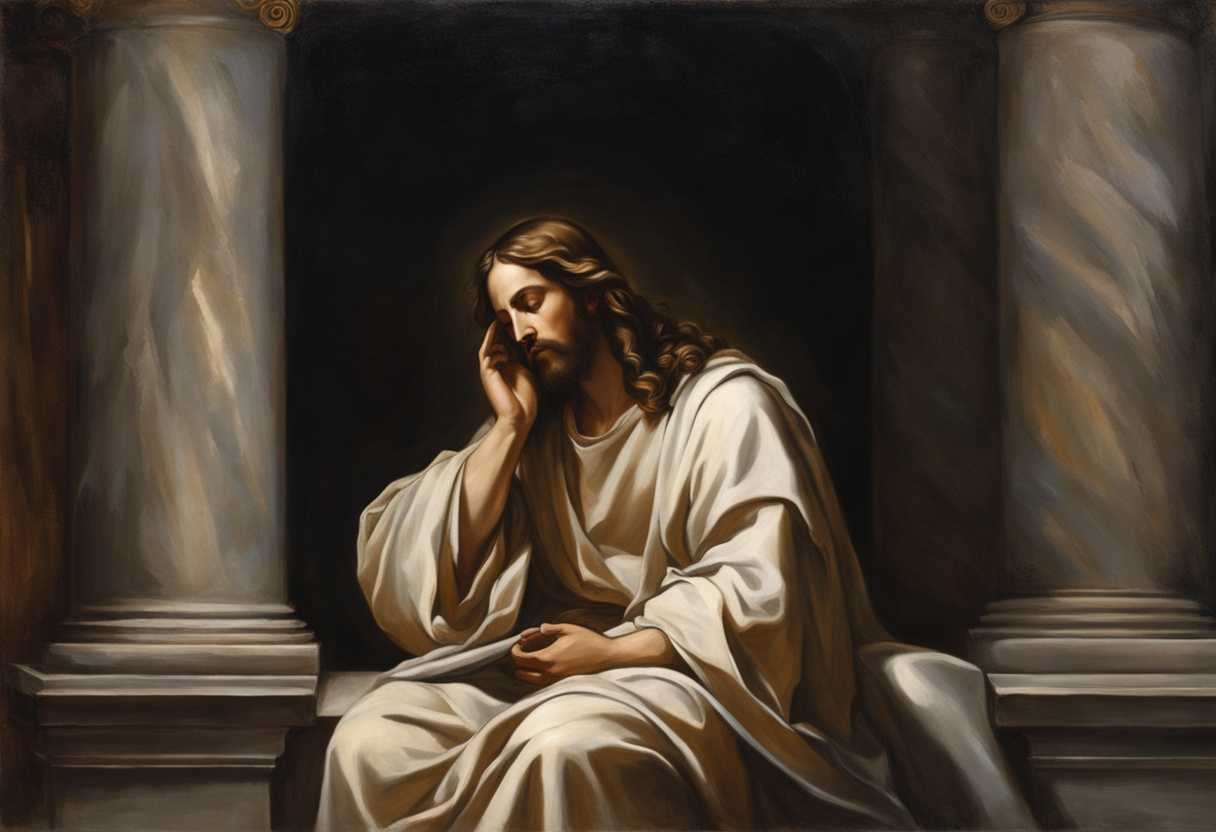
Setting the Scene for Hebrews 5:5-14
In Hebrews chapter 5, the scene is set in a quiet and reverent space within the temple in Jerusalem. The room is dimly lit by oil lamps, casting a warm glow on the intricate tapestries adorning the walls. The air is filled with the scent of burning incense, creating an atmosphere of holiness and solemnity.
In the scene, we find the high priest, a dignified figure dressed in elaborate ceremonial robes, kneeling before the altar. Beside him stands a group of Levite priests, their faces turned towards the high priest in respect and attentiveness. The high priest is offering prayers and sacrifices on behalf of the people, seeking forgiveness for their sins and interceding with God on their behalf.
As the high priest performs his duties, a young man named Jesus enters the scene. He is a humble carpenter from Nazareth, but there is a sense of divine presence about him that sets him apart. Jesus approaches the high priest with a look of compassion and understanding, his eyes filled with wisdom beyond his years. The high priest recognizes something special in Jesus and is struck by his deep reverence for God and his understanding of the scriptures. The scene captures a moment of connection between the earthly high priest and the future High Priest, Jesus Christ, who would offer himself as the ultimate sacrifice for the sins of humanity.
What is Hebrews 5:5-14 about?
The author emphasizes the significance of Jesus as the ultimate high priest and the importance of spiritual maturity for believers in Hebrews 5:5-14. The verse underscores the unique and unparalleled nature of Jesus’ intercession for humanity by highlighting Jesus’ role as a high priest appointed by God. This portrayal of Jesus as the ultimate high priest signifies his authority, holiness, and ability to empathize with human struggles and shortcomings. Believers need to strive for spiritual maturity and growth in their faith, as underscored by the passage. The author conveys that spiritual maturity is crucial for discerning God’s will, deepening one’s relationship with Him, and effectively ministering to others. The verse challenges believers to pursue deeper understanding and application of their faith by admonishing readers who have yet to mature spiritually and suggesting they need to move beyond elementary teachings. Reflecting on Hebrews 5:5-14 urges us to consider the profound implications of Jesus’ role as the ultimate high priest and the call to spiritual maturity. How can we deepen our understanding of Jesus’ priesthood and its significance in our lives? What steps can we take to cultivate spiritual maturity and grow in our faith journey? We should embrace the challenge presented in this passage, seeking to draw closer to God and mature in our spiritual walk with Him.
Understanding what Hebrews 5:5-14 really means
Hebrews 5:5-14 delves into the qualifications and role of Jesus as the high priest, underlining His divine appointment and the significance of spiritual maturity. This passage is pivotal in comprehending the distinct priesthood of Christ and the imperative for believers to advance in their faith. The phrase “You are my Son; today I have begotten you” in verse 5 accentuates Jesus’ divine sonship, affirming His unique relationship with God the Father and fulfilling the messianic prophecy from Psalm 2:7. Furthermore, the mention of being “in the order of Melchizedek” in verse 6 alludes to the eternal and superior priesthood symbolized by the mysterious priest-king Melchizedek, contrasting Jesus’ priesthood with the Levitical lineage-based priesthood.
The statement “He learned obedience through what he suffered” in verse 8 underscores Jesus’ humanity and His qualification as a compassionate high priest through His experience of suffering, resonating with the humility and obedience portrayed in Philippians 2:8. Additionally, the reference to “solid food is for the mature” in verse 14 symbolizes deeper spiritual truths that necessitate maturity to grasp, urging believers to progress beyond elementary teachings and cultivate discernment. Psalm 110:4 reinforces the eternal nature of Jesus’ priesthood, while Philippians 2:8 emphasizes His obedience and suffering, aligning with the themes in Hebrews 5:8. Similarly, 1 Corinthians 3:2’s admonition about spiritual maturity parallels the exhortation in Hebrews 5:14.
In today’s context, this passage urges spiritual growth and maturity, challenging believers to transcend basic teachings in a culture accustomed to instant gratification. It serves as a poignant reminder of the significance of perseverance and deepening our faith amidst life’s challenges. The portrayal of Jesus as a compassionate high priest offers solace and reassurance, particularly in times of adversity. To illustrate, envision a young athlete progressing from fundamental training to advanced skills in pursuit of professional excellence, mirroring our spiritual journey from basic teachings to embracing the complexities of faith for true growth and maturity.
Hebrews 5:5-14 stands as a compelling testament to Jesus’ unique role as our high priest and the call for believers to strive for spiritual maturity. By internalizing and applying these truths, we can nurture our faith and foster a deeper connection with God. This passage beckons us to embark on a journey of spiritual growth, transcending the superficial to embrace the profound, and ultimately, to mature in our walk with the Lord.
How can we mature spiritually and teach others?
We can mature spiritually and teach others by constantly seeking wisdom and understanding from God’s Word. It is important to nourish ourselves with spiritual truths and continually grow in our knowledge of the Scriptures. Deepening our understanding of God’s Word equips us to grow spiritually and guide and instruct others on their own spiritual journey.
Additionally, we can mature spiritually by consistently practicing what we learn from the Word of God. It is not enough to simply acquire knowledge; we must apply the principles and teachings of the Bible to our daily lives. We become living examples of God’s truth and light in the world by living out our faith and showing love, kindness, and grace to others. This practical application of our faith not only helps us grow spiritually but also allows us to effectively teach and mentor others in their walk with God.
Furthermore, as we mature spiritually, we should be open to correction and guidance from other more mature believers. Surrounding ourselves with a community of believers who can offer spiritual support and accountability is essential in our growth. We can continue to mature in our faith and become better equipped to teach and encourage others in their own spiritual journey by humbly accepting feedback and advice from others and learning from their experiences.
Application
Delve into Hebrews 5:5-14 and embark on a spiritual journey to deepen your understanding of faith. Embrace the opportunity to mature in your beliefs, equipped to impart wisdom to others. Shift from being spiritual toddlers to seasoned believers, capable of spreading the transformative message of the Bible. Are you ready to rise to the challenge, nurture your spiritual growth, and play an active role in guiding others towards enlightenment?

Reverend Michael Johnson is an experienced Church Minister with a profound expertise in spirituality and guidance. With a serene presence and a compassionate heart, he has faithfully served his congregation for over 20 years, leading them on a spiritual journey towards inner peace and enlightenment. Reverend Johnson’s extensive knowledge of religious philosophies and profound understanding of human nature have made him a trusted confidant and mentor to many, as he seamlessly weaves his profound wisdom into life teachings. Reverend Johnson’s calming demeanor and empathetic nature continue to uplift and heal souls, nurturing a sense of unity and tranquility within his community.